
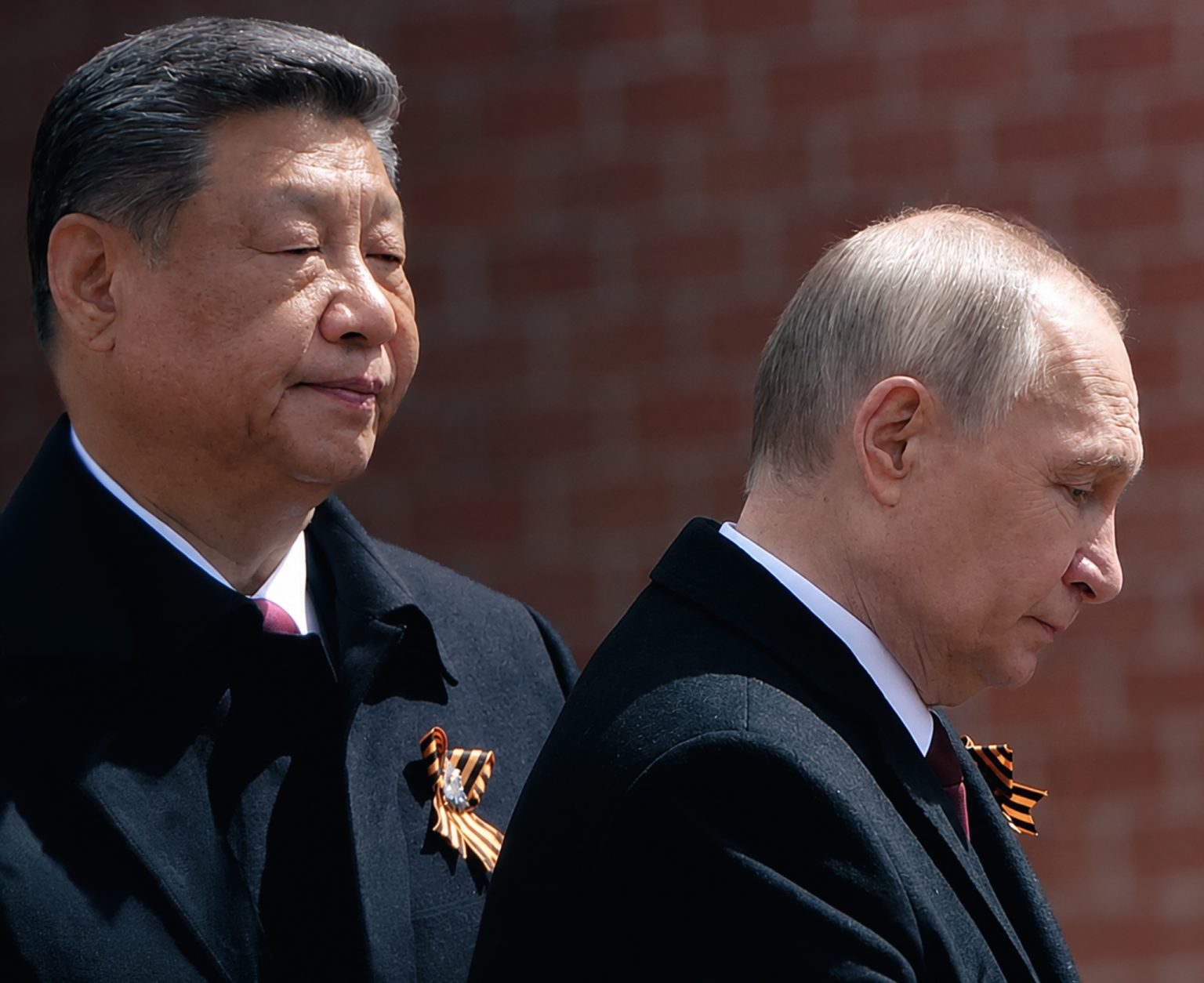
When Trump arrived in Beijing for the second time as president, he came as a rival testing the ground for a deal. When Putin followed shortly after, it was his 25th visit, and he came as something closer to a regular: a strategic partner engaged in the ongoing work of long-term cooperation.
Putin's team had prepared the ground with care. Trump relied, as he tends to, on instinct and improvisation. Neither approach, however, tells the full story of where these relationships stand. Washington and Beijing are not simply adversaries incapable of agreement, nor are Moscow and Beijing the seamless partners they sometimes appear.
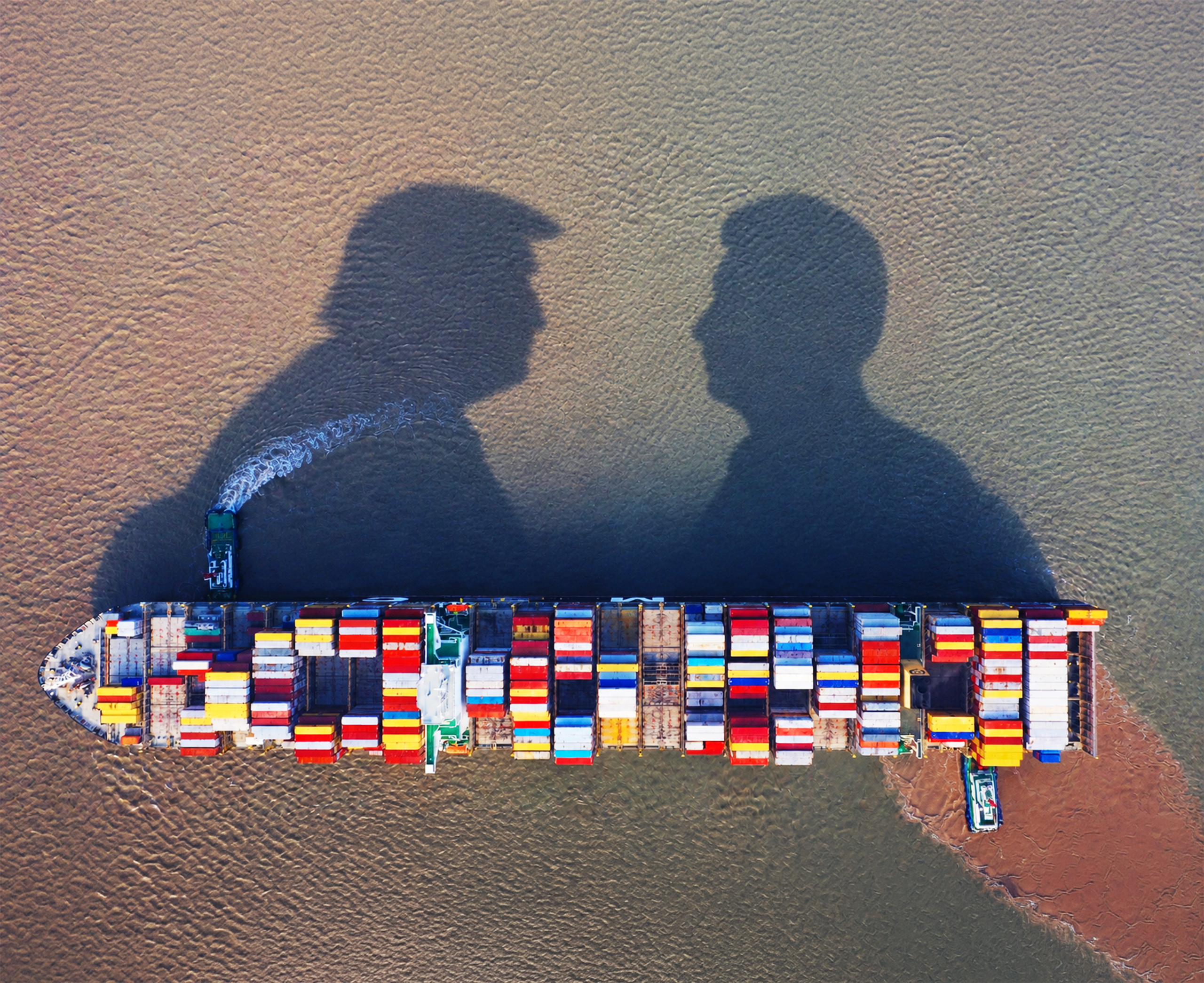
The US, China and Russia are the three powers that define the contemporary international order. The relationship between Washington and Beijing forms its central axis: the two are broadly comparable in economic weight, though the US still commands a significant military advantage. From their competition and occasional cooperation, the basic framework of world politics is shaped. Russia belongs to this picture too, completing the triangle from a position of relative economic weakness but considerable military strength, ahead of China in the latter, behind the US.
United by What They Oppose
Russia and China are united today by a shared resistance to American hegemony, which both see as being in retreat. Russia objects to the expansion of American influence into the former Soviet states, Eastern Europe, Central Asia and the Caucasus. China chafes at American dominance in its own neighborhood, where Japan, South Korea and above all Taiwan constrain its room for maneuver, and at Washington's systematic efforts to push Chinese companies out of markets across Latin America, Asia and Africa.
Both powers bristle at a world ordered on American terms, particularly given Washington's habit of disregarding its own rules when convenient. On multipolarity as an alternative to American hegemony, they find it easy to agree.
The partnership has clear limits. Neither side trusts the other unconditionally, and each seeks advantage where it can. China's historical memory of Russia is not comfortable: it knows Russia as an imperial power that took part in its colonization under the Tsar and later sought to dominate the international left under the USSR. That history makes Beijing wary of any arrangement that would leave it dependent on Moscow, not least in energy.
Russia's concern is more immediate: the economic relationship is strikingly unequal. China is Russia's single most important trading partner, absorbing nearly half of its exports, yet Russia ranks only seventh among China's trading partners, behind Vietnam and just ahead of Germany. Having spent years resisting economic subordination to the West, Moscow has little appetite for a comparable dependence on Beijing.
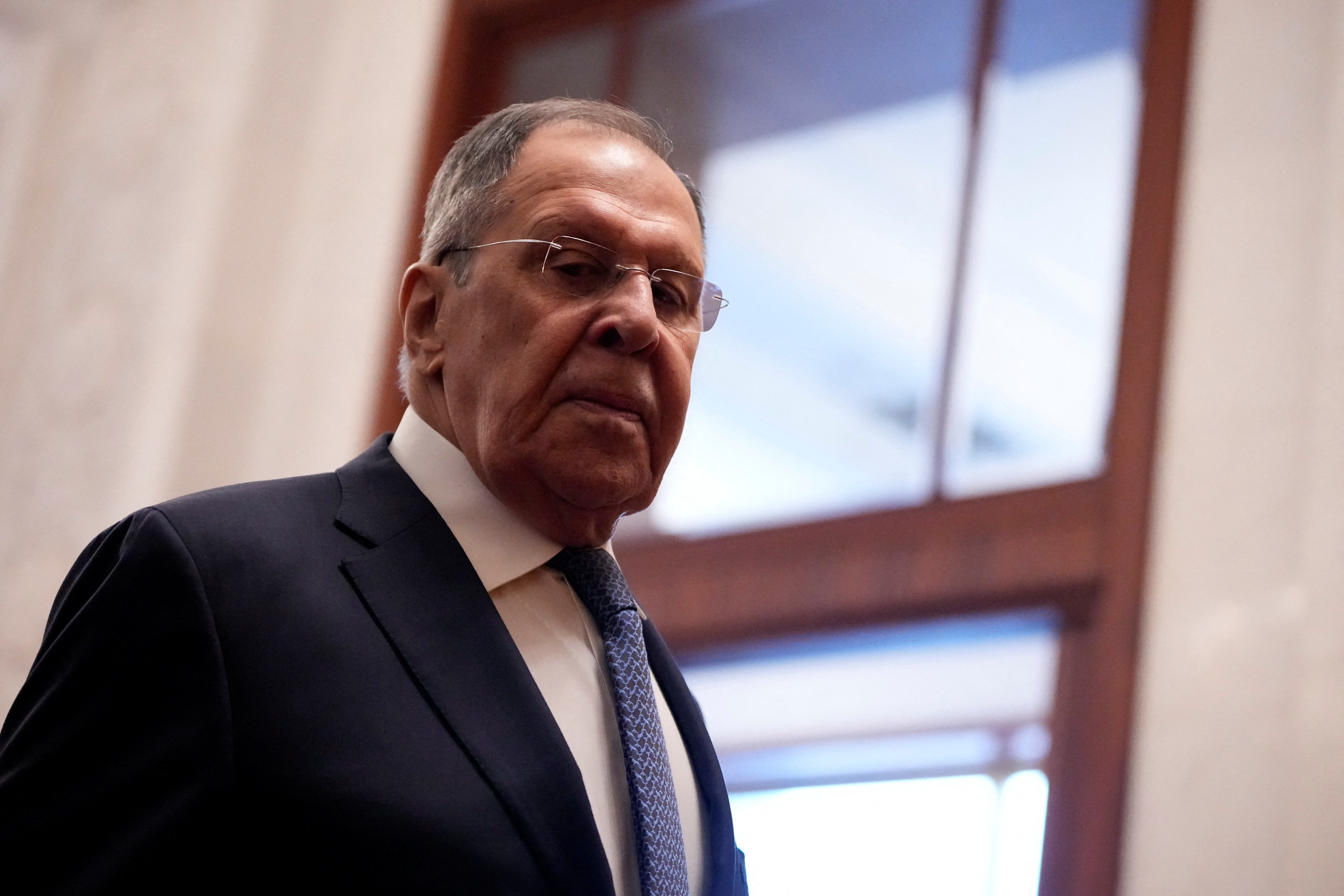
It was in this context that Putin arrived in Beijing. The scale of the Russian delegation was itself a signal: five deputy prime ministers, eight ministers, five other senior officials, and the heads of the country's leading banks and energy companies. Trump's delegation was considerably smaller and less senior, though he managed to bring even more businessmen along than Putin did.
Everything but the Gas Deal
Xi and Putin began with a "tea" meeting in a reduced format, flanked by just four advisers each, reserving that setting for the most delicate items on the agenda. By the end of the visit, 20 memoranda of cooperation had been signed between ministries and state agencies. The main new document was a 40-page declaration on deepening further cooperation between the two countries.
That document captures both the substance and the boundaries of the Russia-China partnership. Much of it is devoted to practical cooperation across dozens of policy areas, ranging from nuclear energy and crime-fighting to environmental protection and the management of border rivers, a scope that reflects how extensively the two countries are now intertwined. Of particular strategic significance is the push to deepen ties between China and the Eurasian Economic Union, Russia's economic sphere of influence, and to align that body more closely with China's Belt and Road Initiative.
The silence on gas cooperation is the declaration's most eloquent omission. For years, Russia and China have been unable to reach agreement on the Power of Siberia 2 (PoS2) pipeline, which would bring gas from the Yamal field in western Siberia to Chinese buyers, adding a second supply corridor to the Power of Siberia 1 pipeline already running from eastern Siberia. The project would give Russia an outlet for Yamal output that once flowed to Europe until sanctions closed that market.
From Beijing's perspective, PoS2 would ease dependence on seaborne liquefied natural gas imports, and with it exposure to the chokepoints those routes pass through: the Panama Canal, the Strait of Hormuz and the Strait of Malacca, all of them subject to growing uncertainty under current US policy. The sticking point is price. Moscow is seeking terms broadly in line with what European customers used to pay. Beijing wants a figure several times lower, closer to the cost of gas produced within China itself.
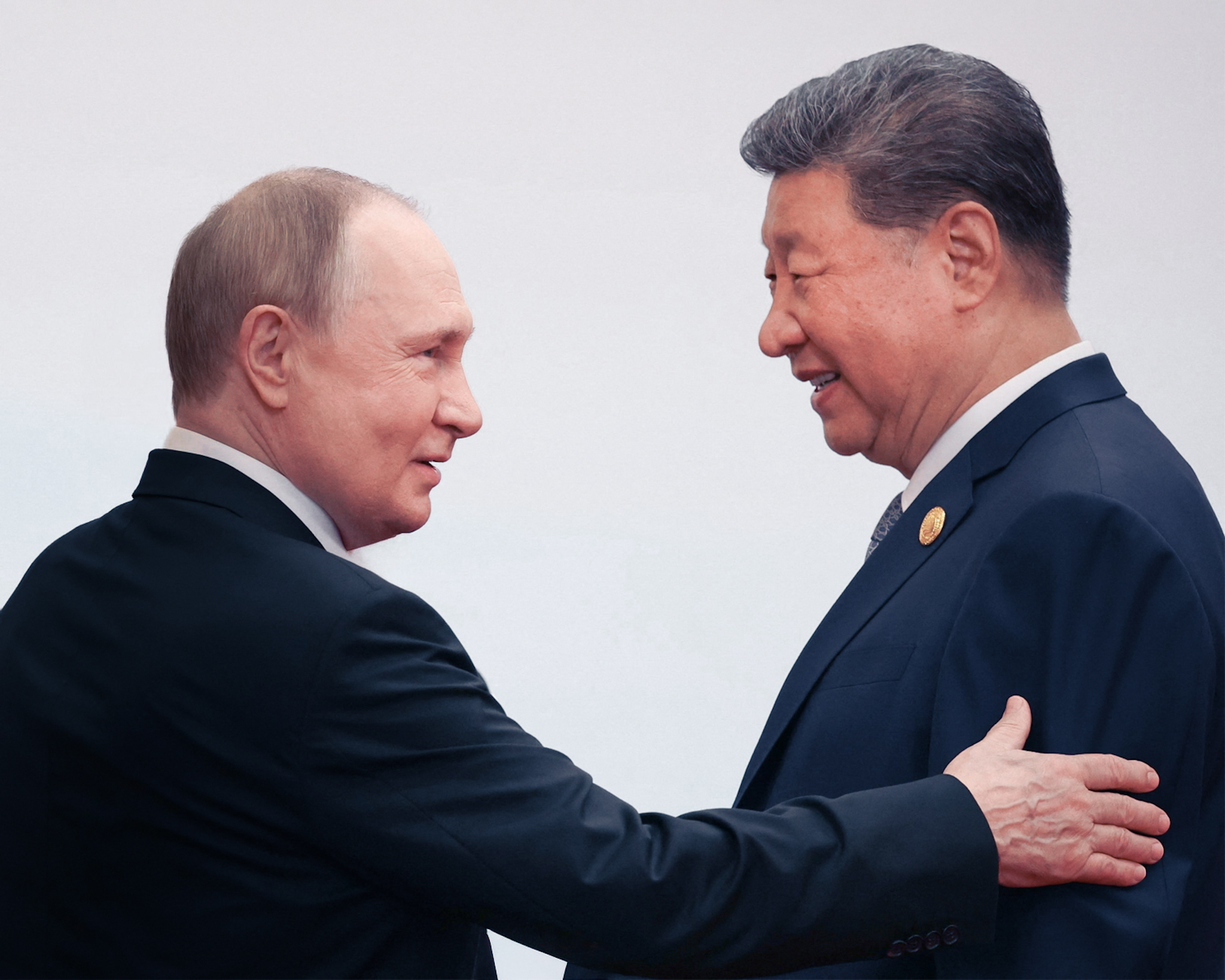
How close Putin and Xi actually came to a deal on PoS2 is unclear. Official sources have said only that the two sides agree on the essentials and that concrete steps remain to be worked out, a formula that has been in circulation for years. A separate question hangs over the declaration's commitment to "confidently pursue practical cooperation in banking and capital markets". Whether Chinese banks will in practice stop observing US secondary sanctions, which penalize cooperation with Russia by severing access to the Western financial system, remains to be seen.
The World According to Moscow and Beijing
On the broad questions of world politics, the declaration reflects a wide area of agreement. The two powers express support for the United Nations and the World Trade Organization (WTO) and single out the Shanghai Cooperation Organisation (SCO), the BRICS grouping and the G20 as the preferred forums of international governance. Their denunciation of chaos, hegemony and neo-colonialism is carefully unattributed, but the target requires no identification.
The document grows more pointed still in its list of condemned practices, rejecting "treacherous military strikes against other countries, the hypocritical use of negotiations as cover for preparing such strikes, the assassination of leaders of sovereign states, the destabilization of the domestic political situation in these states and the provocation of regime change, and the brazen kidnapping of national leaders for trial". Iran and Venezuela are not named. They do not need to be.
On nuclear matters, the logic is the same. The declaration accuses certain states of seeking absolute military superiority, with "some nuclear-weapon states, blindly believing in the 'right of might,' are attempting to gain an absolute military advantage, forward-deploying military-strategic infrastructure and corresponding offensive and defensive weapons in close proximity to other nuclear-weapon states … thereby increasing tensions in relations between nuclear-weapon states". The passage is unattributed, but its application is clear enough: for Russia, it describes US behavior in Ukraine and across Eastern Europe; for China, American positioning toward South Korea and Japan.
The two powers go further, calling on nuclear states and their non-nuclear allies to give up what they characterize as the deeply destabilizing doctrines of joint nuclear missions and extended and forward nuclear deterrence. The US is the obvious primary target, but France is implicated too, having spent the past year actively promoting its nuclear umbrella as a shield for Eastern Europe.
The US is addressed by name at several points. The declaration states that "US and Israeli military strikes against Iran violate international law and fundamental norms of international relations, seriously undermining stability in the Middle East". On the Arctic, the two powers express concern about "the militarization of high-latitude areas by the United States and its allies".
A separate chapter addresses US conduct on nuclear matters. The two powers condemn Washington's failure to renew the Strategic Arms Reduction Treaty (START) as an "irresponsible policy" and explicitly reject the "Golden Dome" anti-missile project, which revives the ambitions of Reagan's Star Wars program. As with its predecessor, the technology needed for implementation does not exist.
That may offer some reassurance, but the underlying logic is sobering: a functioning system would eliminate the Russian or Chinese capacity for a retaliatory second strike following a US nuclear attack. The mere prospect of losing that guarantee is the kind of pressure that historically precedes catastrophic miscalculation.

The Cracks in the Common Front
The declaration extends its nonproliferation warnings to specific targets. Japan is cautioned by name against "the long-term accumulation of sensitive nuclear materials" and warned against falsifying history or attempting to revise the outcome of the Second World War. A number of formally non-nuclear EU member states are also criticized for making statements "in favour of acquiring nuclear weapons", with Poland the obvious implied target.
China is notably less hostile toward the EU than Russia, and the declaration reflects this: Beijing acknowledges Moscow's concerns about EU militarization without making them its own, noting only that "the Chinese side notes the Russian side's concern regarding the European Union's militarization policy". The same gap appears on disarmament. China supports reductions in the Russian and American arsenals but, with a stockpile orders of magnitude smaller than either, declines to accept parallel obligations. The declaration records, in careful language, that "the Russian side respects the Chinese side's position on the so-called trilateral talks between China, the United States and Russia on nuclear arms control".
The language on the Israeli-Palestinian conflict is notably restrained. Beyond calling for a ceasefire in Gaza, the two powers reaffirm their commitment to "a comprehensive, just and sustainable settlement of the Palestinian issue based on a universally recognized international legal framework, with a central two-state solution envisioning the establishment of an independent, prosperous and territorially contiguous Palestinian state coexisting with Israel in peace and security". This implicitly rejects current US and Israeli policy, but neither country is named, and there is no condemnation of war crimes. The formulation is milder than the positions taken by many European states.
The declaration is equally guarded on Ukraine. China neither endorses Russian aggression nor condemns it. The joint statement settles on language calling for "the need to fully address the root causes of the Ukrainian crisis", an implicit reference to US expansionism, and records that "the Russian side commends the objective and impartial position of the Chinese side on the situation in Ukraine and welcomes China's desire to play a constructive role in resolving the Ukrainian crisis".
The Sino-Russian declaration as a whole, read alongside the record of practical cooperation between the two countries, tells a consistent story: broad agreement in principle, uneven follow-through in practice. What continues to close the gap between them, more than anything else, is US policy.