
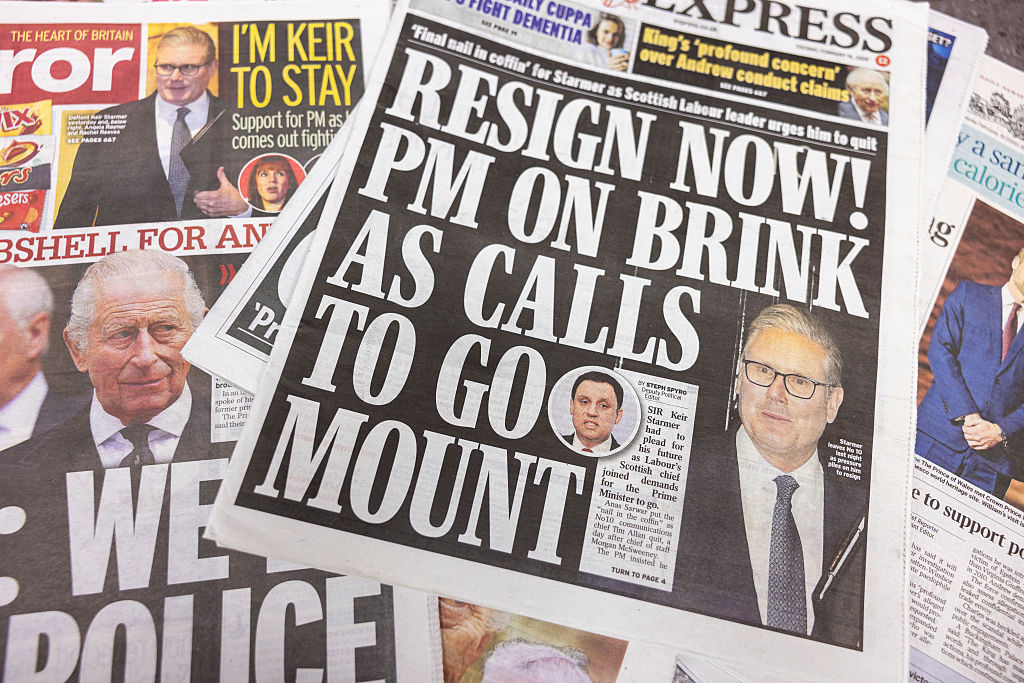
Prime Minister Keir Starmer is facing mounting political pressure as controversy intensifies over his links to Lord Peter Mandelson, in what is rapidly becoming one of the most serious crises of his premiership. The row centers not only on Mandelson’s personal associations and judgment, but also on Starmer’s decision-making and transparency in handling the situation. While there is, at present, no formal mechanism underway to remove Starmer from office, the political damage has fuelled speculation about whether his position could become untenable if the crisis deepens.
At the heart of the controversy is Lord Mandelson’s long-documented association with the late financier Jeffrey Epstein, a convicted sex offender whose network of powerful contacts has continued to generate global scrutiny. Mandelson has previously acknowledged knowing Epstein and maintaining some level of contact after Epstein’s conviction, a fact that has drawn sustained criticism. For many observers, the issue is not simply the existence of that relationship, but the judgment involved in continuing it despite the reputational and ethical risks. Critics argue that any senior public figure who maintained links with Epstein after his conviction raises serious questions about standards.
The Mandelson Controversy Explained
The issue began when Mandelson, a long-time Labour figure who had previously resigned twice from government, was selected as Britain’s new ambassador to the United States. His appointment was political, with him replacing a well-respected diplomat. Supporters said that he had a strong record in trade and diplomacy, which made him well-suited to maintain the "special relationship". Critics, however, questioned whether sufficient weight had been given to the potential risks attached to his past associations.
They were proven correct when the release of Jeffrey Epstein’s emails by the US House Oversight Committee revealed that Mandelson had retained his friendship with Epstein, even after his conviction. There were additional concerns that Mandelson may have shared confidential information with Epstein while he had been serving as a cabinet minister in 2010.

That was damaging enough, but it has subsequently been revealed that during the process of being appointed ambassador, Mandelson failed his direct vetting. In British politics, senior appointments, particularly those involving international representation, are expected to undergo rigorous scrutiny, including developed vetting, which is intended to ensure that they are trustworthy enough to handle secret information. Despite this, the Foreign Office overruled this decision within 48 hours, leading to Mandelson taking up the role as ambassador.
For Starmer, the controversy has quickly shifted from being about Mandelson alone to becoming a test of his own leadership. Opponents and some commentators have accused the prime minister of showing flawed judgment in backing Mandelson, while others have questioned whether he has been fully transparent about what he knew and when.
He has previously stated that Mandelson had passed vetting. The question became whether he had been misled about Mandelson failing direct vetting or if he had been economical with the truth. In Westminster, accusations of “misleading Parliament” carry particular weight, even when based on interpretation rather than clear evidence of intent. Starmer has defended his actions, maintaining that decisions were taken in good faith, but critics argue that the episode reflects broader failures around political risk and leadership.
The political fallout has been compounded by the cumulative nature of the allegations and reporting, which has kept the story in the headlines and allowed pressure to build incrementally. In modern British politics, sustained media attention can be as damaging as any single revelation, particularly when it feeds a narrative of poor judgment or inconsistency. Within Starmer’s own party, unease has begun to surface, although it remains limited largely to secret briefings rather than overt defiance. Labour MPs are acutely aware of the risks of internal division, but they are also sensitive to issues that could damage the party’s credibility with voters.

Could Starmer Be Forced Out?
Despite the intensity of the criticism, it is important to note that there is currently no confirmed evidence that Starmer has committed a breach of law or formal rules. The controversy is so far political rather than legal. This distinction matters because in the UK system, prime ministers are rarely removed solely based on controversy; rather, they fall when political support, especially within their own party, erodes to the point where governing becomes impractical.
Speculation about whether Starmer could be forced out remains, for now, hypothetical. Leadership challenges in British politics typically require a clear trigger, such as a collapse in party support, electoral setbacks or a decisive shift among MPs. While the Mandelson affair has weakened Starmer’s standing and provided ammunition to his critics, it has not yet reached that threshold. However, the episode has introduced a degree of instability and raised questions about how resilient his leadership would be in the face of further crises. These are coming, with polling showing that the local elections in May will likely go badly for the government.
Ultimately, the Mandelson controversy illustrates how issues of personal association and political judgment can quickly escalate into broader questions about leadership. For Starmer, the challenge is no longer simply to manage a difficult story, but to restore confidence in his decision-making and authority. Whether he succeeds will depend not only on the facts that emerge, but also on how convincingly he can reassure both his already crumbling party and the public that such a lapse, perceived or real, will not be repeated.