
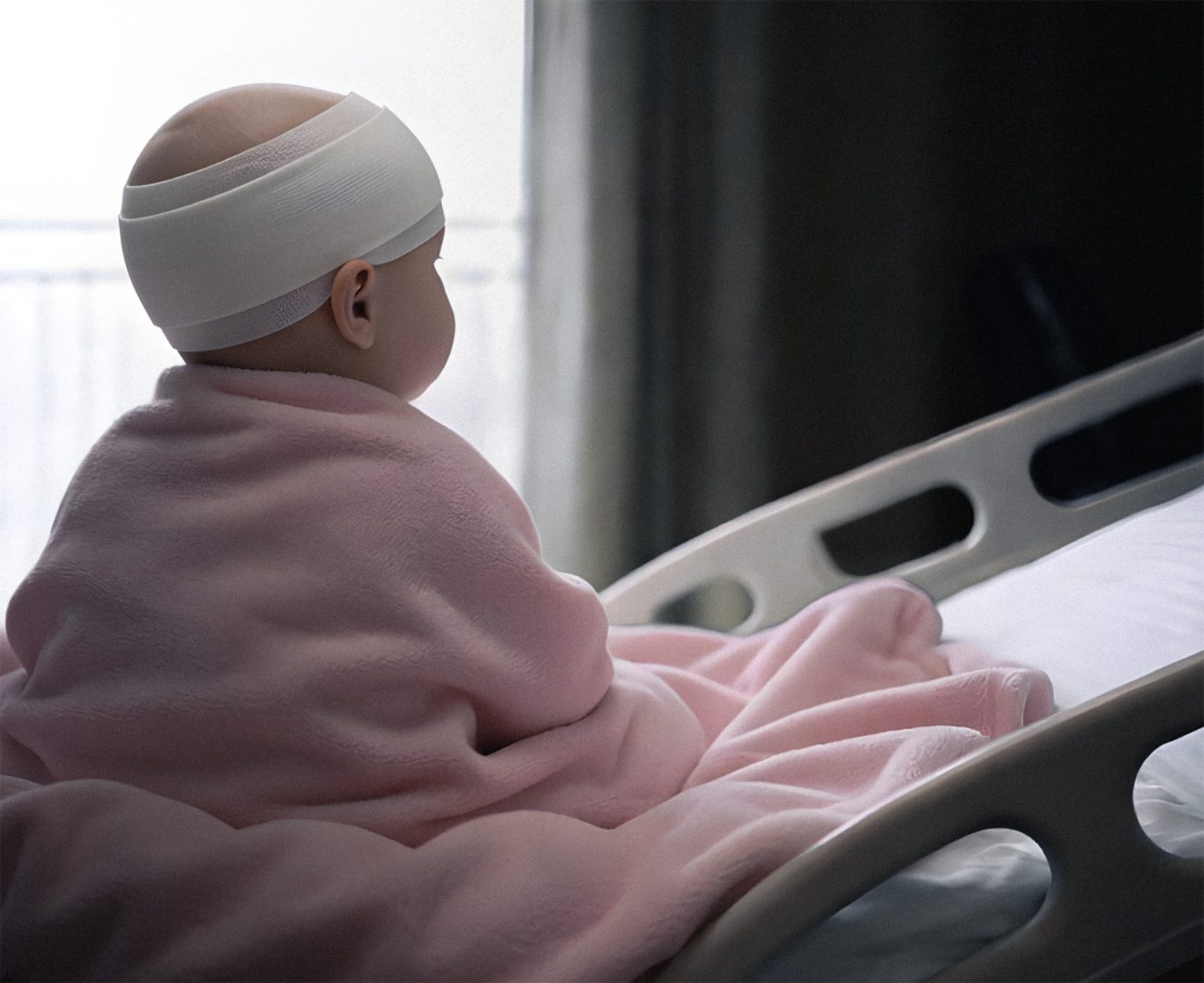
Doctors at the University Hospital Motol and the Hospital Na Homolce in Prague have carried out an unusual procedure on a child suffering from a severe form of epilepsy caused by a rare genetic condition.
University Hospital Motol announced the development on its website earlier this week.
The operation was performed when the girl was just 21 months old. She is now two and a half, and doctors say her condition has improved significantly.
Her seizures began at four months of age and gradually worsened. Despite treatment with various combinations of medication, they could not be controlled over the long term. In very young children, frequent and uncontrolled seizures pose a serious risk to brain development and overall psychomotor function.
From Radical Surgery to a Targeted Approach
In similarly severe cases, doctors have often resorted to radical interventions such as removing large sections of brain tissue or hemispherectomy – a procedure that functionally disconnects an entire cerebral hemisphere. Such operations typically result in severe and lasting motor impairment on one side of the body.
In this case, however, a multidisciplinary team led by Professor Pavel Krsek, head of the Motol Epilepsy Centre, and paediatric neurosurgeon Petr Liby opted for a more targeted approach. They performed a posterior disconnection, selectively interrupting neural pathways in the rear part of one hemisphere rather than carrying out a full hemispherotomy.
“The aim of this type of surgery is not to remove brain tissue, but to interrupt the pathological neural connections that trigger seizures. This allows us to preserve as much brain function as possible”, Krsek said.
The outcome exceeded expectations. Nearly a year after the operation, the girl remains free of seizures, shows no serious neurological complications, and her psychomotor development is progressing normally. Doctors are also gradually reducing her medication.

Hope for Other Patients
The case suggests that posterior disconnection may offer an effective and less invasive alternative to radical surgery in selected children with severe forms of epilepsy.
“One of the most remarkable changes after the operation was that our daughter began to laugh. Before that, it was very rare. It is wonderful to see that despite everything she has been through, she is developing well, and we believe she will one day enjoy the same quality of life as her peers”, her mother said.
Based on this experience, doctors say the procedure could become part of standard treatment for patients with similar conditions.
(fnmotol.cz/ber)