
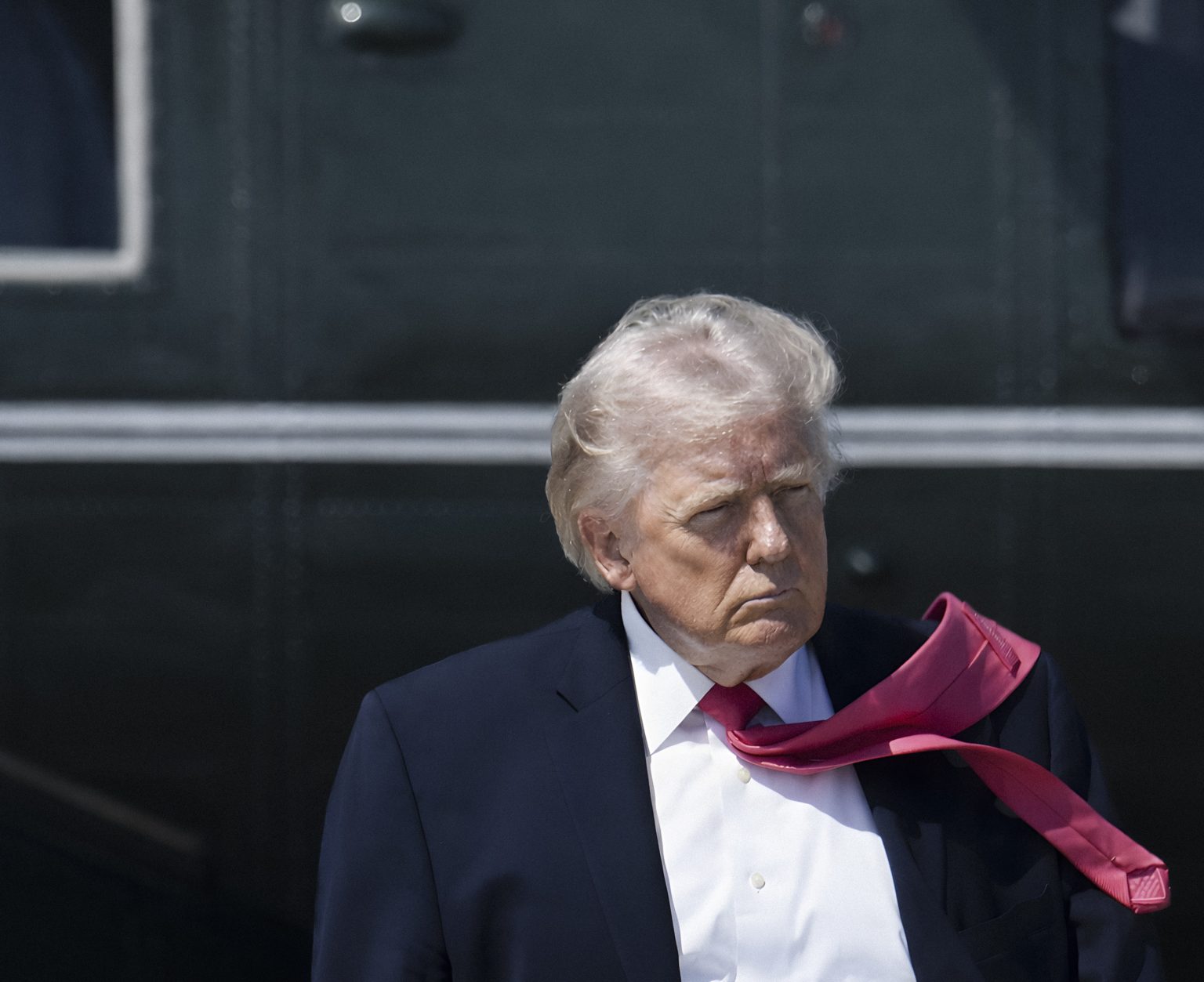
US President Donald Trump said on Thursday that Israel and Lebanon had agreed to begin a 10-day ceasefire at 11 p.m. Central Daylight Time, equivalent to 4 a.m. in London on Friday.
He described his talks with Lebanese President Joseph Aoun and Israeli Prime Minister Benjamin Netanyahu as productive.
Pakistan’s foreign ministry previously said that stability in Lebanon is essential to the talks it is brokering to end the war between the United States and Iran.
An Israeli cabinet source said Netanyahu’s security cabinet had convened for an urgent meeting on the proposed ceasefire.
An Israeli security official, speaking on condition of anonymity, indicated that the military had no plans to withdraw forces from southern Lebanon during the ceasefire.
Hezbollah, in its first response after Trump’s announcement, said any truce must not allow Israel to move freely in Lebanon. In a statement, the group argued that the presence of Israeli troops on Lebanese territory gives Lebanon and its people “the right to resist”.
Hezbollah will respect the ceasefire if Israeli attacks on its positions stop, Hezbollah MP Ibrahim al-Moussawi said.
“We in Hezbollah will cautiously respect this ceasefire on the condition that it is a complete suspension of hostilities against us and that Israel does not use it for any further killings,” he said. He also expressed gratitude to Iran for exerting pressure in favor of Lebanon.
Buffer Zone
Lebanon was drawn into the Middle East conflict on 2 March when Hezbollah opened fire in support of Tehran, prompting an Israeli offensive just 15 months after the previous major confrontation between the group and Israel.
Lebanese authorities said Israeli strikes since 2 March have killed more than 2,100 people and displaced more than 1.2 million. Hezbollah attacks have killed two Israeli civilians, while 13 Israeli soldiers have died in Lebanon over the same period.
Israeli forces have moved into parts of southern Lebanon to maintain control over territory extending to the Litani River, which flows into the Mediterranean about 30 km north of the Israeli border. During the conflict, Israel ordered residents to leave areas south of the river.
Israeli forces have since destroyed villages in the area, saying the aim is to create a “buffer zone” to protect northern Israeli towns from Hezbollah attacks.
In an interview with Reuters shortly before Trump’s announcement, senior Hezbollah official Hassan Fadlallah said the group had been informed by the Iranian ambassador to Lebanon that a ceasefire could take effect on Thursday evening. After the announcement, he said it would last 10 days.
Asked whether Hezbollah would commit to the ceasefire, he said it depended on Israel halting all forms of hostilities.
Beirut at Odds With Hezbollah
The Lebanese government has been at odds with Hezbollah over its decision to enter the war, after spending the past year seeking the group’s peaceful disarmament. Hezbollah was founded by Iran’s Revolutionary Guards in 1982.
Israeli and Lebanese ambassadors held rare talks in Washington on Tuesday despite objections from Hezbollah.
Trump said he had instructed Vice President JD Vance, Secretary of State Marco Rubio and Chairman of the Joint Chiefs of Staff Dan Caine to work with both countries towards a lasting settlement. “Both sides want to see peace, and I believe that will happen, quickly!” he wrote on Truth Social.
In a separate post, he said he would invite Netanyahu and Aoun to the White House for talks between the two countries, which have been formally at war since Israel’s creation in 1948.
Trump had earlier indicated that the two leaders would meet on Thursday for the first time in decades. Lebanese officials, however, denied any such contact and said the embassy in Washington had informed US authorities that it would not engage with Netanyahu in the near future.
Battle for Border Town
Hassan Fadlallah said displaced residents from southern Lebanon should wait until the ceasefire is in place and exercise caution in areas held by Israeli forces.
Fighting continued in southern Lebanon on Thursday, particularly in the border town of Bint Jubail, a Hezbollah stronghold. A senior Lebanese official said Beirut believed Israel wanted to secure control of the town before diplomatic progress could be made.
An Israeli strike destroyed the last bridge over the Litani River in the south, a senior Lebanese security source said, cutting the area off from the rest of the country after earlier crossings had already been destroyed during the conflict.