
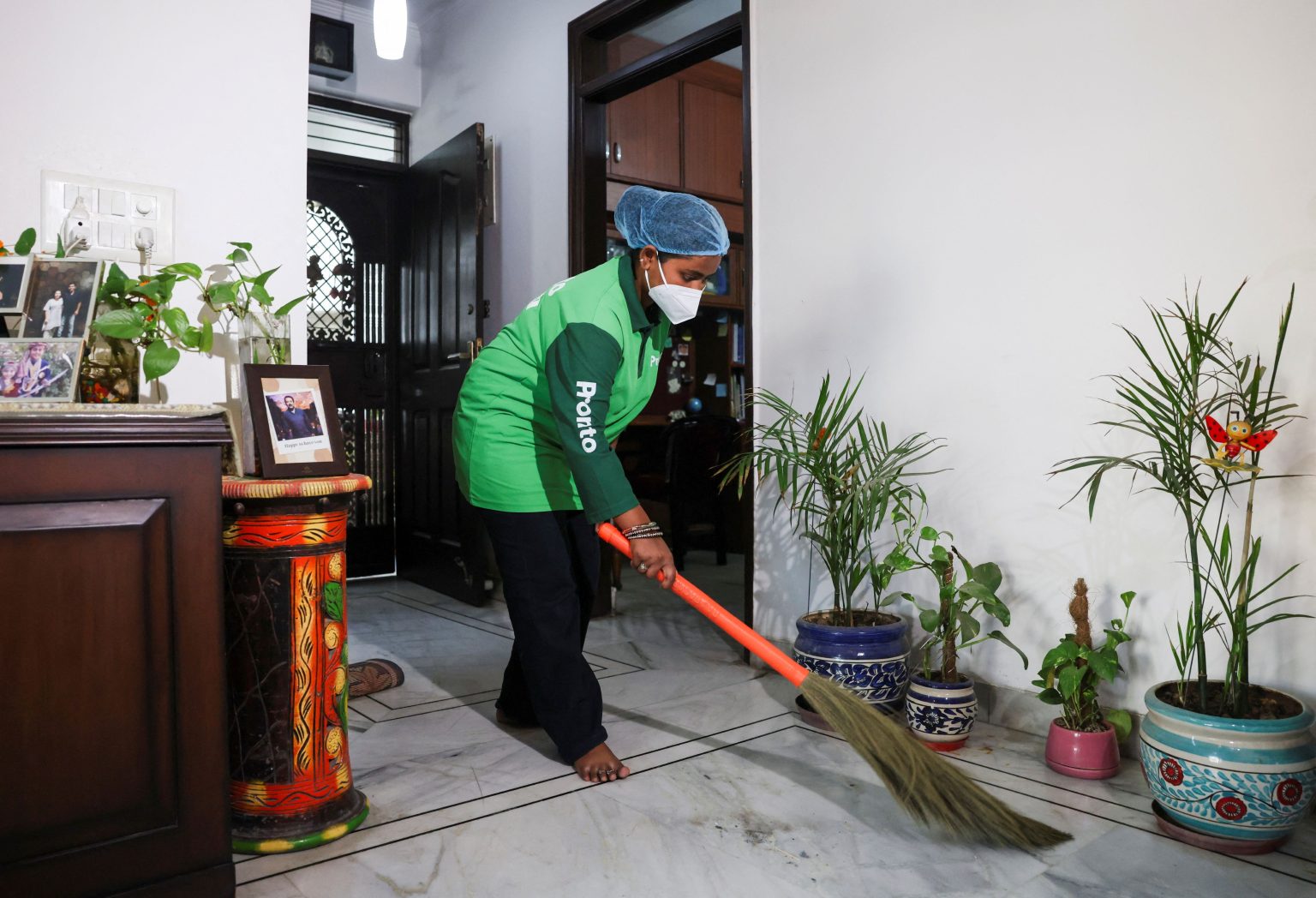
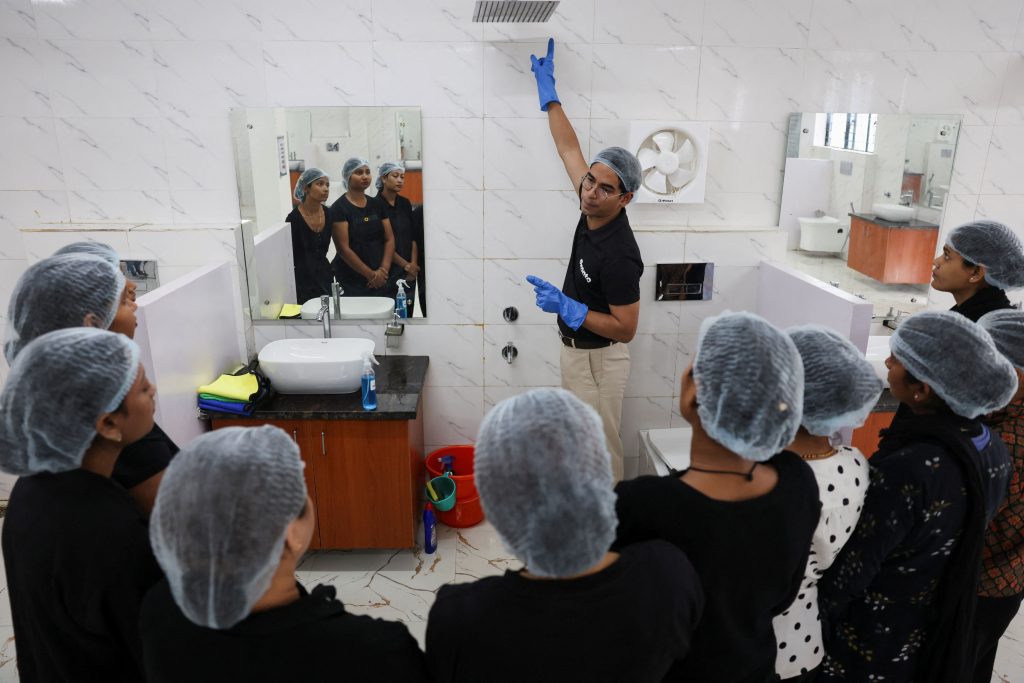
At the training center of Indian startup Pronto, women practise chopping and cleaning while also learning how to send an SOS signal if they feel unsafe in customers’ homes. They are preparing to tap into one of India’s latest consumer trends: domestic help for a dollar an hour.
Thirty-five-year-old Indu Jaiswar hopes that domestic work, her first job, will help fund her son’s dream of becoming a doctor. “We have been doing this at home for years. So why not get paid for it,” the mother of two said.
In a country where housework is often delegated to outside help, startups Pronto and Snabbit, along with publicly traded competitor Urban Company, are training thousands of workers to assist households. Urban Company estimates that India’s fast-growing cleaning services market is worth about $9bn and involves 53 million households.
Similar to Uber or Bolt drivers, workers receive orders through apps that direct them to nearby apartments within minutes. Before starting work, they activate a countdown on the app. According to Reuters, potential annual earnings for an eight-hour working day can reach up to $5,000, well above India’s average per capita income of around $3,000 a year.
Companies are setting ambitious targets and spending millions of dollars to attract busy professionals in cities such as New Delhi and Mumbai with offers below 99 rupees ($1), prices that are unmatched globally. Comparable services cost about $30 an hour in the United States and about $7 in China.
Concerns for Women’s Safety
However, enthusiasm among customers and workers is tempered by concerns over women’s safety in a country with high rates of sexual harassment. Unlike e-commerce couriers, who remain at the door briefly, domestic workers can spend hours inside private homes, exposing them to greater risk.
Soumja Chauhan, an investment manager at Dutch e-commerce investor Prosus, which holds a stake in Urban Company, said worker safety remains a key operational challenge. “Platforms that can effectively establish security protocols will earn the greatest customer loyalty and the most sustainable revenue,” she said.
Snabbit and Pronto acknowledge the risks in a sector that predominantly employs women. Both have introduced SOS buttons in their apps to alert regional supervisors in emergencies, while Pronto also offers self-defense training.
“In the informal sector, the rate of abuse of many domestic workers is extremely high,” said Anjali Sardana, Pronto’s managing director. She added that the company seeks to reassure workers by guaranteeing both legal and medical assistance.
Urban Company, which also offers services such as plumbing, declined to comment. In the past, they have said it provides a safety line for women and an SOS feature on its app.
Women’s rights activist Shabnam Hashmi said companies should not only screen workers but also customers. Currently, users can log into the app and request domestic help.
“How can these jobs be safe for women, even with an SOS button? Unless there are cameras, which is of course impossible, there is no way of knowing what happens behind closed doors,” she argued.
Jaiswar has developed her own precaution: she calls customers in advance and only accepts work “if there is a woman at home”.
Rapid Expansion Driven by Market Demand
Companies are reporting record booking volumes. Urban Company recorded a peak of 50,000 daily domestic orders in February, while Snabbit reached 35,000 orders a day.
Pronto, backed by Bain Capital, reported 22,000 daily orders in March, up from 2,500 in October. It has raised $25m in new funding.
Chief executive Sardana said she founded the company last year after identifying three key opportunities: strong demand for reliable cleaners, the need for more stable and secure jobs, and a gap in the market for flexible services.
“It is possible to build a business that benefits everyone,” she told Reuters.
The trend is supported by the lack of a do-it-yourself culture in India and the popularity of low-cost services.
In Bangalore, 30-year-old Dhruv said he paid 100 rupees ($1) an hour for Urban Company services, using help to unpack kitchen items and hang curtains after moving. This allowed him to “save a lot of time and effort”, although price remained crucial. “I would not pay 400 or 500 rupees for that,” he said.
Snabbit founder Ayush Agarwal said the service is particularly popular among young couples and single people, who prefer scheduling cleaning via an app rather than relying on monthly helpers who may skip work.
In Facebook advertisements, Pronto offers visits for as little as Rs 25 with slogans such as “Housekeeper free? Do not sulk”, while a package of three visits from Urban Company costs Rs 66 per hour.
Snabbit advertisements claim one customer hired a worker “just to peel 20 potatoes”, while another requested help to “sort Lego bricks by color”.
Subsidies Drive Growth
Like many growth-stage startups, these companies subsidize wages to make jobs attractive while offering heavy discounts to customers.
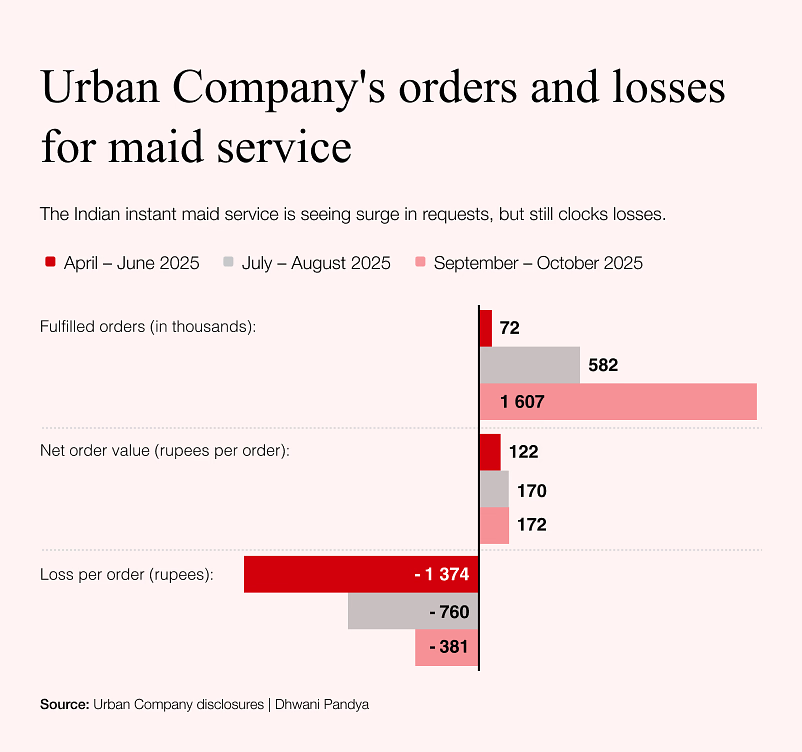
Urban Company’s data shows it received 1.61 million home service orders between October and December, losing 381 rupees ($4) on each. The company said discounts are gradually decreasing, although order values must nearly double to reach profitability.
“Over time, the model can be expected to transition to a sustainable earnings system,” said Rahul Taneja of Lightspeed, which backed Snabbit.
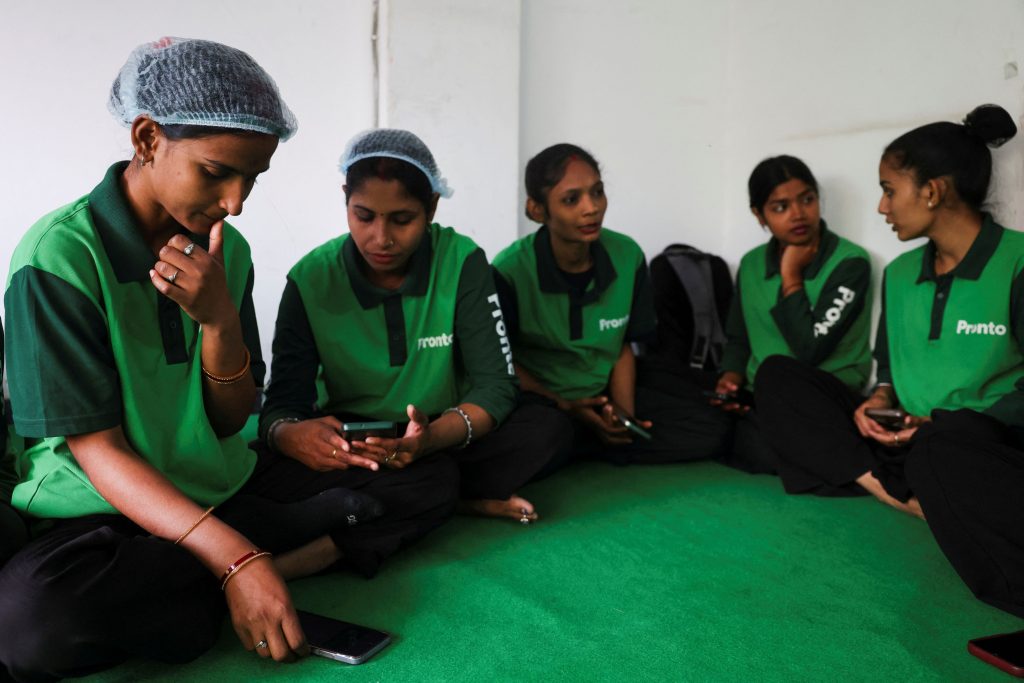
At Pronto’s training center, where workers receive uniforms and are taught to maintain a professional appearance, posters highlight potential earnings. Helpers can earn $1.60 an hour over 12-hour working days, around 48% more than new customers pay.
A monthly income of more than $500 is a major incentive for 22-year-old Nisha Chandaliya, who supports her ill mother and left a call center job where she worked long hours for just $180 a month.
“It is exhausting to clean six or seven homes a day, but I need stability. I cannot afford to go back,” she said.
(reuters, luc)