
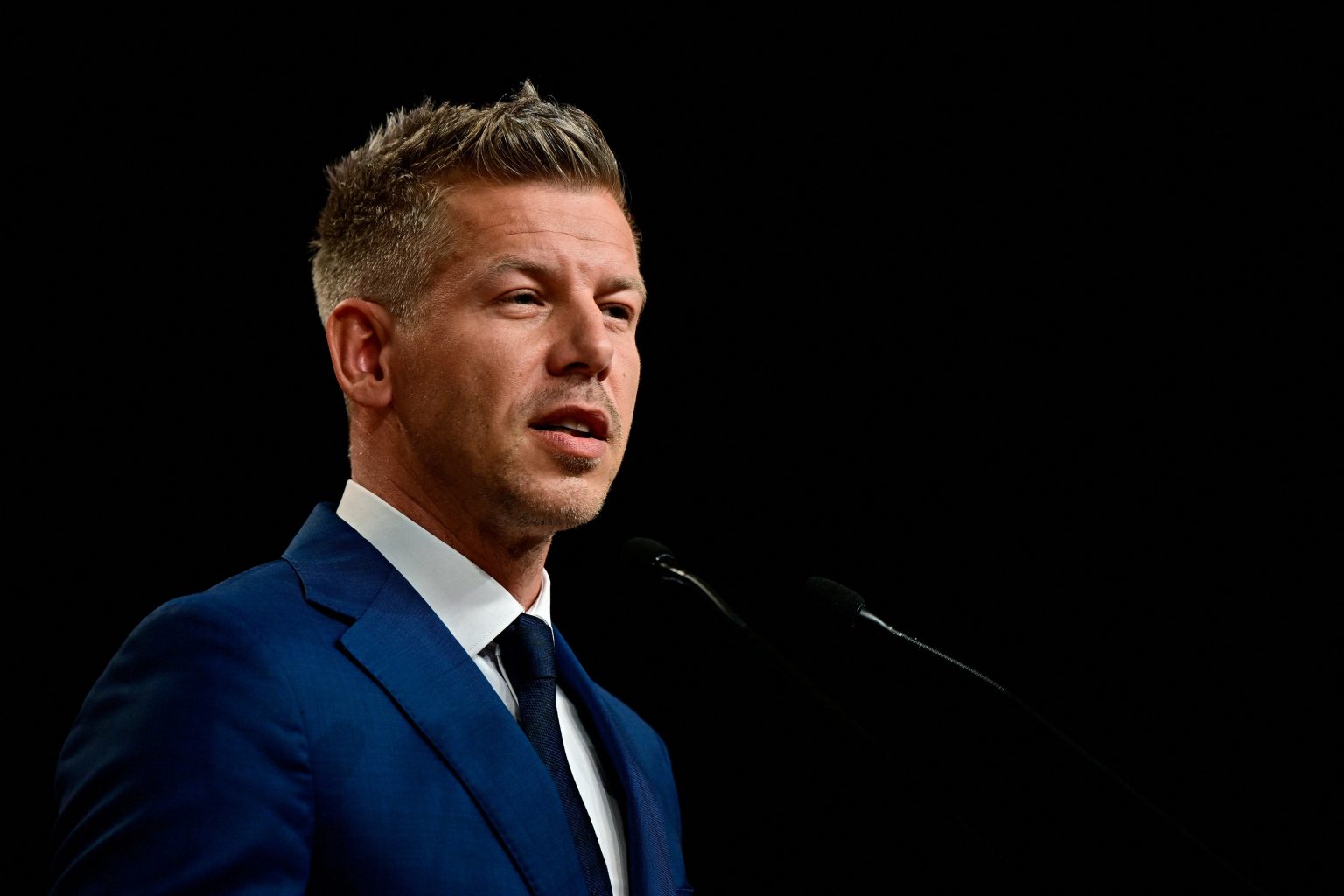
Hungarian election winner Peter Magyar said on Wednesday that his government would suspend state media broadcasts after taking office, introduce a new media law and ensure press freedom.
A similar step was taken by the government after the elections in Poland, although its approach was more aggressive. So far, there is no indication that the Tisza leader is following that example.
“Every Hungarian deserves a public media that broadcasts the truth,” Magyar told Kossuth Radio, a public station where outgoing Prime Minister Viktor Orban has appeared weekly for the past 16 years while opposition politicians have rarely been invited.
“We will need some time to pass a new media law, establish a new media authority and create professional conditions for state media to properly fulfil their role,” said Magyar, who succeeds Orban after 16 years.
His Tisza party secured a landslide victory in Sunday’s elections, effectively taking over the constitutional majority previously held by the Fidesz-KDNP coalition in parliament.
Critics say public media served as the government’s mouthpiece during Viktor Orban’s rule. They also accuse the outgoing prime minister of undermining independent outlets after Fidesz allies gained control of private media – allegations he has repeatedly denied.
The Media as a Battleground
There are growing concerns among Orban’s supporters that Magyar will treat media linked to the Media Services Support Fund (MTVA) in a similar way to Donald Tusk, the Polish prime minister who was among the first to congratulate him.
In December 2023, following his victory in the Sejm elections, Tusk replaced the leadership of public media supervisory boards, a move that was immediately criticized by the defeated Law and Justice (PiS) party. Its legal expert Ryszard Legutko described the development as “the first day of the end of democracy and free access to information in Poland, guaranteed by Article 54(1) of the Polish Constitution” and argued that the government had failed to meet constitutional requirements in appointing new officials.
“Members of bodies responsible for managing and overseeing public media institutions were replaced in a way that was incompatible with the Polish Constitution and laws. There has also been an attempt, unprecedented in democratic states, to take over the headquarters of the public media, switch off the signal of an important public television information channel and block its website,” he said.
Legutko, in a press release from the European Conservatives and Reformists (ECR) group in the European Parliament, wrote that “the takeover was clearly characterised by thoughts of revenge and censorship” and argued that Tusk’s coalition had bypassed the legislative process by merely passing a parliamentary resolution.
TVP and the PAP news agency had also faced criticism for alleged bias before Mateusz Morawiecki’s government was replaced. Orban’s allies therefore see a precedent for concern – although Magyar has not announced mass redundancies and intends to implement staff changes gradually and in line with the law.
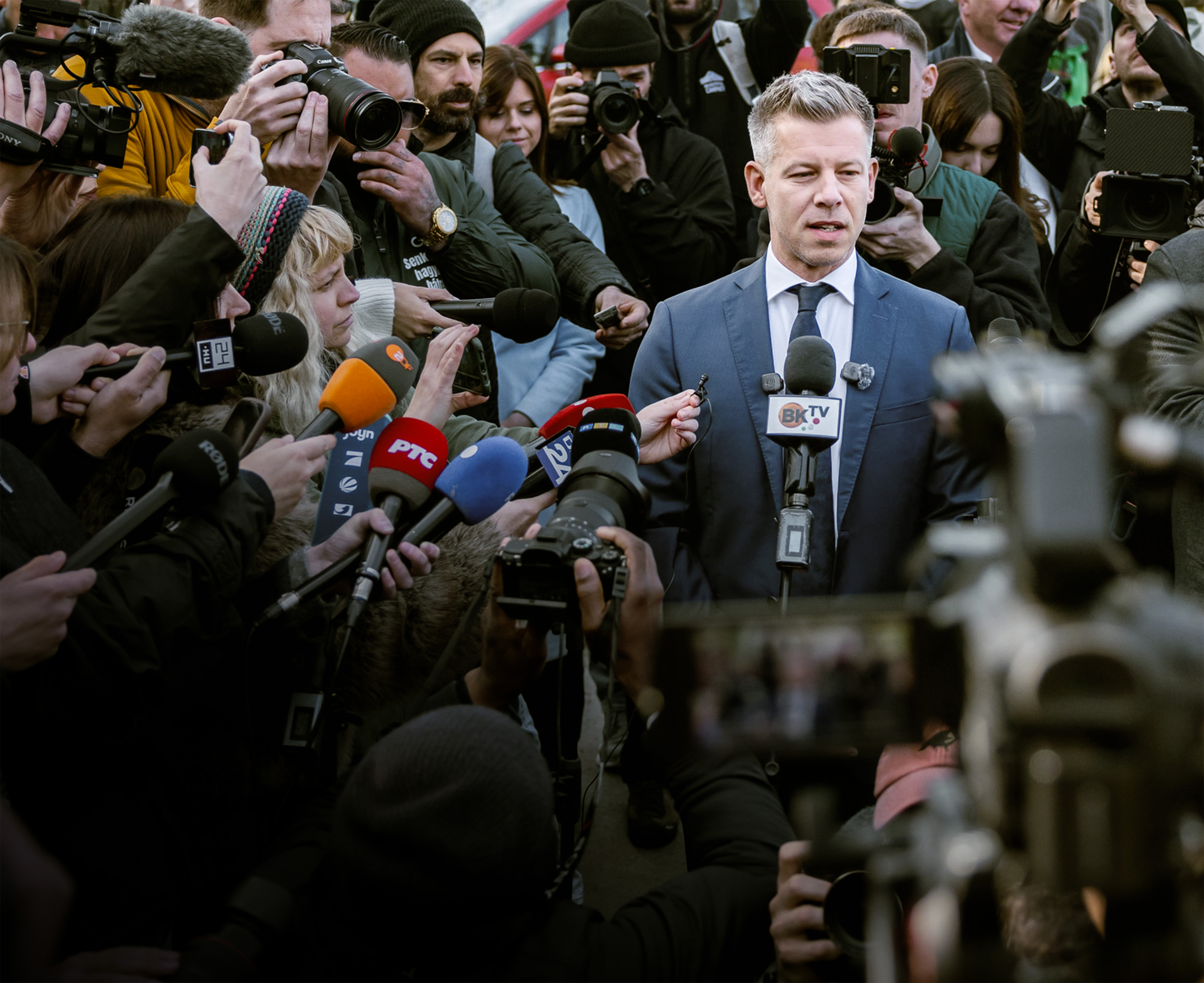
Fuel Concerns Persist
The future prime minister has also announced talks with the state-owned oil company MOL, which includes Slovnaft, to ensure fuel security for all Hungarians. “With regard to strategic oil stocks, the incumbent government bears a huge responsibility for what it will do in the next 20 to 30 days,” he said, adding that emergency reserves had fallen below the required level.
“Everyone hopes that the Druzhba pipeline will resume operations by the end of April, but even if that happens, replenishing strategic stocks will take time,” he warned.
The Fidesz government introduced a price cap on petrol and diesel at the end of March as it faced multiple energy crises that halted supplies through the Druzhba pipeline and drove up fossil fuel prices following the closure of the Strait of Hormuz.
Budapest also banned the export of oil and petrol and released reserves equivalent to 45 days of Hungary’s total consumption. However, this reduced stockpiles below European Union requirements, which mandate that each member state maintain reserves covering at least 90 days of imports.
MOL, Hungary’s state-controlled oil and gas company, said on Tuesday that oil supplies had not been disrupted, as crude continued to arrive via the Adriatic Adria pipeline, although deliveries through Druzhba remained suspended.
“Following agreements with Libya, Kazakhstan, Norway and Saudi Arabia, we have also secured supply deals with companies in the United States. The Danube refinery is operating at reduced capacity due to a fire that broke out in one of our units in October,” the company said, adding that supplies “remain uninterrupted”.