
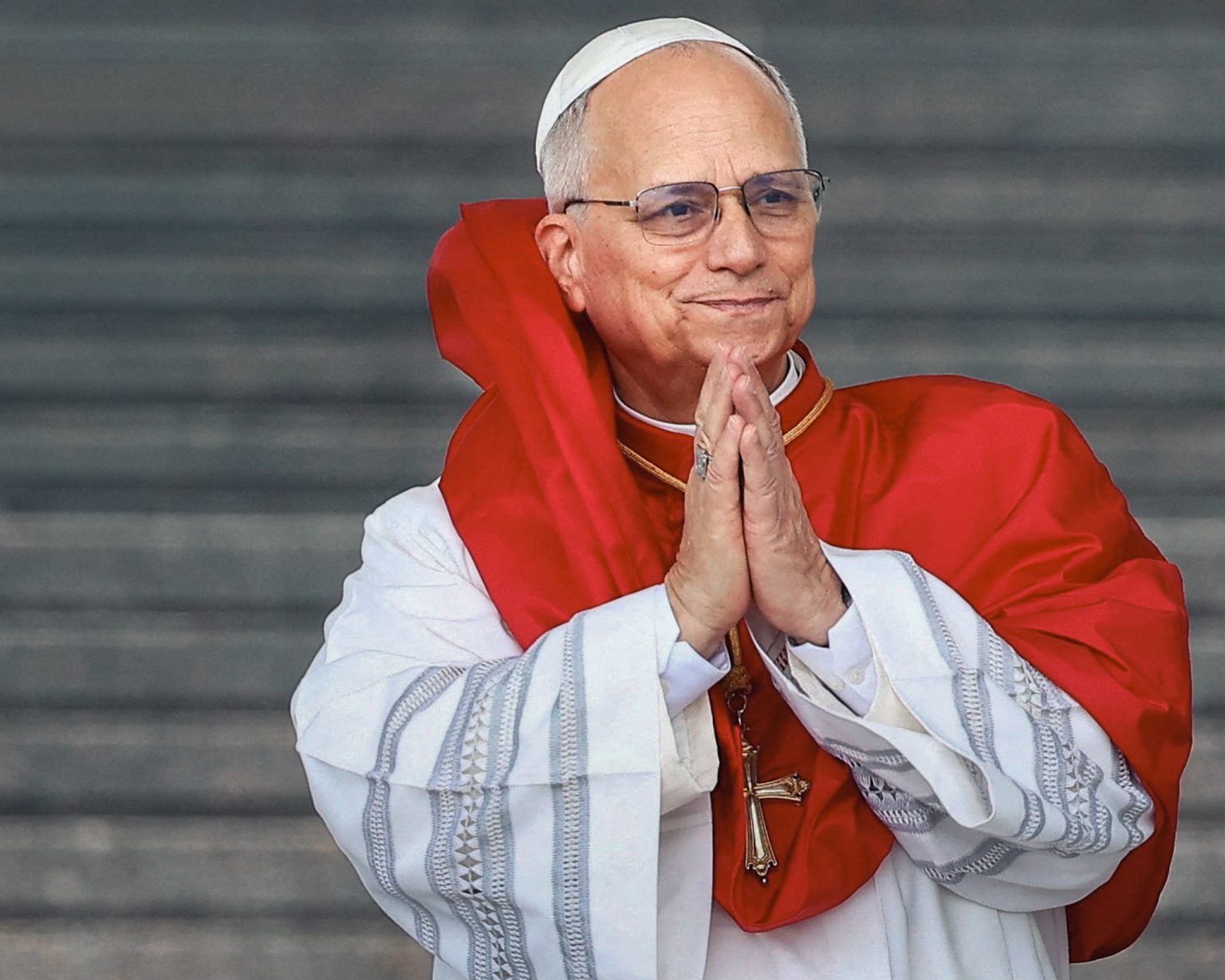
At the start of the pope’s first African journey, international observers focused not only on the pontiff’s diplomatic gestures but also on the situation of a small and often overlooked Christian minority in Algeria.
The sensitivity of the trip was already evident on his arrival in Algiers. Algeria officially defines itself as an Islamic state, with around 98% of the population adhering to Islam. Christian communities do exist, but they operate within narrow legal and social limits. A recent report by the European Centre for Law and Justice describes the situation as a deliberately maintained gray zone, in which religious freedom is formally guaranteed but heavily restricted in practice.
More than 150,000 Christians live in the country, most of whom converted in the 1990s. The overwhelming majority are evangelical Protestants. There is also a small Catholic community, composed mainly of foreigners. The Catholic Church counts just 8,000 believers.
Engagement in the common good has not shielded Christians from constant pressure. They face the consequences of a state policy aimed at enforcing a uniform national identity that is both Arab and Muslim. Religious diversity has little place in Algeria.
The papal visit therefore took on a dual significance. It highlighted interreligious dialogue while placing the difficult situation of Christians in the country in the international spotlight. The pope’s presence aimed to make the country’s Christians more visible and to strengthen their position.
Cheers for Pope Leo XIV
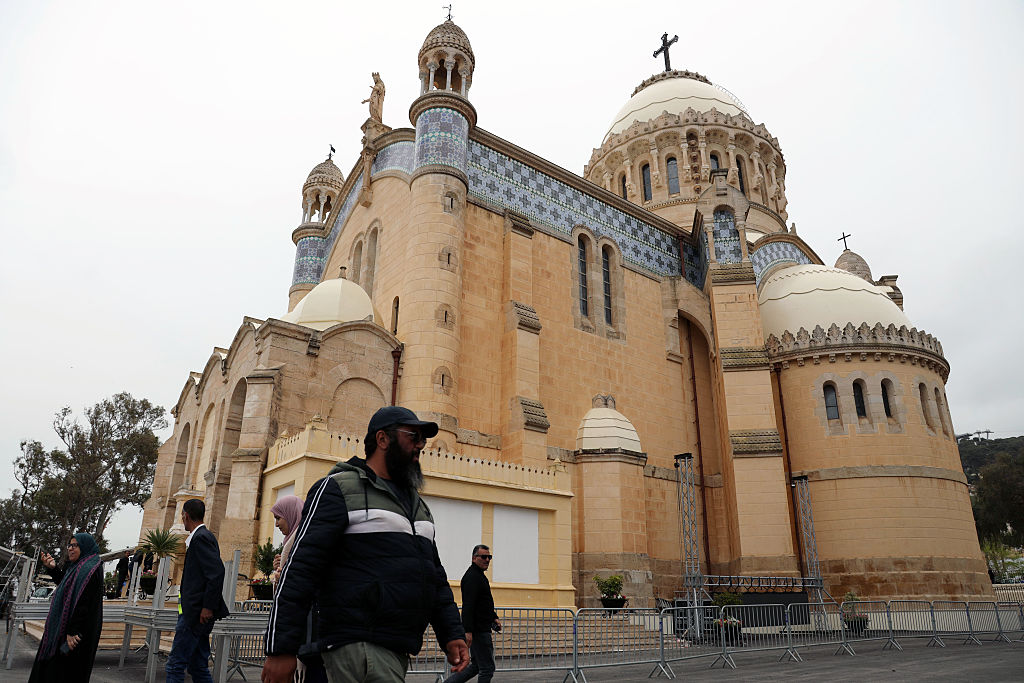
Pope Leo met the Christian community of Algeria yesterday at the Basilica of Our Lady of Africa (Basilique Notre-Dame d’Afrique). He was welcomed with joyful applause and music. Not even wind and heavy rain prevented groups from following the event from outside the overcrowded basilica. During the celebration, the pope listened to testimonies from people of different religions, including a Muslim woman and a Pentecostal student who shared their daily experiences.
In his remarks, the Holy Father stressed that in a world “in which division and wars sow pain and death among nations, in communities and even within families”, the experience of unity and peace is a convincing sign. The visit to the Basilique Notre-Dame d’Afrique thus became a symbolic highlight. The church, overlooking the Mediterranean, traditionally represents understanding between religions. There the pope met representatives of the small Catholic community, composed mainly of foreign believers and a few Algerian Christians.
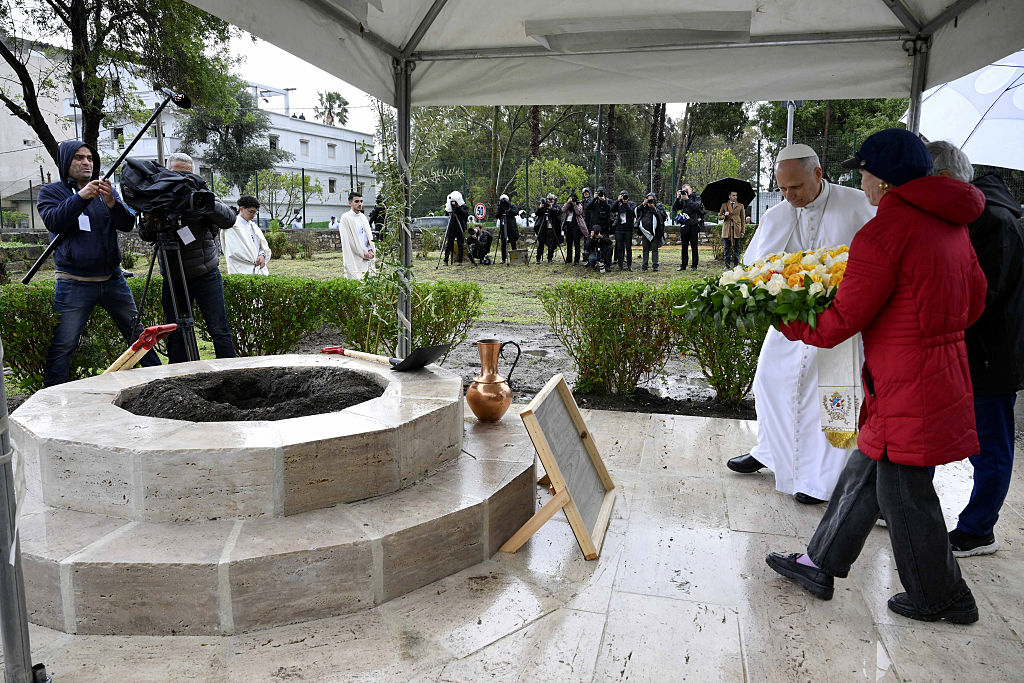
The historical dimension of the journey became even clearer in Annaba, ancient Hippo. The Church Father Augustine, one of the formative figures of early Christianity, worked there. For Leo XIV, who belongs to the Augustinian order, the site holds particular personal significance. At the same time, the visit recalled that North Africa was once a center of Christianity long before it was partly conquered by Islam in often violent campaigns.
Behind these historical references lies a present marked by uncertainty for many Christians. The situation is especially difficult for evangelical congregations. For years, churches have been closed for administrative reasons. By early 2025, the process was largely complete, leaving almost all Protestant places of worship shut.
Christians Underground
Believers have since turned to private homes, remote locations or digital meetings. In practical terms, they operate underground. These improvised forms of worship are legally uncertain and can carry criminal consequences. The reasons lie in a restrictive legal framework. Article 2 of the constitution states that Islam is the state religion. This leaves little room for religious pluralism. Religious minorities in Algeria lack specific institutional recognition. Christians therefore operate in an uncertain legal space. There is neither a specific civil status nor an official mechanism to register religious affiliation.
Religious gatherings outside Islam are subject to a strict authorization system. At the same time, laws complicate any attempt to register churches or religious associations. In practice, many Christian activities are treated as illegal, even when peaceful and private. Vague criminal provisions further increase the risk, as they can be interpreted broadly. Even sharing religious content or discussing faith can be considered an attempt at unauthorized proselytization. Efforts to convert Muslims are punishable by fines or imprisonment. Accusations of blasphemy are also repeatedly raised.
Converts Under Pressure
Social pressure also plays a role alongside state measures. Converts report rejection within families, difficulties at work and social exclusion. In some cases, they face surveillance or questioning by security authorities.
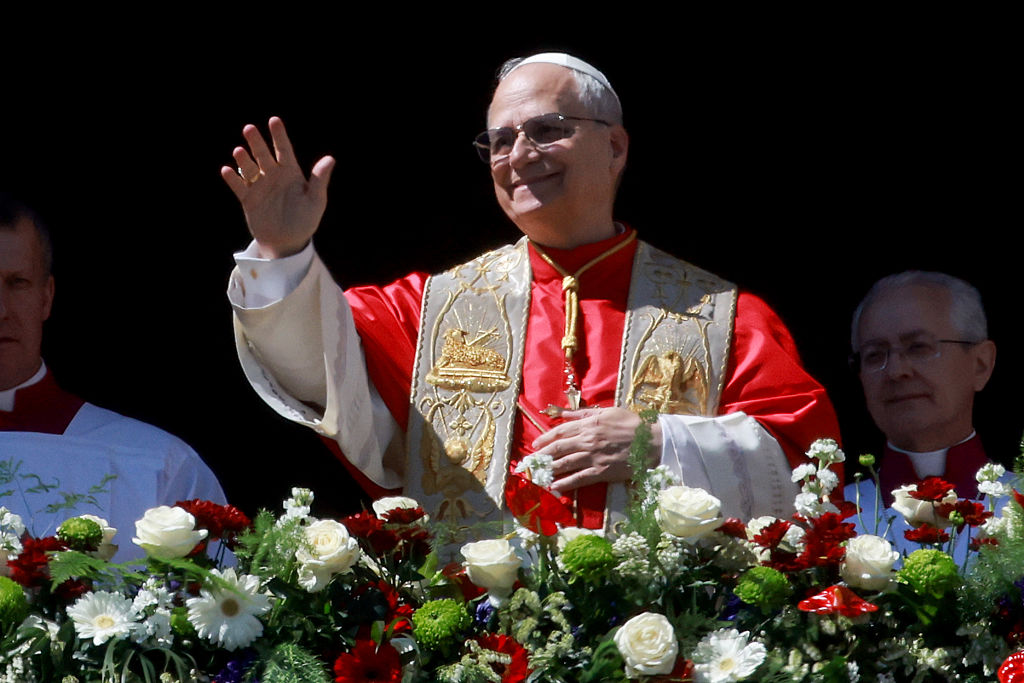
The Catholic Church moves cautiously in this environment. Its historical structures are recognized and its churches remain open. Yet it also acts with restraint and avoids public criticism. Observers describe a fragile balance based on discretion and good relations with authorities. Against this backdrop, the papal visit carried particular symbolic weight. For many believers, it meant recognition and encouragement.
At the same time, the trip sent a signal to the international community to pay closer attention to religious freedom in Algeria. Whether the visit will bring concrete changes remains unclear. Yet it has made visible an issue long overshadowed. Between the historical sites of Hippo and the walls of the basilica in Algiers, it became clear that the history of Christianity in North Africa is not only a matter of the past but also of a challenging present. In the coming days, the pope continues his journey to Cameroon, Angola and Equatorial Guinea.
Further information on the situation of Christians in Algeria is provided by the European Centre for Law and Justice in its report The oppression of Christians in Algeria.