
The task of future historians will be to determine why Donald Trump decided to attack Iran. He has taken a step that all his predecessors in the Oval Office avoided, even though the underlying reasons remained largely unchanged.
Was the main trigger pressure from the Israeli prime minister, a struggle over oil or a desire to defend the US dollar? Was it a gamble based on the illusion of repeating the favourable scenario in Venezuela, transposed to the Middle East? Or was the president counting on a forceful show of strength to place the United States in a stronger negotiating position ahead of key talks with China?
Whatever the immediate motive, the current reality is stark: a six-week conflict, severely curtailed traffic in the Strait of Hormuz, expensive oil and devastated infrastructure across the region.
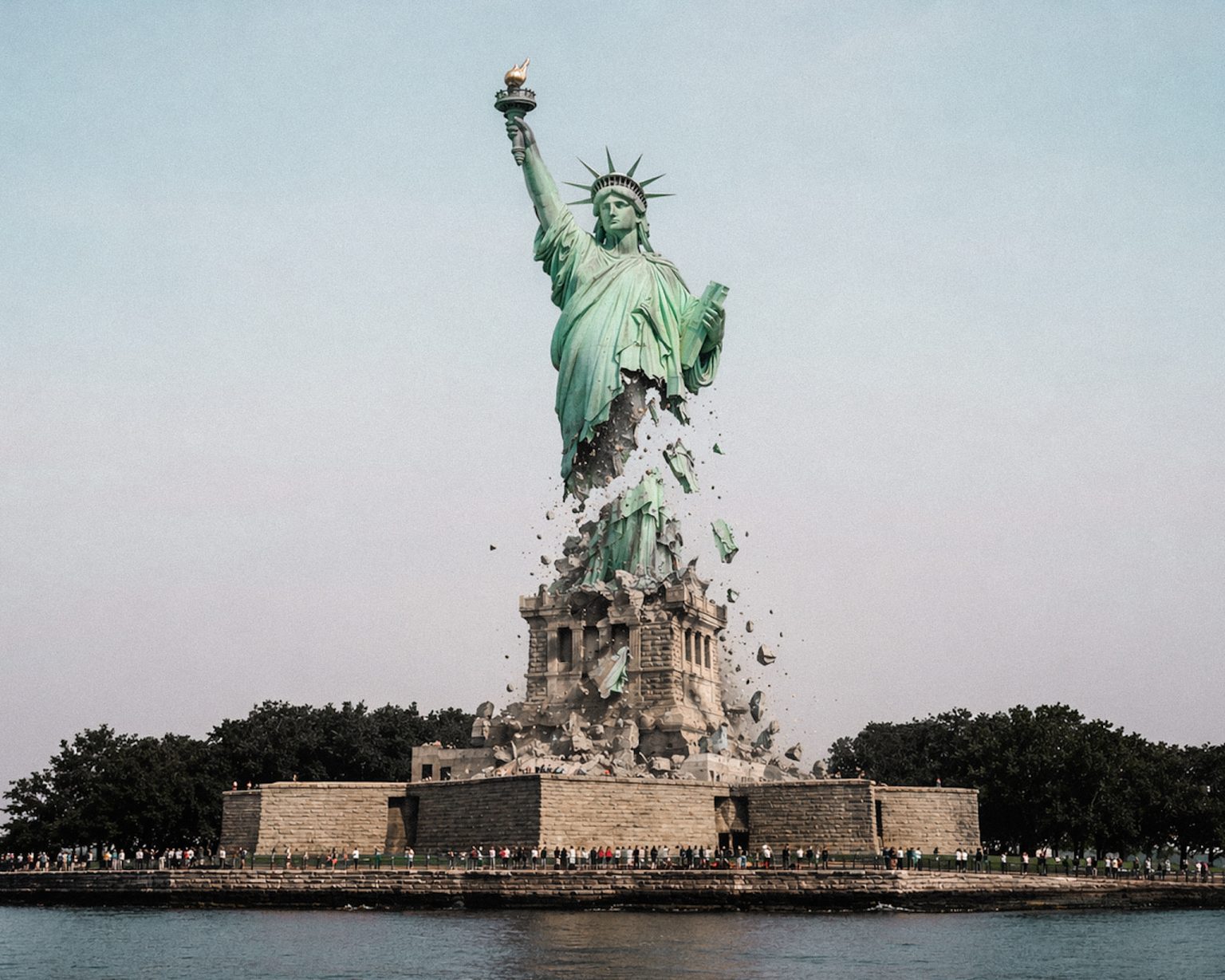
However, if the conflict is viewed beyond moral judgement or short-term tactics, a deeper conclusion emerges. We are watching, in real time, the manifestation of American imperial decline.
The End of Absolute Military Domination
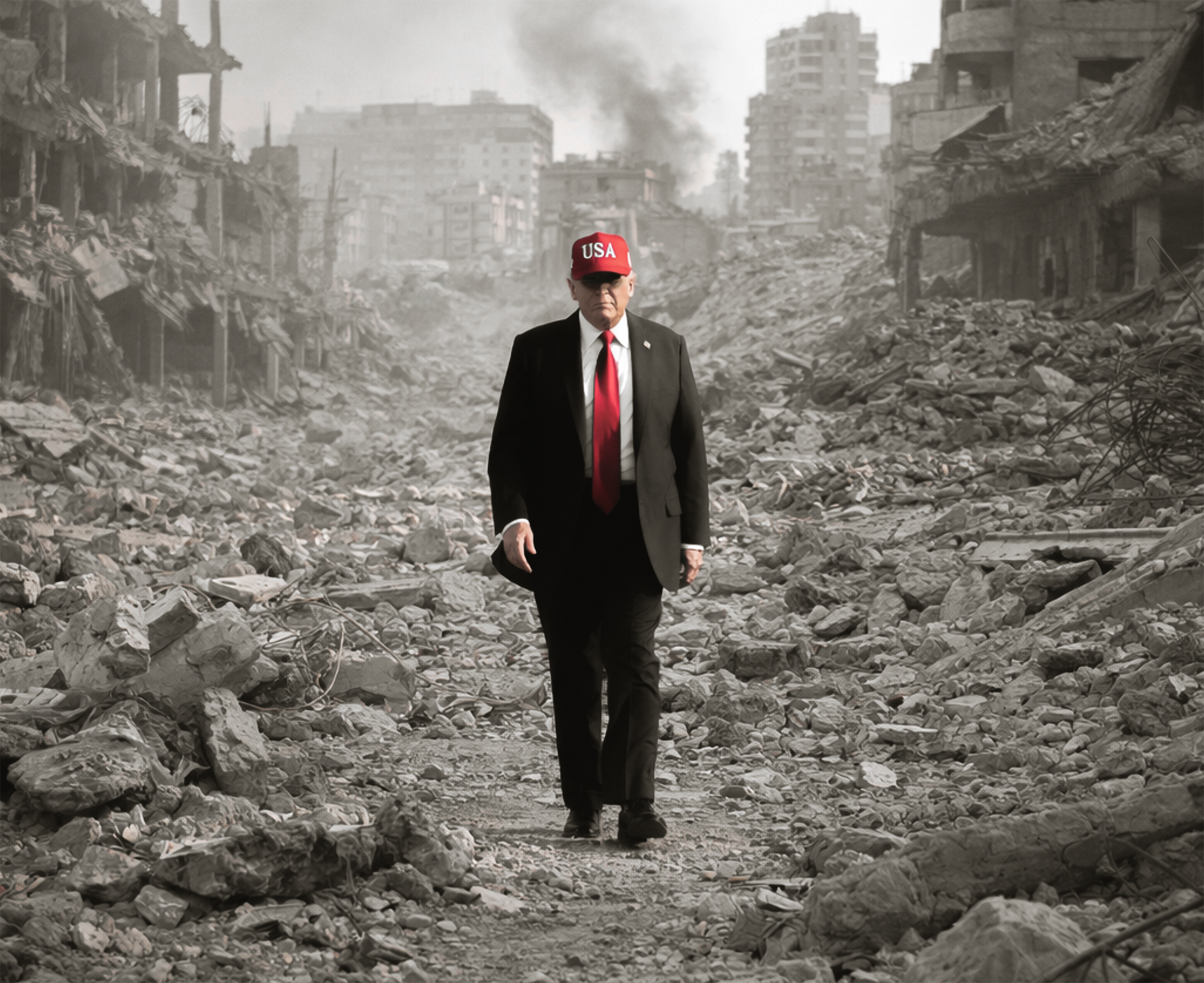
Let us change perspective, set aside moral judgements and examine the conflict as a sign of waning American hegemony. The paradox is that the United States chose to attack Iran at the very moment when its imperial power is diminishing.
The re-election of Donald Trump can itself be seen as a manifestation of retreat from the global stage. Many Americans are tired of the role of world policeman. They are concerned about decaying domestic infrastructure, inflation and declining purchasing power, and ask why Washington has spent decades addressing global problems at the expense of domestic priorities. Involvement in the Iranian conflict is exposing this structural decline in full view.
The 2003 invasion of Iraq, conducted under the slogan “shock and awe”, became a demonstration of overwhelming technological and conventional military superiority. In the case of Iran, the situation is different. Although Tehran suffered heavy initial losses, it absorbed the blow. After six weeks, it retained the ability to retaliate asymmetrically, including by critically disrupting traffic in the Strait of Hormuz. The perception of overwhelming US military dominance has weakened.
Iran’s resistance has also exposed another long-standing vulnerability: stagnation in military doctrine. Washington deployed carrier strike groups to the Persian Gulf, multibillion-dollar assets that represented the ultimate instrument of American power projection in the 20th century.
Today, however, they appear increasingly vulnerable. Iranian strategists have drawn lessons from the war in Ukraine, which has demonstrated the growing effectiveness of relatively cheap drones and precision anti-ship missiles against expensive conventional systems. In modern warfare, massed, low-cost technologies can impose significant costs on superior powers.
Loss of adaptability is often cited as an early sign of imperial decline. Historical parallels are frequently drawn with ancient Rome, whose legions struggled to counter asymmetric tactics along its borders.
Economic Cracks and the Erosion of the Petrodollar
How should the conflict be evaluated in the context of historical imperial decline? Continued military action will not reverse structural weaknesses. Even a decisive battlefield success, as Trump claims, would at best delay underlying trends.
Rather than a strategic victory, the conflict is accelerating developments already under way. Doubts about American hegemony, previously confined to analysis, are now reflected in economic realities.
The conflict is deepening the US budget deficit. One motive behind Trump’s aggressive tariff policy in 2025 was to reduce the trade deficit and boost federal revenues. The strategy delivered mixed results, with partial retreats from tariffs and negative macroeconomic consequences.
High oil and gas prices may provide a short-term boost to US energy exports, but the benefits are limited. Elevated energy costs weigh heavily on Europe, pushing parts of the continent into economic difficulty. Economic pressure on key allies weakens the foundations of global leadership.
At the same time, US debt and the financing of military operations remain a growing concern. The administration avoids the term “war”, which would require congressional approval, but even limited military operations involve substantial costs.
Higher energy prices also risk fuelling inflation. Even moderate inflation would complicate attempts to cut interest rates. Government bond yields would remain under pressure.
Another factor is the behavior of emerging market central banks. Some have sold US bonds to stabilize their currencies amid geopolitical uncertainty and rising energy import costs. Oil-producing Middle Eastern states may also need to draw down reserves for reconstruction, adding further uncertainty.
The underlying question is whether the US dollar will retain its status as the world’s reserve currency. The dominance of the petrodollar faces growing challenges. Iran has signalled a willingness to demand payment in alternative currencies for commodities and potentially for transit through the Strait of Hormuz.
Other states are also exploring alternatives. The conflict is accelerating efforts to diversify supply chains and develop payment systems outside dollar-dominated markets.
The End of the Era of Global Oversupply
The final and perhaps most significant aspect of the conflict is the exposure of structural scarcity in energy and raw materials. The era of global surplus is ending. With it, the foundations of Pax Americana – based on guaranteed supply and global resource flows – are weakening.
Geopolitics is no longer centred exclusively on oil. Critical minerals are becoming increasingly important, while processing capacity remains a bottleneck. Despite ambitions to build low-carbon economies, the crisis has highlighted continued dependence on fossil fuels. Natural gas remains a key vulnerability.
Renewable energy requires backup capacity to ensure stability. Gas-fired power stations have played that role. However, high gas prices and supply constraints undermine this model.
Some developing countries, despite investing in renewables, have increased coal use, offsetting environmental gains. Nuclear power offers a low-carbon alternative, but construction timelines in the West remain long and costs high.
For Europe, the Iranian conflict and declining US influence act as a wake-up call. The central political issue in the coming years may shift from decarbonization debates to economic survival: how to secure stable and affordable energy in a world in which the United States no longer guarantees global stability.