
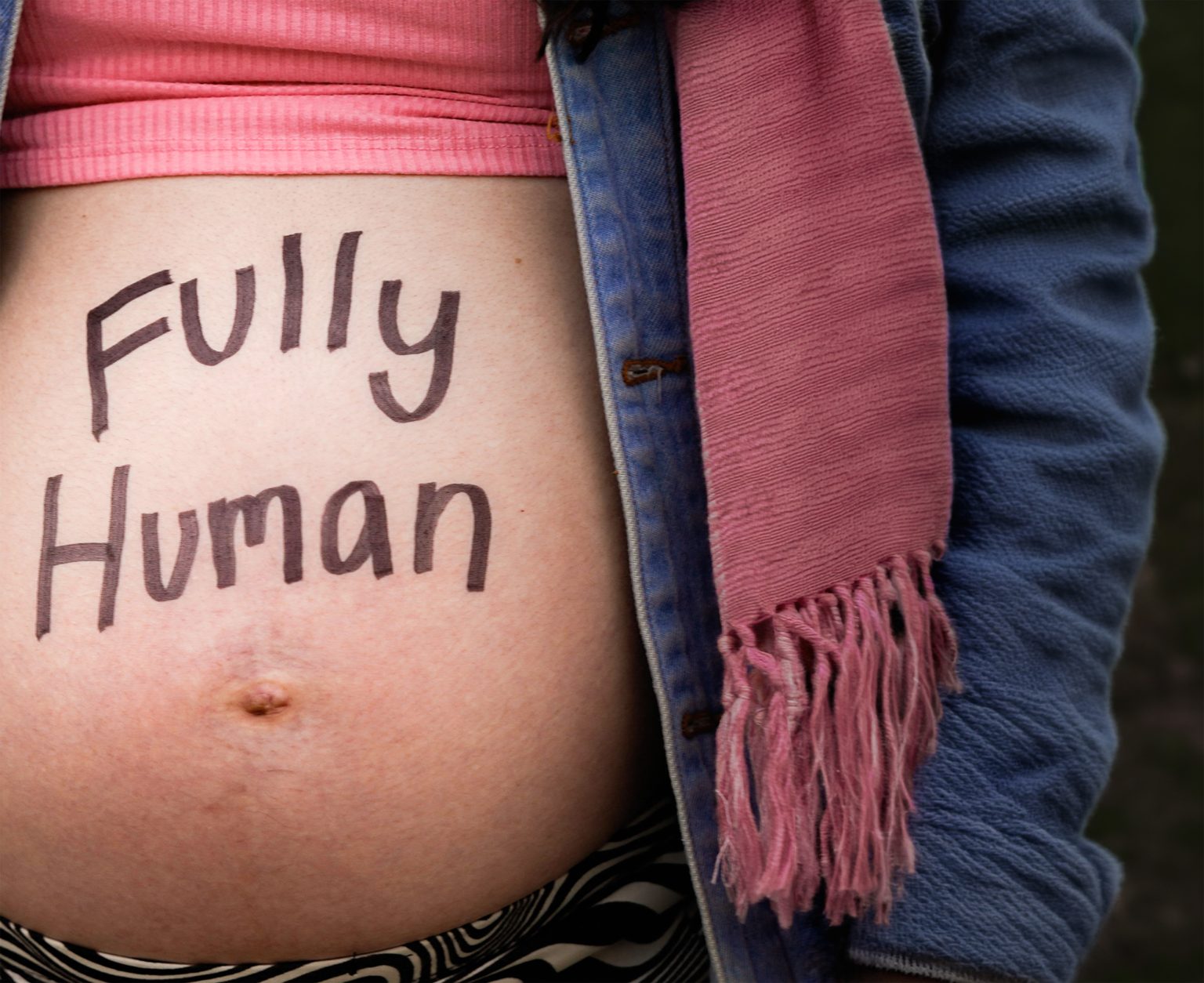
According to estimates by the World Health Organization (WHO), compiled by the Worldometers platform, more than 73 million abortions are performed worldwide each year. By this measure, abortion is the leading cause of death on the planet.
They account for nearly 52% of the approximately 140 million deaths recorded annually. By comparison, all other causes combined amount to just 67.1 million.
Around 61% of the 121 million unintended pregnancies each year end in abortion. This represents an increase compared with previous periods, driven by population growth and the widespread availability of abortion pills.
These figures are not merely statistics. They are a reflection of the state of modern civilization and raise a fundamental question: how is it possible that the greatest tragedy of our time is also among the least talked about?
"Christian" Politicians Censor Defenders of Life
In Austria, parliament has recently moved to explore restrictions on the activities of pro-life activists near hospitals and abortion clinics. The proposal, backed by the governing Austrian People’s Party (ÖVP), the liberal NEOS and the Social Democratic Party (SPÖ), would introduce so-called buffer zones.
Such measures already exist in the United Kingdom, where individuals have been detained for praying silently near clinics. Not for blocking access, not for aggression, but for silent prayer.
The paradox is difficult to ignore. The ÖVP continues to describe itself as Christian Democratic, yet it supports an initiative that would restrict the fundamental rights of individuals peacefully defending the right to life.
If that Christian identity means anything to the ÖVP, they should recognize that human life is under the protection of God and that all bloodshed cries out to heaven.
Arrest for Prayer
Austria is following a path already established elsewhere. In the UK, legislation passed in 2023 allows for the creation of buffer zones around abortion clinics, within which certain forms of expression, including prayer, may be restricted.
Several cases involving buffer zones have drawn significant public attention. Former soldier Adam Smith-Connor was investigated for praying silently near a clinic and ordered to pay more than €10,000 ($10,800) in costs.
In another case, pro-life activist Isabel Vaughan-Spruce was detained while standing quietly in prayer. She later challenged the arrest and succeeded in having it declared wrongful.
(Un)Free America
This trend is not confined to Europe. Across the Anglo-Saxon world, once seen as a stronghold of free speech, similar patterns are emerging.
In Canada, activists have been arrested for gathering peacefully near clinics under so-called safe access laws.
These measures are often presented as protections for women, but in practice they mean the complete removal of alternative voices from the public space. Thus, a woman arriving at a clinic may not be confronted with a dissenting opinion or an offer of help.
In the United States, federal authorities have used the Freedom of Access to Clinic Entrances (FACE) Act to prosecute pro-life activists, including in cases involving non-violent protest. In contrast, attacks on churches and pro-life centres often go without an adequate response from law enforcement.
Selective Freedom
Arguments about harassment or intimidation by prayer activists appear selective in the context of today's society.
During the pandemic, citizens were subjected to unprecedented interference with their freedom of movement, work and assembly. Public space is regularly filled with noisy and vulgar events that often target and affect children.
Yet it is silent prayer that is increasingly treated as a problem.
The issue is not whether rights are protected, but which rights are still considered legitimate. In the case of abortion, one person's alleged right is being asserted at the expense of another person's fundamental right to life.
The legal foundations of democratic states rest on the principle of equality. A selective application of the right to life thus undermines the foundations of a democracy based on a system of law.
Genocide of the Unborn
If there is one topic that should be the subject of the greatest public debate today, it is abortion.
Not as an abstract concept, but as a concrete reality of tens of millions of lives ended every year. The scale of this is so vast that it is difficult to comprehend.
When one speaks of the greatest tragedies of history, of the Holocaust, of the genocides of the 20th Century, it is always the millions of victims that justifiably provoke a sense of profound shock and shape collective memory.
Today, however, we are faced with a reality where the number of unborn children who die each year exceeds those historical tragedies many times over, yet it does not provoke the same level of reflection or response.
Instead, we are seeing the opposite trend: the greater the scale of this tragedy, the more limited the opportunity to talk about it, to pray about it, to protest about it.
Public spaces are being systematically cleansed of voices that remind us of the unpleasant truth. Silence becomes the norm, and with it, a form of acceptance.
This is the sad reality of our times. Death without mourning. A society that has grown used to silence in the face of its greatest evils, lest it disturb the comfort of its own conscience.