

Angela Rayner has not been a quiet presence in British politics. Combative, high-profile and often controversial, the former deputy prime minister now faces the challenge of rebuilding her career after a scandal that forced her from office. Yet she also has an opportunity, as questions grow over the stability of Labour’s current leadership.
Rayner’s fall from government in September 2025 followed a controversy over her tax affairs. At the centre of the row was the purchase of an £800,000 flat in Hove earlier that year, for which she paid £30,000 in stamp duty rather than the roughly £70,000 that would have been due had the property been classified as a second home.
The discrepancy arose from complex arrangements involving her former family home in Greater Manchester, which had been placed in a trust for her disabled son. Although Rayner had removed her name from the property deeds, tax rules meant she was still deemed to have an interest in it, triggering the higher rate.
Under mounting political and media pressure, Rayner admitted the error, stating that she had relied on legal advice and had acted in good faith. Nevertheless, the prime minister’s independent adviser concluded that she had breached the ministerial code by failing to ensure her tax affairs were fully compliant.
Rayner’s Ties to Trade Unions Influence Her Politics
Even before her fall, Rayner’s agenda had already sparked fierce debate. Central to it was an ambitious overhaul of employment law, including the creation of a powerful enforcement body, the Fair Work Agency, designed to act as a single watchdog for workers’ rights.
Supporters argued that the agency would finally give enforcement "real teeth", with the ability to investigate, prosecute and fine employers who break labour laws. Critics, however, raised concerns about the scope of its authority. Opponents have described the body as a de facto "workers’ police force", combining the functions of several regulators and equipped with broad powers to enter workplaces, seize documents and pursue legal action against companies.
Reports have also suggested that enforcement officers may gain access to communications data when investigating serious labour abuses, powers more commonly associated with police or intelligence agencies.
Alongside this, elements of Rayner’s wider employment reforms have drawn accusations of increased workplace monitoring. Critics argue that companies could feel pressured to police internal conversations more closely to comply with strengthened protections against harassment, a development some have dubbed the rise of the "banter police", although ministers insist no such formal requirement exists in law.
For Rayner’s allies in the trade unions, however, the reforms represent a long-overdue correction. They argue that fragmented enforcement has allowed exploitative practices, from underpayment of wages to insecure contracts, to persist unchecked and that a centralised agency is necessary to restore fairness in the labour market.
At the same time, some economists warn that, in a context of weak growth and sluggish productivity, increased regulation could weigh on the economy.
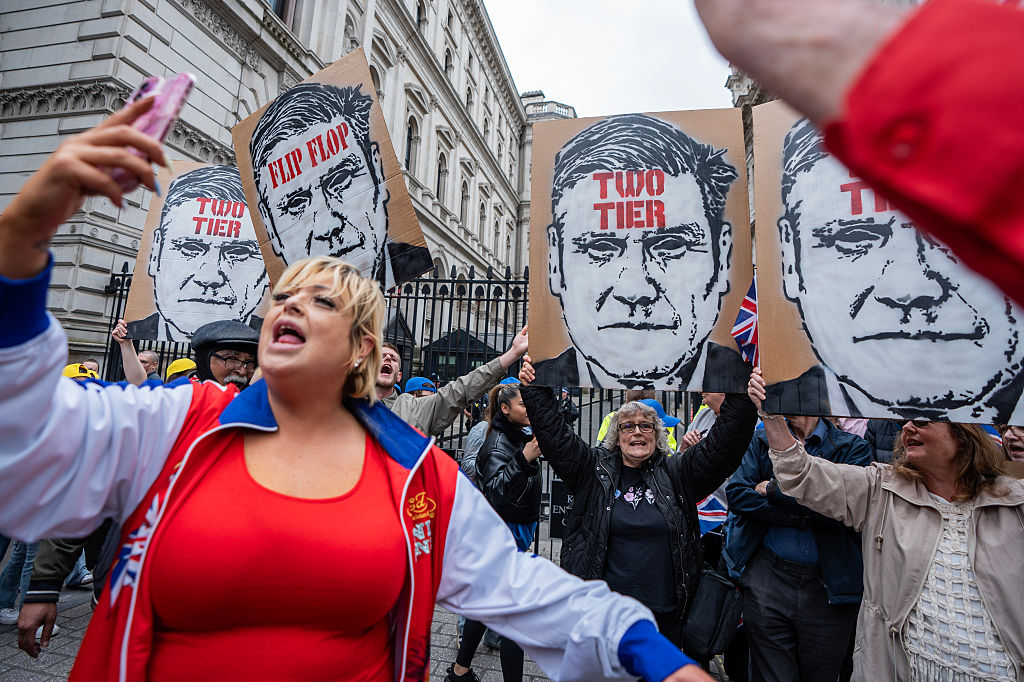
Keir Starmer’s Weak Position After the Local Elections
This clash of views on workers’ rights has become part of the wider political debate surrounding Rayner herself: a figure seen by supporters as a champion of the working class from which she emerged and by critics as an advocate of heavy-handed state intervention aligned with trade union interests.
With local elections scheduled for May and Labour facing a difficult electoral test, attention is once again turning to the party’s internal dynamics. The party is expected to face significant losses, potentially in the region of 1,000 seats.
While there is no confirmed leadership challenge, speculation is growing that one could follow the elections. Prime Minister Keir Starmer faces low approval ratings, raising questions about his ability to remain in post until the next general election in 2029. Historically, however, Labour has been reluctant to remove its leaders, meaning any transition may depend on Starmer choosing to step down.
In that context, Rayner’s prospects of a comeback remain uncertain. Her political identity, rooted in the image of a working-class background challenging the establishment, continues to resonate with parts of the party. Yet the controversies that have defined her recent career, from personal missteps to disputes over policy, may prove difficult to overcome.