

The Dominican Sisters of Hawthorne, a Catholic women’s order founded in 1900, have spent 125 years caring for people with incurable cancer who have no one else to look after them. They act solely out of charity and do not charge insurance fees or rely on publicly subsidised healthcare. Now the state of New York wants them, like all care homes, to comply with transgender regulations that would oblige them to use patients’ preferred pronouns, house them according to their chosen gender and allow them to use the bathrooms of their choice. Failure to comply could lead to prison sentences as well as the closure of the facility.
The nuns have decided to go to court. On 6 April they filed a lawsuit against the so-called New York LGBTQ+ and HIV Long-Term Care Facility Residents’ Bill of Rights (S1783A/A372). Originally introduced to prevent discrimination in residential care facilities on the basis of sexual orientation, gender identity or HIV status, the rules are intended to ensure respectful treatment, particularly for transgender residents. Violations can be reported directly to the state long-term care ombudsman.

The Law at the Center of the Dispute
The sisters had already been urged in several letters in spring 2024 to comply with the rules. In practice, the regulation would oblige Rosary Hill Home, with its 42 beds, and other long-term care facilities to house biological men in women’s rooms, even if a female roommate objects. It would also allow residents and visitors of one sex to use bathrooms designated for the other.
Facilities would further be expected to use pronouns and language that contradict biological sex. The rules would also require the creation of "communities" that affirm patients’ sexual preferences and accommodate requests for extramarital sexual relationships. Long-term care facilities would also have to ensure that staff receive training in ‘cultural competence’ aligned with the state’s gender definitions.
The legal confrontation between the voluntary service of Catholic nuns and a state that pushes through transgender laws without regard for the consequences shows how ideology works against charity. There have never been any allegations of discrimination against transgender patients in the facility. In a statement, the sisters explicitly stress that no complaints have ever been made. The dispute is therefore about principle. The state seeks to enforce its LGBTQ definitions regardless of context – whether in schools, in sport or at the bedside in a convent. No exemption is foreseen for the Catholic faith.

A Clash of Charity and State Doctrine
The courtroom battle now pits those who offer abandoned dying patients a dignified end of life against authorities demanding submission to a gender framework that conflicts with the sisters’ beliefs. Many of the patients have no one else – not even the state care system. The nuns will have to invest time and money, resources that would otherwise go to patients, in order to continue acting in accordance with their Christian convictions.
"We Sisters have taken care of patients from all walks of life, ideologies, and faiths. We treat each patient with dignity and Christian charity. We have never had complaints. We cannot implement New York’s mandate without violating our Catholic faith", said Mother Marie Edward, general superior of the Hawthorne Dominicans. It appears detached from reality to lecture women about respect for others when they have devoted their lives to caring for strangers.
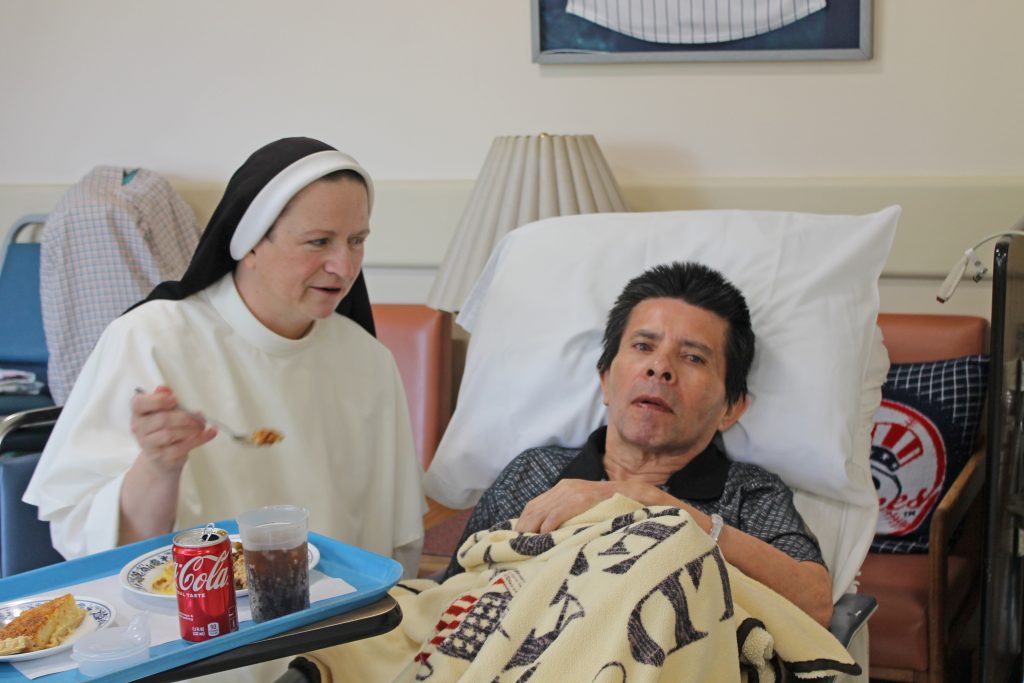
The case also raises broader questions about religious freedom. "Indeed, to demand that a Catholic deny another’s sex is to require him or her to affirm another religious worldview", the lawsuit states. After unsuccessfully attempting several times to obtain an exemption for Christian institutions, the sisters decided to file suit to safeguard both their religious liberty and their service to patients.
The refusal to grant an exemption is particularly disappointing, their lawyer argued, because New York law allows for such exceptions and the state has already approved them for institutions run by the Christian Science Church. Martin Nussbaum of the First & Fourteenth Law Firm said the same consideration had apparently not been extended to Catholic facilities.
The sisters are being financially supported by the Catholic Benefits Association as they challenge the measure. The outcome remains uncertain.