

For a long time, any limitation of internet freedom was regarded as a hallmark of authoritarian systems. The harshest examples are familiar: China with its ‘Great Firewall’, Iran with nationwide shutdowns, Russia with the construction of a so-called sovereign internet. What passes for the internet in North Korea would be almost laughable were it not so tragic.
The once clear contrast – a free network here, a tightly censored one there – is increasingly blurring. Regulation is also expanding noticeably in liberal democracies. The measures often appear well justified and, at least in parliaments, politically viable. However, the global trend is anything but harmless. The decisive point is that such interventions are no longer exceptional or limited in scope. They are becoming structural. They appear almost orchestrated.
Always the protection of minors
The official justification tends to be strikingly similar. It is about safety, protection from disinformation and, above all, the protection of minors. Few political goals appear as morally unassailable as safeguarding children. That is precisely why the argument is particularly suited to pushing through far-reaching measures.

A look at the United Kingdom, the motherland of parliamentary democracy, shows how deep such interventions can reach. Under the Online Safety Act, the state has required platforms since 2025 to introduce effective age verification to keep minors away from harmful content. What initially sounds like sensible regulation has a crucial side effect. Adults, too, increasingly have to identify themselves in order to access legal content. Civil liberties organisations such as the Electronic Frontier Foundation warn of a system that effectively places access to lawful communication under reservation. The result, they argue, is a ‘chilling effect’ – self-censorship out of fear of being tracked.
Australia goes a step further. In 2025, a social media ban for under-16s was introduced. The state thus excludes an entire age group from central spaces of communication. Critics from both liberal and conservative-libertarian perspectives, including the Cato Institute, see a disproportionate intervention. It is not individual harmful content or practices such as doomscrolling that are regulated. Access itself is denied. France, meanwhile, combines age restrictions with a politically sensitive mechanism. Platforms may be classified as unsuitable on the basis of state assessments and blocked accordingly.
The state blacklist
This creates a form of administrative blacklist, an instrument that goes far beyond traditional child protection and introduces state discretion into the governance of the digital public sphere. The distance to Russia is no longer so great. Similar models are being prepared in Norway and Spain, with age limits, mandatory verification and tighter platform oversight. The measures resemble one another like siblings. Even at EU level, the planned age-verification infrastructure is designed to be privacy-friendly while simultaneously establishing the technical basis for far-reaching identification online.
What connects all these measures is less their specific design than their structural effect. Access to the internet is increasingly conditional. Where open use once prevailed, checks, age limits and identity requirements now appear. Existing freedom is not directly prohibited but indirectly constrained.
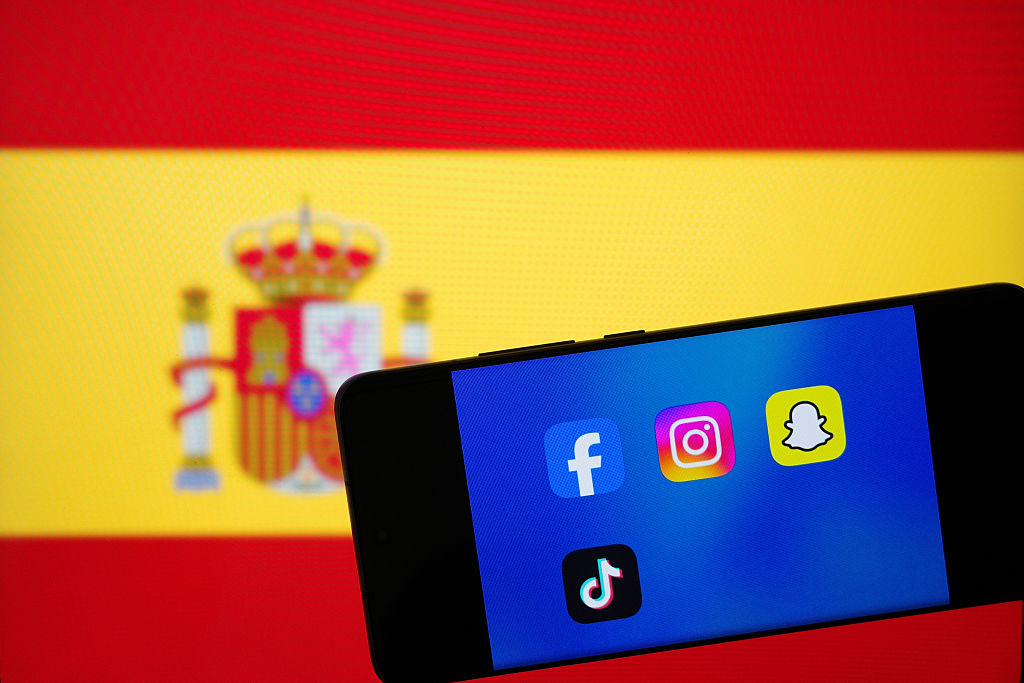
From a liberal perspective – and here civil liberties organisations and conservative-libertarian thinkers are strikingly aligned – the problem lies not in the intention but in the architecture of the measures. Making access to information and communication dependent on preconditions shifts the basic logic of the internet. An open space becomes a regulated entry point. In practice, information can be steered, access to state-undesirable material restricted and content labelled misinformation removed or rendered invisible. A space in which anonymous access to information was possible becomes one in which the state knows who is seeking which information, where it is obtained and where it is shared. Interventions at any point along this chain become technically feasible at any time.
From child protection to self-regulation
The way such dynamics unfold can be illustrated by the system’s inherent tendency to expand. What begins with the protection of minors can easily extend to other areas. Age verification for pornography becomes age verification for social media. Platform regulation becomes content control. Protection against so-called disinformation becomes a restriction on political speech.
In a state committed to freedom of expression, who decides what is true and what is false? Hannah Arendt’s dictum remains: truth exists only in dialogue. Where dynamics emerge that unilaterally determine what may count as truth, the outcome can be observed in authoritarian systems. Only dictators fear criticism. Democrats want criticism. That must be the benchmark for a free internet.
The current danger lies less in individual laws than in their cumulative effect and in a kind of competitive dynamic, in which each actor seeks tougher measures than the next. Step by step, an internet is emerging that is less open, less anonymous and less free than only a few years ago.

Notably, censors worldwide are focusing particularly on the mobile internet, now the most widespread form of access. The claim that online freedom is primarily threatened by external actors falls short. Fake news, hate speech and eccentric opinions are not the core problem.
Freedom dies by centimetres
The real challenge today is that restrictions increasingly come from within. They emerge from democratic systems and from the technology companies themselves. They are invariably well justified, legitimised and politically endorsed, at least as presented publicly. That is the greater danger, because restricting freedom also limits criticism of such restrictions. A critical public is therefore needed to challenge the trend and scrutinise each individual measure.
Freedom, as the late chairman of the Free Democratic Party in Germany once said, always dies by centimetres. It rarely disappears abruptly. It is regulated, limits are justified and eventually the restricted freedom is accepted as sufficient freedom. The familiar example is the frog placed in cold water that is slowly brought to the boil. The frog dies because it fails to perceive the changing temperature. In much the same way, a freedom curtailed only in small steps becomes apparent only when it has already vanished.