
For many Central European readers, the word "quinquennial' evokes a nostalgic chuckle. In the past, socialist planning lost out to capitalism in part because of its rigid focus on meeting arbitrary and unrealistic targets instead of delivering real economic value.
Today's capitalism has discarded any possibility of planning ahead, because the ability to adapt to current conditions has become paramount.
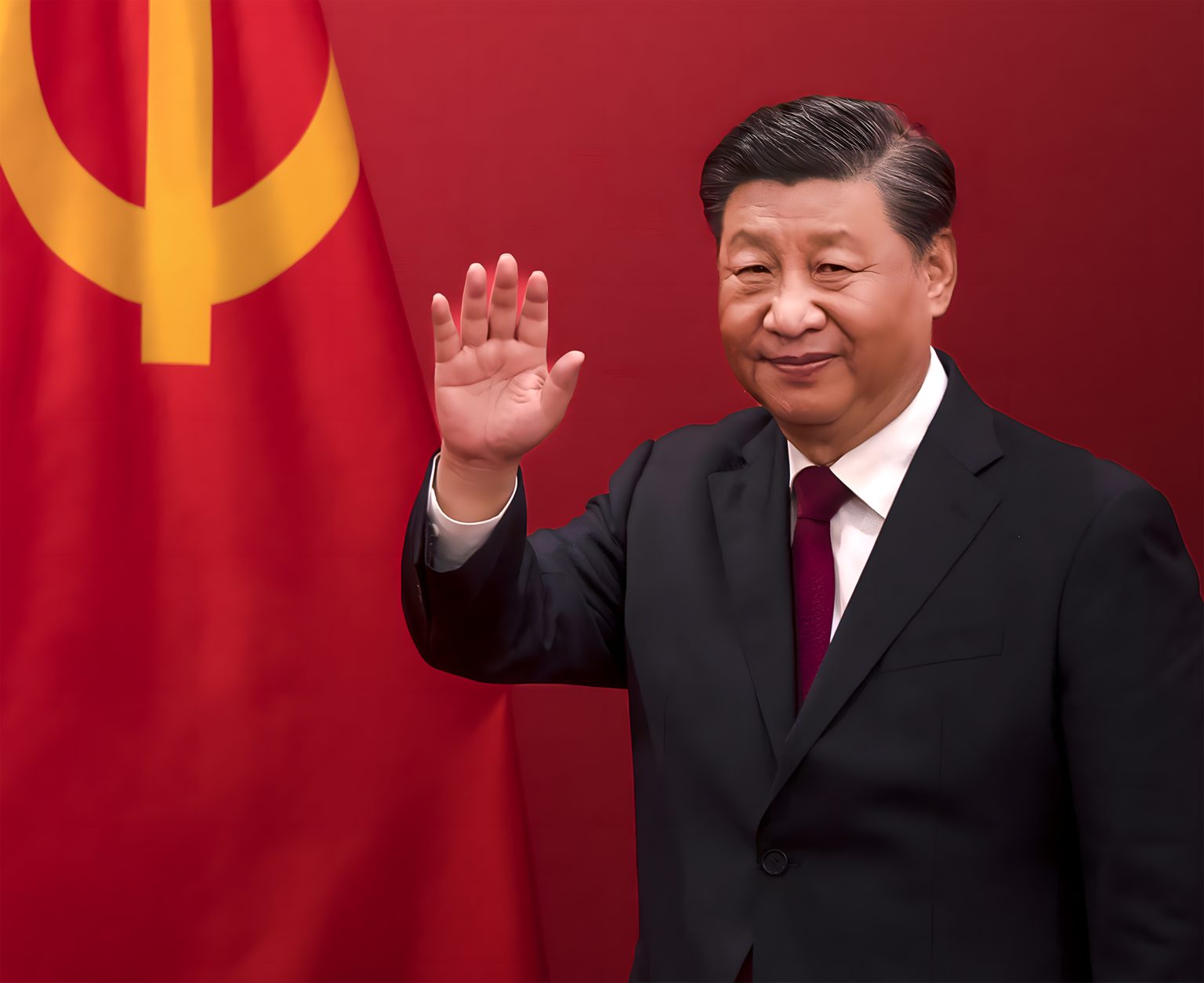
China is attempting to combine capitalist and socialist approaches. Its system blends elements of planning and market logic, and the five-year plan remains its central tool. Last month, the Chinese Communist Party unveiled its 15th five-year plan.
This is not just an economic document. It is a broader political and civilisational statement outlining how Beijing intends to navigate a world shaped by trade wars, technological rivalry and geopolitical uncertainty.
A comprehensive approach to the economy
To understand the plan, it is essential to grasp China's underlying mindset. The state views society as a single, interconnected whole that should function in relative harmony. This comprehensive approach distinguishes it from Western economic thinking.
Western systems tend to focus on individual sectors, addressing problems separately and linking them through aggregate indicators such as GDP. Yet GDP itself is an abstract measure.
China does not reject GDP, but it does not treat it as the ultimate goal. The new plan moves away from fixed targets such as five per cent growth and instead speaks of keeping economic growth within a 'reasonable range'.
What matters more is the strength of the real economy – the ability to produce, industrialise and develop technological capacity.
This productive base underpins everything else: education, environmental policy, military strength and global influence. Here lies a key difference with the West, where governments often respond to economic challenges through redistribution, subsidies or fiscal measures rather than systematically strengthening production.

Resilience and innovation as priorities
China's five-year plan is not a detailed manual but rather a framework that sets national priorities and determines direction.
Its most notable shift is the move away from growth as the primary objective towards resilience. The emphasis is now on stability, security, risk management and the quality of growth.
In other words, China is telling the world that it no longer considers an economic model based solely on continuous GDP growth to be sufficient. The success of an economic model is now measured in terms of how well it can absorb economic and geopolitical shocks. The world has become less predictable and national economies must respond to this.
Innovation is central to China's plans. In today's context, that means artificial intelligence, robotics and other advanced technologies. These are expected to create what Chinese policymakers call 'new quality productive forces'.
At the same time, innovation is no longer just about economic performance. It has become a tool of power. Technological capability now shapes not only prosperity, but also security and geopolitical influence.
Self-sufficiency in an era of uncertainty
Another defining feature of the five-year plan is its emphasis on self-sufficiency. This is not about isolation, but about reducing vulnerability.
China is not retreating from globalisation. Instead, it is seeking to reshape its position so that it is less exposed to foreign technology, sanctions or supply chain disruptions.
This approach is visible in specific sectors. Beijing is focusing on developing its own chips, software, industrial standards and energy infrastructure – areas that increasingly determine economic and strategic power in the 21st century.
At the same time, the plan reveals China's fears. The emphasis on security, reserves, domestic demand and strategic resources reflects an expectation of a harsher global environment – one shaped by trade conflicts, technological barriers and geopolitical shocks.
In this sense, the quinquennial plan reads less like a roadmap for growth and more like a strategy for navigating instability.
Preparing for a more volatile world
As early as the 1950s, Mao Zedong suggested that China might catch up with the United States by the time of the 15th five-year plan. That moment has now arrived.
Yet today’s strategy shows that China is no longer focused simply on matching growth rates or GDP rankings. It is preparing for a world in which global power is more fragmented and less predictable.
Its response is not to abandon globalisation, but to reduce its exposure within it. This reflects a broader tension: modern economies depend on global interconnectedness, yet their stability increasingly requires limiting critical dependencies.
Self-sufficiency, in this context, does not mean isolation. It means resilience.
China is already moving in this direction. The question is whether the West is ready to follow – or whether it will continue to rely on a model that is becoming harder to sustain in a more uncertain world.