
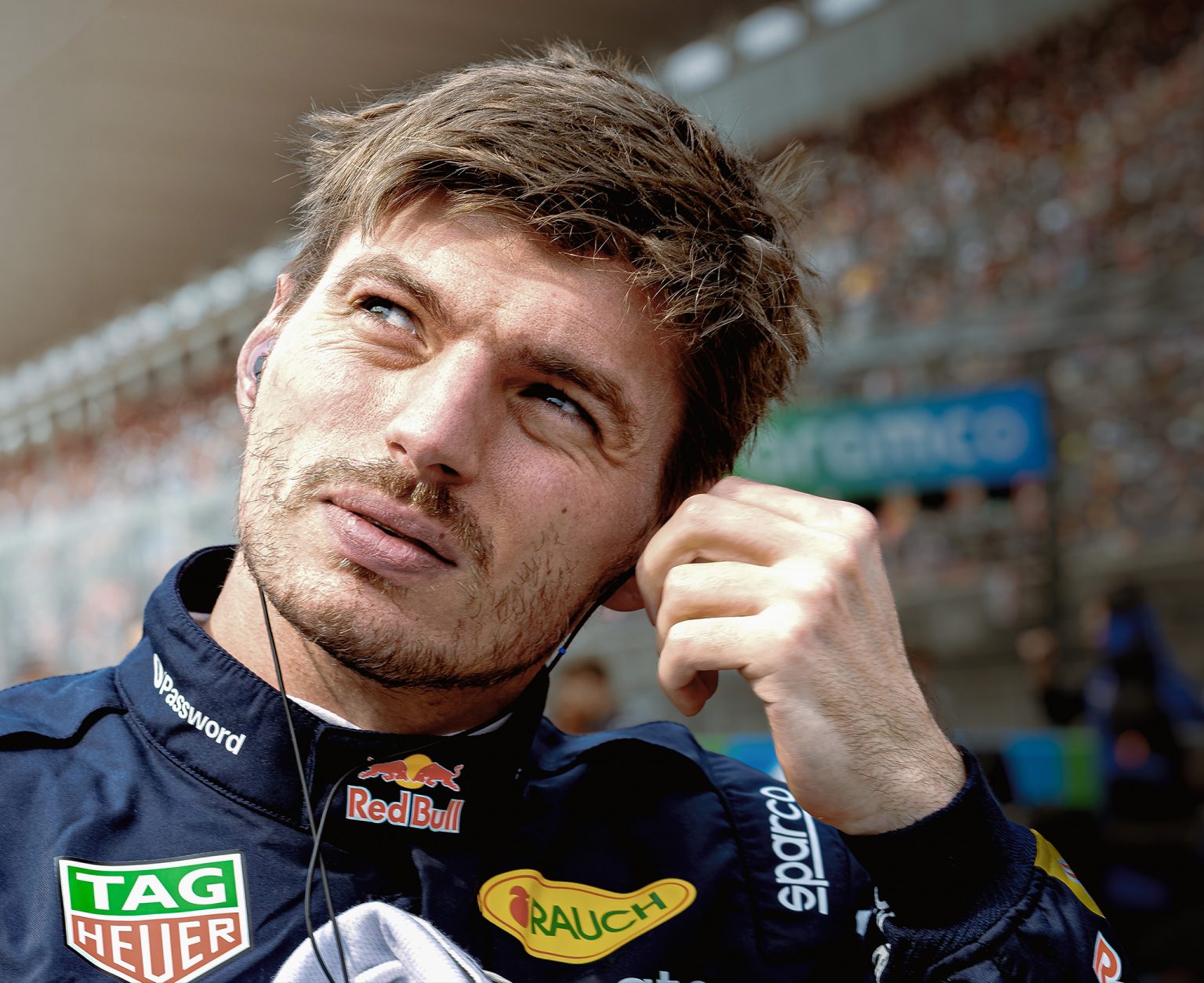
The current trend of battery-powered vehicles, known as electric cars, has now also made inroads into Formula 1, the queen of motorsport. In a world of top speeds and the most powerful engines, however, its challenges are more pronounced than elsewhere. The car itself has become the biggest limitation.
We have completed the first three Grands Prix of the season and of this new era, which has brought new powertrains. The result is an injured driver, several dangerous collisions and lacklustre racing. In accordance with today’s political dogma, Formula 1 teams too had to make a sacrifice to the gods, put the brakes on real development, introduce slower engines and – following a decision by the Supreme Soviet – spend years preparing for a new era of powertrains whose output is largely electric.
The so-called overtake mode is not an unusual change in itself. From a sporting perspective, it essentially replaces the DRS system, under which a driver who has caught up to his opponent within a one-second gap has the advantage of greater power when overtaking on the straights, an advantage previously provided by the aerodynamics of the rear wing. What’s worse is that drivers have turbo power available if they conserve their battery better towards the end of the straight.
A new feature is the hybrid engine, whose powertrain is partially driven by an electric battery. This provides drivers with a significant portion of their power and speed. With a regular car, one can still get used to such operation, but in performance sports – and especially in Formula 1 – it is an anomaly.
In these traditional races, which have been held since 1950, we are used to drivers reaching maximum speed on the straight, where they try to maximise their engine’s power. That has been the history of motorsport for decades.
However, the electric battery has turned this on its head. If a driver wants to manage the battery’s temporary power as effectively as possible, they must slow down on the straights and often downshift precisely where they would normally try to keep the pedal to the floor, which goes against all racing instincts and, in fact, against the very essence of motorsport.
What has already happened
Moreover, many drivers complain that they do not have full control over their car’s power. Oscar Piastri spun out in the very first race, and what actually happened was surprising. He explained it by saying that the battery sent more power to the rear wheels, which he had not anticipated.
Drivers report that the system behaves unpredictably. One consequence of the new rules and new powertrains is that situations regularly arise where two cars find themselves right behind each other on the track with a huge difference in speed, as one is charging while the other is running at full power.
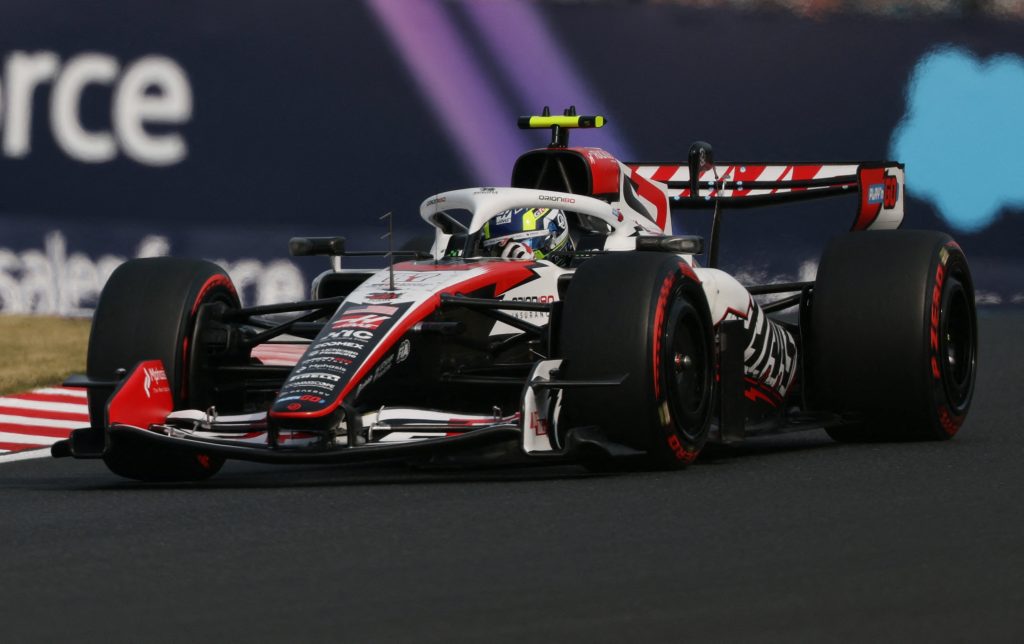
There have been several similar dangerous situations related to the new hybrid semi-electric powertrain. The most serious so far was the accident last Sunday, when Haas driver Oliver Bearman suddenly caught up to the driver in front of him, Franco Colapinto, who was charging his battery and therefore driving slowly.
He suddenly appeared directly in front of him, with a speed difference of around 50 kilometres per hour at that moment. Bearman had to swerve to avoid him, but since he did not have much room on the track, one wheel of the car went onto the grass, where he lost control at high speed and crashed violently into the barriers. Since an injury apparently occurred – something we are no longer used to – it was the biggest crash in recent years caused precisely by the nature of the new ‘electrification’ rules.
In short, according to several critical racers, the combination of a conventional combustion engine and an electric battery is not something you can always fully rely on.
The drivers’ passing manoeuvres are not uninteresting, but they are peculiar. Spectators are witnessing a new phenomenon where almost every overtaking move is accompanied by a ‘yo-yo effect’: when the overtaken car gains a speed advantage in the next corner because its rival has drained its turbo battery. The single-seaters thus overtake each other as if on a trampoline. Not that it is uninteresting, but it becomes repetitive.
Major problems can also arise right after the start, where this speed difference can reach 100 kilometres per hour. Many cars are bunched together at that moment. Any collision on the starting straight or before the first corner can easily cause a serious pile-up.
Battery management is a key element of the new rules. Drivers often have no control over their own powertrains, and the software may decide to tie their hands by starting to recharge the batteries as a safety measure. At least, that is what several drivers are reporting.
Of course, as Formula 1 commentators point out, these are new developments that will continue to evolve and likely iron out some kinks. However, in the history of European industry (excluding the Soviet Union), development has never worked in such a way that bureaucrats sitting at a desk ideologically decide the best path forward and reality then adapts to that decision.
Verstappen is bored
Thanks to the battery, single-seaters now have modes available for short-term power boosts. This creates a paradox: on the fastest tracks with long straights, we must expect a slowdown precisely where we would otherwise witness the full, unbridled power of these fastest machines in the world. Whoever conserves their battery better can overtake their opponent with a significant advantage. But the other driver has saved their capacity at that very moment, so they can turn the tables later.
During the Chinese Grand Prix two weeks ago, Max Verstappen even waved in frustration at Pierre Gasly, who had overtaken him in this manner: ‘So you wave at him on the straight: “Bye, see you later!” And you try again three laps later, once you’ve recharged your battery,’ Max said at the briefing.
So it is no longer about racing speed, but about management, as Verstappen put it. He has recently threatened to leave Formula 1, as he has lost interest in racing. We are talking about arguably the greatest talent of the present day, who managed to rank among the best last season even with a weak car.
Max is not alone in this. Former two-time world champion Fernando Alonso, who at 44 has likely seen it all – and is known for his dry yet sharp wit – has dubbed the races the ‘flashlight championship’. The commentary is pouring in. According to Max, this is the end of Formula 1 as we know it. Already during pre-season testing, when he was taken aback by his first experiences with the new power unit, he said it was ‘Formula E on steroids’.
Max Verstappen, who describes himself as old-school and as someone who is ‘less politically oriented’, fears that the battery will ruin the entire sport. Although he is currently the loudest critic of the new rules, he likely speaks for many drivers. Almost all teams have expressed criticism of the new regulations. Mercedes, which has been very dominant so far this season, is the notable exception.
Equal conditions – but a different sport
It is true that all drivers have equal conditions and that the better one will win in the end, but in this case we will no longer be watching a battle between drivers, but between managers.
Behind all this, however, lies one major problem that remains unspoken: the electrification that has swept through motorsport was an ideological issue, not a sporting or developmental one.
Following numerous complaints, and especially after Bearman’s latest crash, the FIA announced that it would review certain rules during the current enforced break. However, only minor changes are possible. They will not resolve the biggest concerns. We will therefore likely have ‘electric cars’ until the end of the current cycle – that is, for the next five years.