
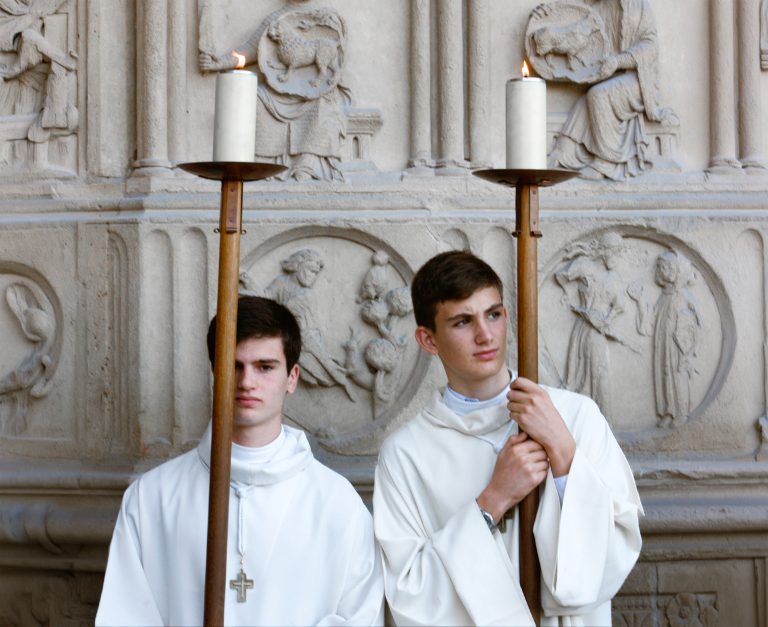
Until recently, Generation Z was cast as the standard-bearer of progressivism – a generation expected to sever ties with tradition, faith and the natural order of society. That image is now beginning to unravel.
A pattern is emerging that analysts increasingly describe as the 'progressive paradox': the more aggressively progressive ideas are pushed, the stronger the backlash becomes, especially among young men.
This is not a coincidence. It reflects a deeper pattern.
The loss of certainty and the search for meaning
A society that loses its foundations inevitably begins to search for new ones. Generation Z has come of age in a period defined by instability – economic uncertainty, cultural conflict, a pandemic and a breakdown of authority. Under such conditions, empty slogans about 'self-expression' and 'fluid identity' prove insufficient. For many, they fail to provide meaning, structure or direction.
Young people, particularly men, are therefore turning towards order, responsibility, hierarchy and, increasingly, faith.
The data reflects this shift. In the United States, the long-term decline in religious affiliation has begun to slow, with Generation Z playing a role in stabilising the trend. As recently as 2022, the proportion of Christians had fallen to around 60 percent. But there are signs that young people are returning to or remaining in their faith.
After decades of individualised, self-constructed spirituality, where everyone constructs their own faith as they see fit, many are discovering its limits. The younger generation is seeing the sobering reality that a 'hodge-podge spirituality' lacks the solid framework needed to carry them through life with all its ups and downs.
Organised religion, especially Christianity, offers what fragmented belief systems cannot: community, identity and clear rules. What progressive culture has sought to dismantle is, for some, proving vital.
A return to order
The change is most visible among young men. Surveys conducted between 2024 and 2026 suggest that Generation Z holds more conservative views on many issues than older generations.
A study by Ipsos and King's College London found that around a third of young men believe men should be the primary authority in the family, while roughly 30 per cent say that wives should be subservient to their husbands. Almost a quarter question women's economic independence.
These numbers are shocking only to those who do not understand reality. This is not the return of a cartoonish patriarchy, but a reaction to an extreme that has denied natural differences and roles.
For years, young men have been told that their natural roles are toxic, that their strength is harmful and their identity is problematic. The logical result of this is not progress, but crisis. And out of crises, resistance is born.
Surveys show that as many as 59 per cent of young men believe efforts to promote equality have gone too far. At the same time, they face a reality in which they are unable to fulfill their traditional role as providers because of economic pressures and social instability.
A vacuum has been created, and it is now being filled.

Why Christianity
In that vacuum, a return to faith is taking shape. Not as a passing trend, but as a response to the chaos. Christianity offers what today's world lacks: order, meaning, discipline and the truth about human existence.
Research shows that young men are turning to more traditional forms of Christianity, where expectations are clear and boundaries defined. After years in which authority, responsibility and faith were questioned, a reversal is under way. A generation is rediscovering the values that progressive ideology tried to erase. What was maligned as outdated or harmful is proving to be life-giving.
The progressive narrative has turned fundamental moral precepts upside down, labelling good as evil and evil as good. We see this in today's abortion debates, where proponents argue that a human being must die for another human being to live.
Christianity, however, presents the opposite. Christ sacrificed himself so that all might live. Not the death of the weak for the strong, but the sacrifice of the strongest for the salvation of others. It is this fundamental difference that will shape the future of our civilisation.
The end of the progressive illusion
Progressivism set out to create a new man – without roots, without tradition and without commitments. But instead, it created a generation that experienced the inevitable emptiness of the progressive experiment.
You can't escape reality. Society cannot function in the long term without family, clear roles and moral norms. It cannot exist while denying the truth about the human person: made male and female, in need of community, in need of God.
When these truths are denied, the result is not freedom but societal and moral decay. Generation Z is increasingly confronting this reality – sometimes clumsily, at times more radically – but at its core, it reflects a return to the natural order.
The 'progressive paradox' is therefore a sign of hope. It shows that even after years of cultural experimentation, there are limits beyond which a return to truth becomes inevitable.
But the question remains, does this signal a return to responsibility and faith, or merely another reactionary wave?
One thing is certain: the era of uncritical progressivism is coming to an end. The generation that was meant to embody it may yet become its greatest challenge.
This is no paradox.
It is a pattern that we have seen in history, time and time again.