
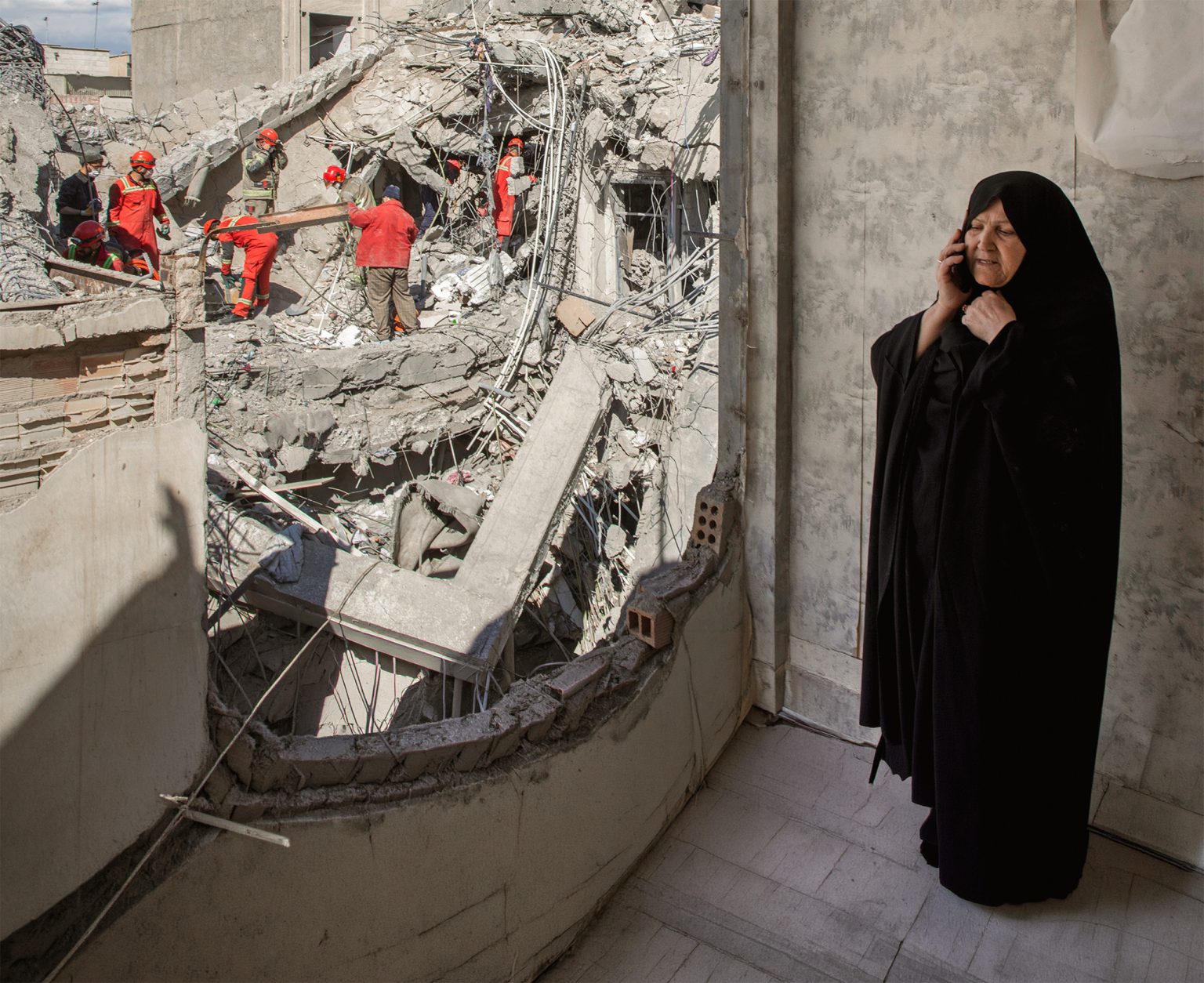
The United States and Israel attacked selected targets in Iran on Saturday, 28 February. The initial strikes killed Supreme Leader Ali Khamenei, Islamic Revolutionary Guard Corps commander Mohammad Pakpour, senior security adviser Ali Shamkhani, Chief of Staff of the Iranian Armed Forces Abdolrahim Mousavi and dozens of other officials.
In the early hours after the attack, the Americans and Israelis said in unison that the aim was regime change as well as halting the nuclear programme, and both allies immediately called on demonstrators to take to the streets and seize control.
The Islamic Republic responded by attacking Israel and a series of American bases in Arab states. In the first days of March, it also shelled Dubai in the United Arab Emirates, hitting several sites in the city.
Among the initial US-Israeli strikes was an attack on a girls’ school in the town of Minab. Around 170 people were reported killed, most of them schoolgirls. It may have been a mistake, as there is an Iranian naval base near the town. The attack has met international condemnation.
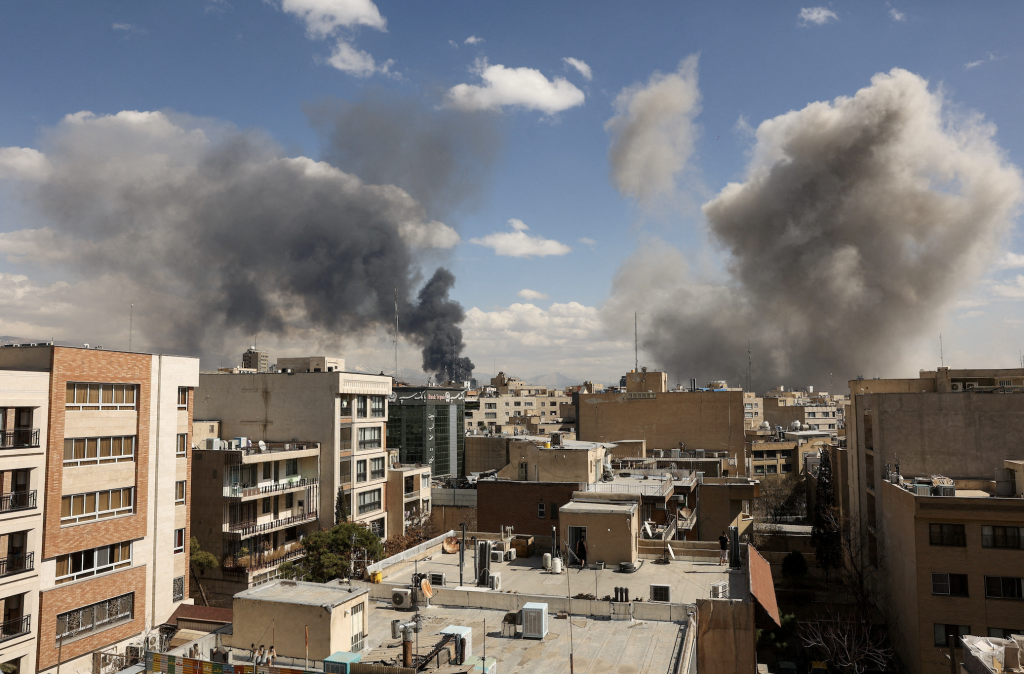
The navy was among the stated targets of US President Donald Trump. He has repeatedly claimed to have destroyed virtually ‘all’ Iranian naval vessels, including those of both the regular Artesh forces and the Revolutionary Guards Navy.
The main target, however, was the nuclear programme, which had been described as ‘completely destroyed’ as early as last June. Other objectives included ballistic missile launchers and selected political and military leaders. In the early days, Trump claimed that Tehran’s ballistic missile programme posed a threat to US national security. That assessment was denied by his own intelligence agencies.
Until the war began, there had been no indication that Iran’s nuclear programme was military in nature. For Trump and Israeli Prime Minister Benjamin Netanyahu, however, the high level of uranium enrichment, which last year reached up to around 60 per cent, was reason enough.
Retaliation with global impact
As early as 1 March, the Americans suffered casualties when a surprise attack on an operations centre in the Kuwaiti port of ash-Shuaiba killed six soldiers. According to CNN, they had been expected to take shelter in a bunker, but no sirens were sounded to warn of incoming projectiles.
A day later, Israeli troops in Lebanon expanded their operations against the Shia militant movement Hezbollah, a long-time ally of Iran. It had already been engaged in hostilities against northern Israel since October 2023, leading to a historic third occupation of the country’s south.
On 3 March, the Israeli army attacked the majority Shia village of Yohmor using white phosphorus. Human Rights Watch condemned the incident as a violation of international law and said it had verified video footage from southern Lebanon. In the following days, Israeli forces also struck a base of the United Nations Interim Force in Lebanon (UNIFIL) in the town of al-Qawzah, wounding three Ghanaian peacekeepers.
At the time, Trump said the war was expected to last about four weeks. After less than a week, however, he was already claiming that the Americans had effectively won. At the end of March, his envoy Steve Witkoff said the United States had suspended attacks on power plants for 15 days. However, it also carried out a strike on the Bushehr nuclear power plant on 28 March.
Tehran’s actions are technically referred to as horizontal escalation. Instead of waging a symmetrical war in which the Iranian military would, for example, attack US power plants, it is targeting facilities of economic importance to the United States and expanding the battlefield to other countries.
The attacks on oil and gas infrastructure and the closure of the Strait of Hormuz were therefore not direct actions against the United States, but had global repercussions for fuel prices, broader energy costs, agriculture and even cosmetics.
Iran targeted desalination plants in several Arab states. On 8 March, it struck a facility in Bahrain, an attack condemned by the country’s interior ministry. The regime said it was retaliating for a similar strike on an Iranian facility on the island of Qeshm.
Tehran also attacked a desalination facility in Kuwait on the last weekend of March, but the theocratic government, according to Al Jazeera television, attributed responsibility for the strike to Israel.
Iran’s successes are mainly symbolic. The weekend strike on an E-3 Sentry aircraft did not weaken America’s ability to destroy military or energy infrastructure, even though the aircraft costs about half a billion dollars to produce. Iran is also using Shahid-type drones costing tens of thousands of dollars, which the US and Israel shoot down with missiles worth millions.
The Bazan oil refinery in the northern Israeli city of Haifa was also targeted on Monday morning. Although the Israeli Fire and Rescue Service did not immediately say whether the munitions came from Iran or Lebanon, the attack caused no casualties and the disruption is not expected to affect fuel supplies.
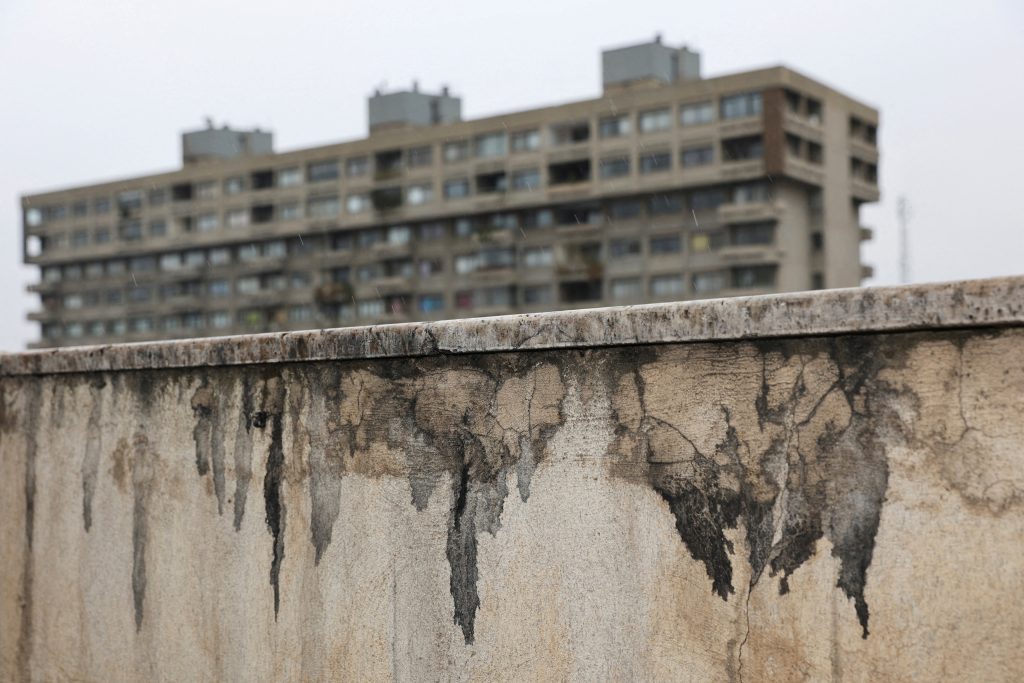
Again, this was in retaliation for the joint attacks on Iranian refineries around Tehran in mid-March, which, combined with the passage of a cold front, produced black rain. The toxic fumes that fell over the capital have caused a range of ailments, from cardiovascular and respiratory problems to neurological ones – particularly among young children and the elderly.
On Saturday, 28 March, Yemeni rebels from the Ansar Allah movement, known as the Houthis, rejoined the war. They have repeatedly launched attacks on Israel since the war in the Gaza Strip began, with only brief interruptions.
This horizontal escalation is now affecting the entire Middle East after a month of war. Kuwait, Bahrain, the United Arab Emirates, Oman and Saudi Arabia are all Gulf states and are therefore directly exposed to Iranian retaliation. Houthi missiles are being launched from Yemen into Israel. The Jewish state is attacking Lebanon and Syria ‘pre-emptively’, while Shia militias linked to Tehran are operating in Iraq.
A ceasefire? Not so soon
At present, there appears to be no way out of the situation. While Trump said in the first weeks that the war had been ‘successfully concluded’, he has more recently claimed that Tehran is asking the Americans for talks on a potential ceasefire.
The United States, through Pakistan, therefore sent the Shia government a 15-point ceasefire plan on 25 March, including conditions ranging from halting the nuclear programme to curbing ballistic missile capabilities, ending support for anti-Israeli militant groups in the region and reopening Hormuz.
The plan was summarily rejected by the Iranian General Staff with a taunting message. ‘Has the level of your internal struggle reached such a state that you are negotiating with yourselves?’ Ebrahim Zolfakar, a spokesman for the joint command, asked. ‘Someone like us would never make a deal with someone like you, not now, not ever,’ he added.
The Iranians have reversed course and proposed their own five-point plan. It includes conditions such as a complete cessation of aggression, war reparations for destroyed infrastructure, an end to operations against militant groups and an affirmation of Tehran’s sovereignty over Hormuz.
It is questionable whether the negotiations are moving towards a ceasefire. Pakistan announced on Sunday that it would host talks between US and Iranian delegations in Islamabad. However, neither Tehran nor Washington has responded to the statement.
Further escalation
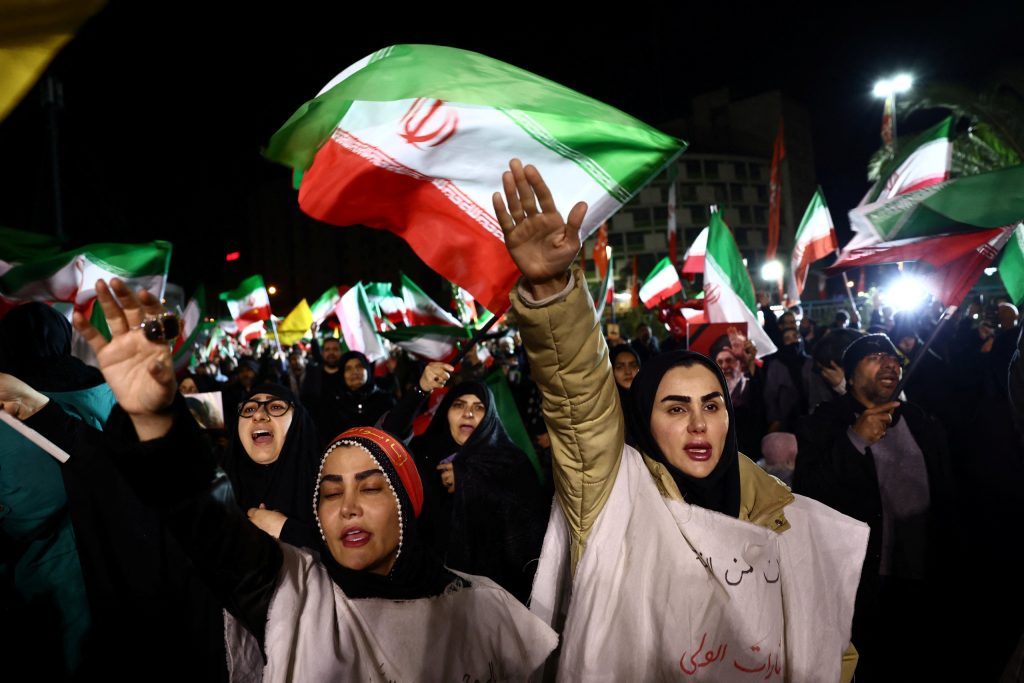
Instead, the United States has already sent thousands of troops to the region, including members of the elite 82nd Airborne Division. More than 3,000 people have died on both sides so far, and the White House is considering further escalation.
Anonymous federal officials have repeatedly warned that the White House and the Pentagon are planning to deploy ground troops numbering up to 10,000. The aim is, among other things, to seize Kharg Island, which hosts Iran’s main fossil fuel export terminal.
Trump was still weighing on Monday whether to approve an extremely risky operation in which special forces would remove a large quantity of highly enriched uranium from the Islamic Republic. He had insisted in his first term that Iran ‘must not have a nuclear weapon’ or the material to build one. As recently as 19 March, he said he was ‘not sending anyone anywhere’ and refused to deploy ground forces.
Neither of the warring parties has so far shown any willingness to make major concessions. The escalation is therefore likely to continue, with fossil fuel costs rising, Arab petromonarchies’ investments in the US AI sector falling, agricultural yields declining and hostility on both sides intensifying.