
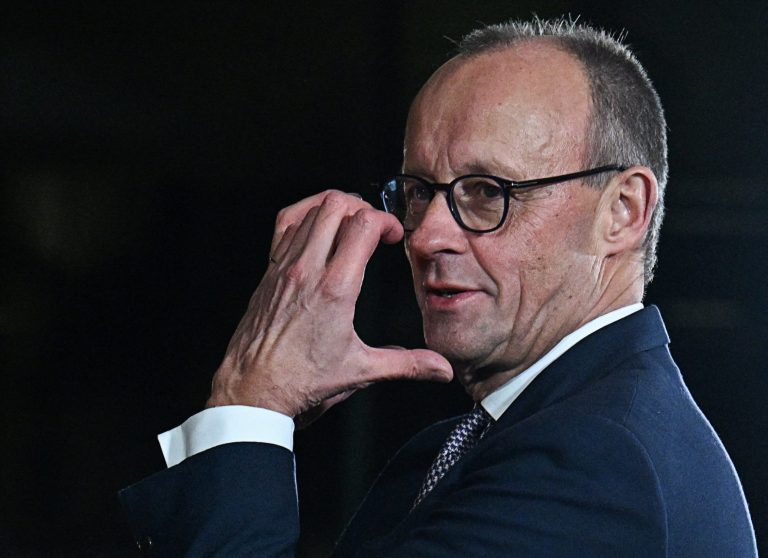
On Thursday, German Chancellor Friedrich Merz called for closer cooperation between the European Union and the United States and for the strengthening of the North Atlantic Treaty Organization (NATO) in Europe. However, he noted in the plenary session of the Bundestag that the EU would not be "intimidated" by threats of tariffs.
The CDU leader pointed out that a "rules-based international order" is not a dead vision, even though recent statements by US President Donald Trump about "acquiring" Greenland threaten it.
"For several weeks now, we have been seeing the emergence of a world of superpowers. A harsh wind is blowing in this world, and we will feel its effects in the foreseeable future," he told members of the German parliament.
He added that in recent weeks "we have been able to experience some of the joy of self-respect" and went on to say that rules-based action and rules-based trade "are not dead."
"More and more countries around the world are realizing that the current global reorganization represents an opportunity for all actors who prefer rules over arbitrariness and who see more advantages in free and fair trade than in the unilateral pursuit of their own exclusive interests," he concluded.
NATO in the battle of the superpowers
The chancellor said he "does not want to recklessly jeopardize established alliances," referring specifically to the Alliance. This alliance "is still a value in itself for us in Germany today."
Although Germany was the first European country to withdraw its symbolic military contingent from Greenland, Merz went on to say that "we are partners and allies with the US – not subordinates." However, given Washington's behavior, Europe must "learn to speak the language of power politics."
Britain, Denmark, Finland, France, the Netherlands, Germany, Norway, and Sweden sent approximately 20-member detachments to protect Greenland, earning themselves the threat of 10% tariffs effective from the beginning of February. These were to increase to 25% in June.
A few days later, at an extraordinary summit in Brussels, representatives agreed to restart negotiations on a trade agreement that had previously been suspended by the European Parliament. However, they unanimously agreed that trust between the two sides of the Atlantic "had been damaged."
Merz attributed Trump's retreat from tariff threats against Europe to the "unity and determination" of the old continent. "Anyone in the world who thinks they can make policy towards Europe through tariffs must know, and now knows, that we are ready and able to defend ourselves against it," he said.
Just a week before his speech in the Bundestag, Merz spoke at the World Economic Forum (WEF) in Davos, Switzerland, declaring that "the old world order is disintegrating at a dizzying pace."
Ukraine in the EU? Not so soon
At Wednesday's meeting with the coalition SPD, Merz dampened hopes that Ukraine would be given the opportunity to join the EU quickly. Despite voices in Brussels calling for the acceleration of accession negotiations begun in June 2024, the Chancellor pointed out that Kiev must meet the Copenhagen criteria.
These are a set of requirements that an applicant country must meet, with the basic areas being the protection of human rights, a democratic constitutional system, and a functioning market economy. This process takes several years, Merz explained.
With this statement, he supported his party colleague and foreign minister Johann Wadephul, who on Wednesday during parliamentary question time acknowledged Ukraine's right to rapid accession but ruled out shortening the Copenhagen process. He did not address the topic of Ukraine in his speech on Thursday.
Criticism of the AfD
Merz did not escape criticism from the floor. Alice Weidel, co-chair and election leader of Alternative for Germany (AfD), pointed to the chancellor's statement rejecting Germany's entry into the Trump-founded Peace Council. Merz argued that there were constitutional obstacles, although he added that membership in its original composition was "unacceptable."
Weidel described the rejection of membership in the Peace Council, which was founded on January 22 in Davos, as a "mistake" by the federal government. She argued that this new body, which is raising concerns in the West about replacing the UN, is "an opportunity to remove various obstacles caused by the UN's inability to act."
Slovakia was among the countries invited to join the Peace Council, but Prime Minister Robert Fico and Foreign Minister Juraj Blanár have "for now" declined the opportunity. While the prime ministerarguedthat the "entry fee" was worth a billion dollars, the head of diplomacydrewattention to the binding nature of the UN Charter.
The leader of Germany's strongest party also sharply criticized the government's foreign policy, particularly on the issue of "protecting" Greenland. "Sending a dozen soldiers to Greenland and withdrawing them the next day is, with all due respect, a farce," she said.
She pointed out that the US is an important ally of Germany, but that it represents its own interests, which Berlin should take as an example. According to Weidel, the German government must also define its national interests and represent them confidently, "especially when they differ from the interests of our allies."
(sab, reuters, welt)