
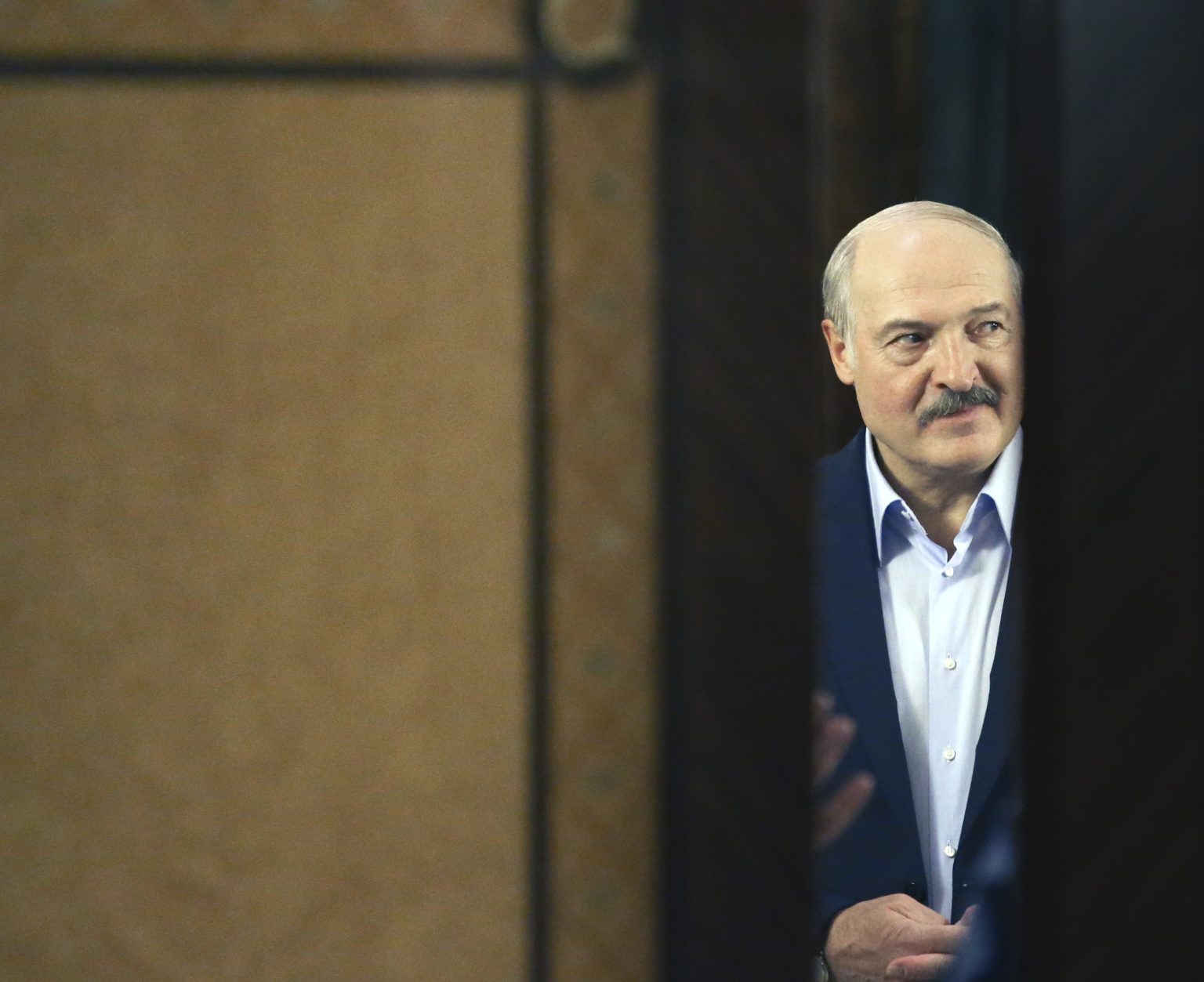
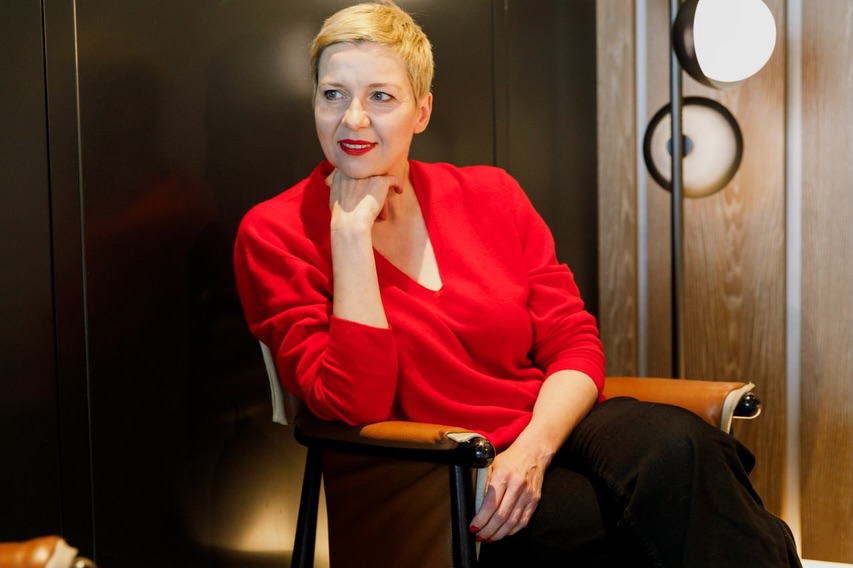
In mid-December, Belarusian President Alexander Lukashenko released 123 political prisoners. Among them was Maryia Kalesnikava, coordinator of the campaign team of Viktar Babaryka, a hot candidate for president in the 2020 elections. Babaryka was arrested before the elections and his coordinator shortly after them, and both were convicted.
In Belarus last year , excluding the December amnesty , 78 political prisoners were pardoned and 438 new ones were put behind bars, bringing the total number of prisoners to more than 1,250. Now that she has been released, Kalesnikava is calling on Europe to start a dialogue with the Belarusian regime, as she believes it "understands the language of business."
Déjà vu
In June 2025, Lukashenko released opposition blogger Siarhei Tsikhanouski and thirteen other political prisoners. According to Lukashenko, a total of 293 people had previously been released in several waves of amnesties.
The latest pardons and subsequent releases came shortly after a visit to Minsk by Keith Kellogg, the US Special Representative for Ukraine and Russia. He was the highest-ranking US official to visit Belarus in recent years.
The meeting between the Belarusian and American delegations took place at the Palace of Independence and, according to Lukashenko's office, the topics of discussion were "international issues and the overall situation in the world, regional issues, and Belarusian-American relations."
It should be noted that the most senior US official to visit Belarus in the last 20 years was Trump's Secretary of State Mike Pompeo in 2020.
"President Trump's strong leadership today led to the release of 14 prisoners from Belarus. Thanks to the Lithuanian government for its cooperation and assistance," Kellogg's representative John Coale said on social media on the day of the amnesty.
Lukashenko's spokeswoman for the pro-regime Belarusian channel Pul Pervogo said on the evening of the prisoners' release that they were people convicted of "extremist and terrorist activities" and that Lukashenko had decided to release them at Trump's request.
Pragmatic again
While it is not known what the US promised Belarus in exchange for the release of political prisoners in June, and there is only talk of Trump's request, in the case of the December releases, no one tried to hide that it was a matter of pure pragmatism.
After Belarusian security forces deported 114 of Lukashenko's political opponents to Ukraine and nine to Lithuania, the United States lifted sanctions on potash industrial fertilizers. Potassium carbonate-based fertilizers are the main source of foreign exchange earnings for Lukashenko's regime.
Less than a month after her release, Kalesnikava said in an interview with the Financial Times (FT) that if Europe misses the opportunity for dialogue with Lukashenko, the Belarusian regime will cling to the Kremlin.
"The more Belarus is isolated from Europe, the more it is forced to move closer to Russia... This makes Belarus less secure and less predictable for Europe," she told the FT, adding that as someone with a European mindset, she does not understand why Europe did not start talking to Lukashenko before the United States did.
She cited Berlin as an example, which has much more ties with Minsk than Washington. The British daily notes that her "argument contradicts the European approach," which is almost zero contact with Minsk, sanctions affecting the Belarusian economy, a ban on flights, stricter visa rules, and, last but not least, support for the civilian wing of the Belarusian opposition.
Is there anything to hold on to?
According to Kalesnikava, the Palace of Independence in Minsk is home to a "pragmatic man" who "understands the language of business." Since, according to her, the regime in Belarus will change one day, the ground must be prepared, not scorched.
On February 5, 2022, in an interview with Russian propagandist Vladimir Solovyov, Lukashenko stated that "this war [with Ukraine, editor's note] will last three to four days at most. There will be no one there to fight against us [Belarus and Russia, editor's note]."
Subsequently, on February 24, Lukashenko allowed the Russian army to launch a ground attack on northern Ukraine in the direction of Kyiv, although the Belarusian army has not yet joined the invasion, despite some indications, and the Belarusian president occasionally invites Kyiv and Moscow to the negotiating table. In his own words, he will only send the army to Ukraine if Belarus is attacked.
In the summer of 2023, however, Russia moved a large number of tactical nuclear weapons to Belarus, which Lukashenko said he would not hesitate to use in the event of aggression. At the end of 2025, the Kremlin strengthened its nuclear arsenal in Belarus with several Oreshnik hypersonic missiles.
Surprisingly, he commented on the issue of Crimea: "De facto, Crimea is Russian, de jure it is not," Lukashenko said in October 2024, taking a more pro-Western stance than many representatives of the civil wing of the Belarusian opposition.
On the other hand, Lukashenko's hybrid war continues, with Minsk sending African and Asian migrants to the Polish border. According to Polish findings and statements by the migrants themselves, Belarusian border guards are providing foreigners with ladders, wire cutters, and other equipment necessary to cross the Polish-Belarusian border.
Kalesnikava's statement to the Financial Times was also reported by the Belarusian opposition media. The civic wing of the Belarusian opposition, led by 2020 presidential candidate Sviatlana Tsikhanouskaya, has not yet responded to Kalesnikava's statement, nor to Standard's request for comment. The Belarusian Volunteer Corps (BDK) responded to Standard's request by saying that it "does not comment on any statements that do not concern the BDK."
Many manifestations of Belarusian culture—the national flag, coat of arms, language— have been labeled as extremism in Belarus itself. However, it is questionable whether this would be an obstacle for Brussels to rapprochement with Minsk if mutual dialogue led to the gradual release of political prisoners and Belarus's distancing from Moscow.
It is also questionable whether, given the current geopolitical balance of power and Belarus's important geographical location, the Kremlin would allow Belarus to truly break free from Russia's influence, which is currently ensured directly on its territory by the Russian army and its weapons, including nuclear weapons.