
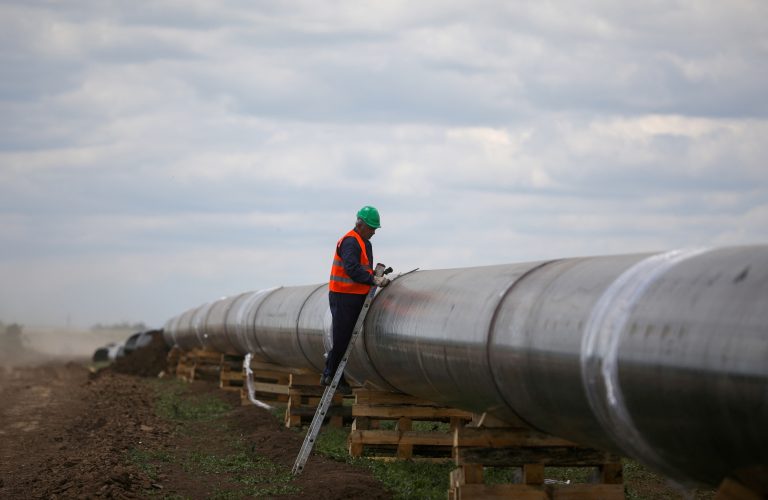
On Monday, European Union countries definitively approved the bloc's plan to ban Russian gas imports by the end of 2027. This policy makes the Union's promise to sever ties with its former largest gas supplier due to the war in Ukraine legally binding.
EU ministers approved the move at a meeting in Brussels on Monday, although Slovakia and Hungary voted against it. Hungary has announced that it will refer the case to the Court of Justice of the European Union.
The ban was designed to be approved by a majority of countries, which would allow it to overcome the opposition of Hungary and Slovakia. Budapest and Bratislava are particularly dependent on Russian energy imports.
Under the agreement, the EU will stop importing Russian liquefied natural gas by the end of 2026 and gas via pipelines by September 30, 2027.

However, the ministers' approval allows this deadline to be extended to November 1, 2027, at the latest, if the country has problems filling its gas storage facilities with supplies from countries other than Russia before the winter heating season.
Before the war in Ukraine, Moscow supplied more than 40 percent of the EU's gas. According to the latest available data from the Union, this share fell to around 13 percent last year.
Even a peace agreement will not help
In December, European Commissioner for Energy Dan Jørgensen gave an interview to Euronews. In it, he specified that the ban would remain in place even after a possible peace agreement with Moscow.
According to him, the aim is to prevent a repeat of the energy dependence that the Kremlin has abused in the past. He said that short-term contracts concluded before June 17, 2024, will be terminated in the first half of 2026, while long-term contracts may remain in force until autumn 2027 at the latest.
Jørgensen expressed his incomprehension at the resistance of Hungary and Slovakia, which have criticized the measure. "I think we should stand together side by side against Putin to help our friends in Ukraine," he said, adding that the Commission is ready to help all member states facing supply disruptions.
The commissioner pointed out that the energy crisis following Russia's invasion of Ukraine has exposed the weaknesses of European dependence and that the Union will never return to Russian gas, regardless of geopolitical developments.
Trump's call
In the fall, US President Donald Trump also spoke on the phone with European Commission President Ursula von der Leyen and called on her to take tougher action against Russian energy revenues.
He made it clear that only if Brussels took bolder steps would he be prepared to increase pressure on the Kremlin himself. His demands included not only a complete halt to purchases of Russian oil, but also the imposition of tariffs on China and India, which remain the main consumers of Russian fossil fuels.
In one of his public appearances, he assessed that if "the price of oil falls, Putin will have no choice but to end the war."
(reuters, max)