
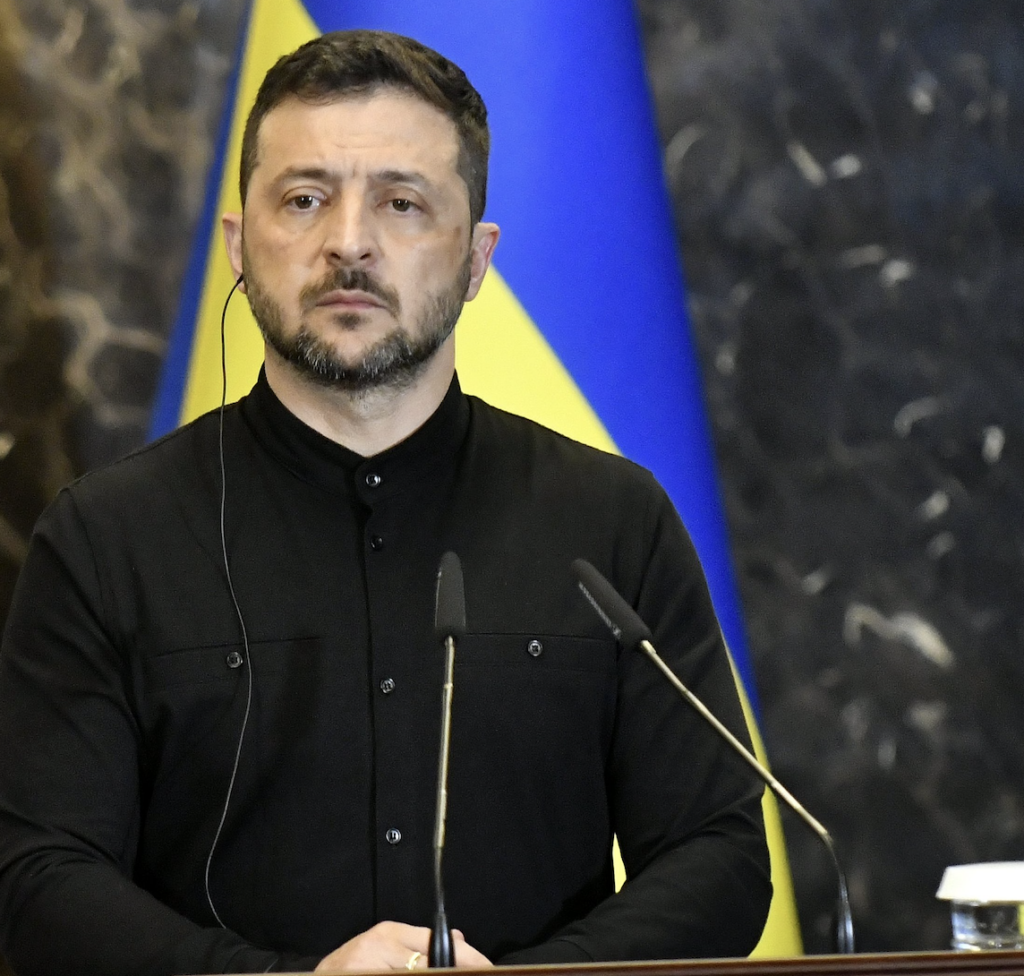
Widespread corruption in Ukraine is a cause for concern not only for Europeans in negotiations on the country's possible accession to the EU, but also for the domestic population of this war-torn country. President Volodymyr Zelensky himself won the election thanks to his promise of extensive anti-corruption measures, but in reality he has not changed much.
Contrary to his pre-election promises, he recently signed a law that significantly restricted the independence of anti-corruption agencies in Ukraine. This move came after the Ukrainian Security Service (SBU) detained two officials from the National Anti-Corruption Bureau (NABU) on suspicion of espionage and ties to Russia.

After massive domestic criticism and reservations from EU representatives, the president dropped the restrictions on these agencies and submitted a new law that restores their independence in investigating corruption.
The issue of corruption and its detection is extremely important in Ukraine, also for its European and American allies, as they provide significant financial and material support to the country, including its military defense against Russian aggression.
Hunter Biden's experience with kleptocracy
Hunter Biden, son of former US President Joe Biden, also spoke about corruption in Ukraine in a recent extensive interview.
On the popular Shawn Ryan Show podcast, hosted by Shawn Ryan, a former Navy SEAL and CIA contractor, he talked about his work in Ukraine.
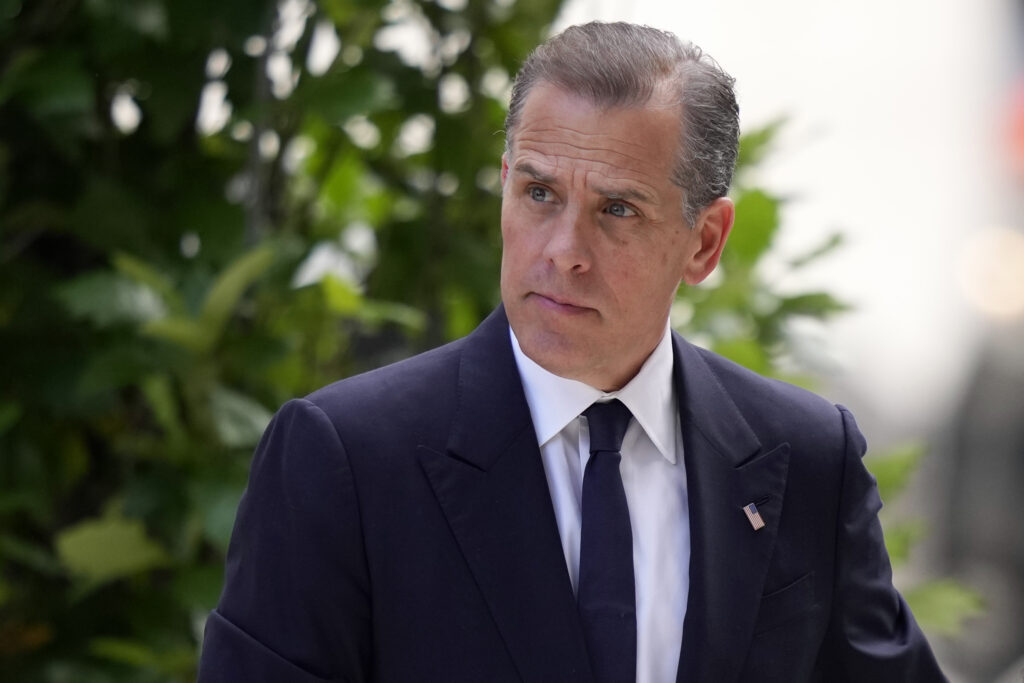
From 2014 to 2019, Biden served as a board member of Ukrainian energy company Burisma Holdings, one of the largest private natural gas producers in Ukraine.
Describing his work in Ukraine, the president's son said it was a "nest of vipers" and called the country a "kleptocracy" in reference to widespread corruption.
He now views his decision to work for Burisma Holdings as "an absolute mistake" because he was "very naive at the time about the level of corruption in the country."
Hunter Biden himself was the subject of a corruption investigation in connection with his work at the Ukrainian company, which also involved his father, but it turned out to be unfounded. FBI witness Alexander Smirnov, who spoke about bribes to the Bidens, was ultimately convicted of lying. However, the president's son Hunter was himself convicted of drug-related crimes and gun possession, and his father Joe Biden subsequently granted him a presidential pardon.
Corruption in Ukraine is still rampant
Hunter Biden's testimony in the podcast only reinforces the perception of corruption in Ukraine, which was extremely widespread and negatively perceived across society until 2019. It was precisely in that year that he won the presidential election on promises of anti-corruption reforms and cleansing the country of the influence of oligarchs.
However, Zelensky's efforts to tackle corruption have not made any significant progress, and the current widespread scandals in Ukraine show that Hunter Biden's words about "kleptocracy" are not far from the truth.
The public and Western observers were concerned when the Ukrainian president tried to restrict the activities of anti-corruption agencies during the war. It later emerged that investigations by these agencies had also led to charges being brought against people close to the president.
Statistics show millions stolen
The NABU published a report on its website stating that in the first half of 2025, there was a series of significant revelations concerning the corrupt behavior of high-ranking individuals.
For the first time in the history of NABU and SAPO (Specialized Anti-Corruption Prosecutor's Office), the acting Deputy Prime Minister of Ukraine, Oleksiy Chernyshov, was exposed for corrupt behavior. The former deputy head of the presidential office was also charged with suspicion of bribery and money laundering.
NABU carried out an operation called "Clean City" with the aim of breaking up a criminal organization that controlled decisions on land rights in Kyiv. Two major corruption schemes were uncovered at the Ministry of Defense: a system of inflating food prices for the army, which caused damages amounting to 733 million hryvnia, and the embezzlement of 246 million hryvnia earmarked for the development of the "DZVIN" automated command system for the Armed Forces of Ukraine.
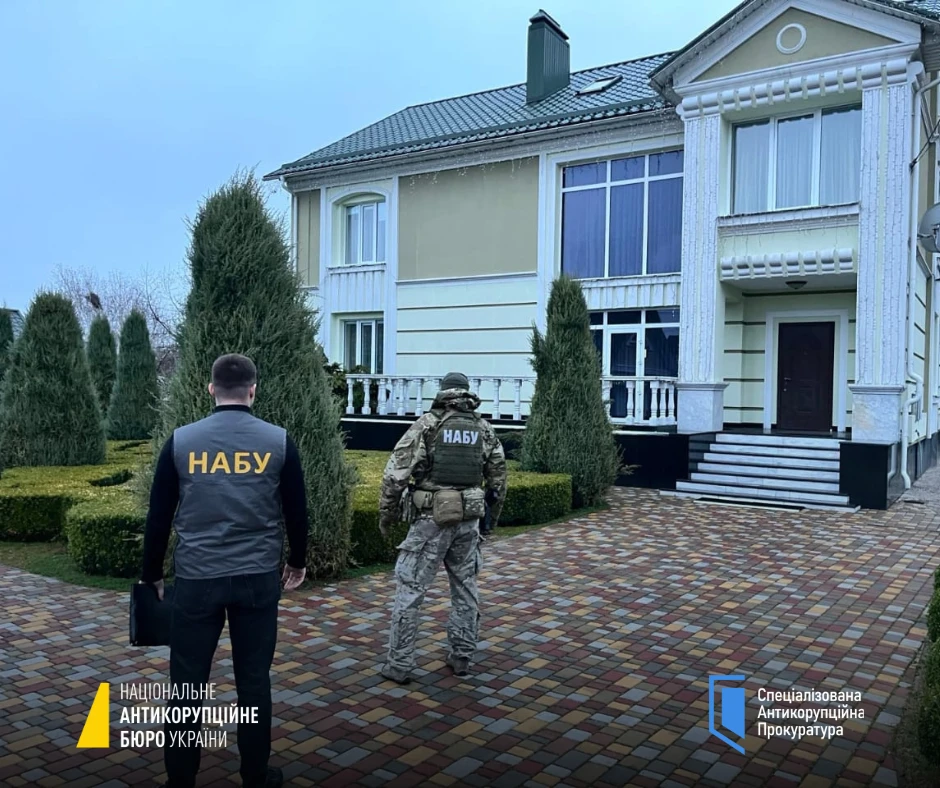
Anti-corruption authorities uncovered a criminal group of judges and lawyers who helped men of draft age to illegally leave the country and obtain deferrals from mobilization for a fee. Another group of judicial officials was caught leaking information about investigative actions.
According to NABU statistics, 154 people were brought to trial, including the former head of the National Bank of Ukraine accused of embezzling more than 206 million hryvnia, a member of parliament who organized a corrupt gas deal worth more than 2.1 billion hryvnia, as well as participants in multimillion-dollar embezzlement cases involving the construction of warehouses for the Ministry of Defense, the procurement of reactive armor for military vehicles, and bulletproof vests.
Another member of the Ukrainian parliament was sentenced to up to seven years in prison for illegally accepting $85,000 to ensure that a private company obtained a lease on state-owned land.
The former chairman of the Ternopil Regional Council was convicted of accepting more than 600,000 hryvnia from a businessman and was sentenced to nine years in prison. Four former Ukrainian railway officials were sentenced to eight to nine years in prison after being found guilty of embezzling more than 98 million hryvnia during the procurement of fuel and lubricants.
Hundreds of new findings in the first half of 2025 alone
The Anti-Corruption Prosecutor's Office and the Agency report 370 new investigations in the first half of 2025 alone, with the estimated economic effect of their activities – i.e., the estimated funds saved – calculated at 1.5 billion hryvnia, which is approximately 35 million euros.
At the end of December 2025, NABU and SAPO announced the discovery of an organized group in parliament in which "necessary votes" were allegedly bought with bribes. The organizers coordinated the activities of MPs, determined which proposals should be supported or blocked, and ensured the receipt and distribution of funds. The other participants undertook to vote according to instructions and to be present in the chamber.
The majority of MPs in parliament are from his Servant of the People party – 254 out of 450 seats.
Corruption among the powerful in the energy sector
Anti-corruption authorities have concluded their investigation into a case involving former Deputy Prime Minister and Minister Oleksiy Chernyshov, who has been remanded in custody by the court, among others suspected of corruption in the energy sector. According to investigators, the group of suspects, which also includes Ukrainian Justice Minister Herman Halushchenko, allegedly received $100 million in bribes.
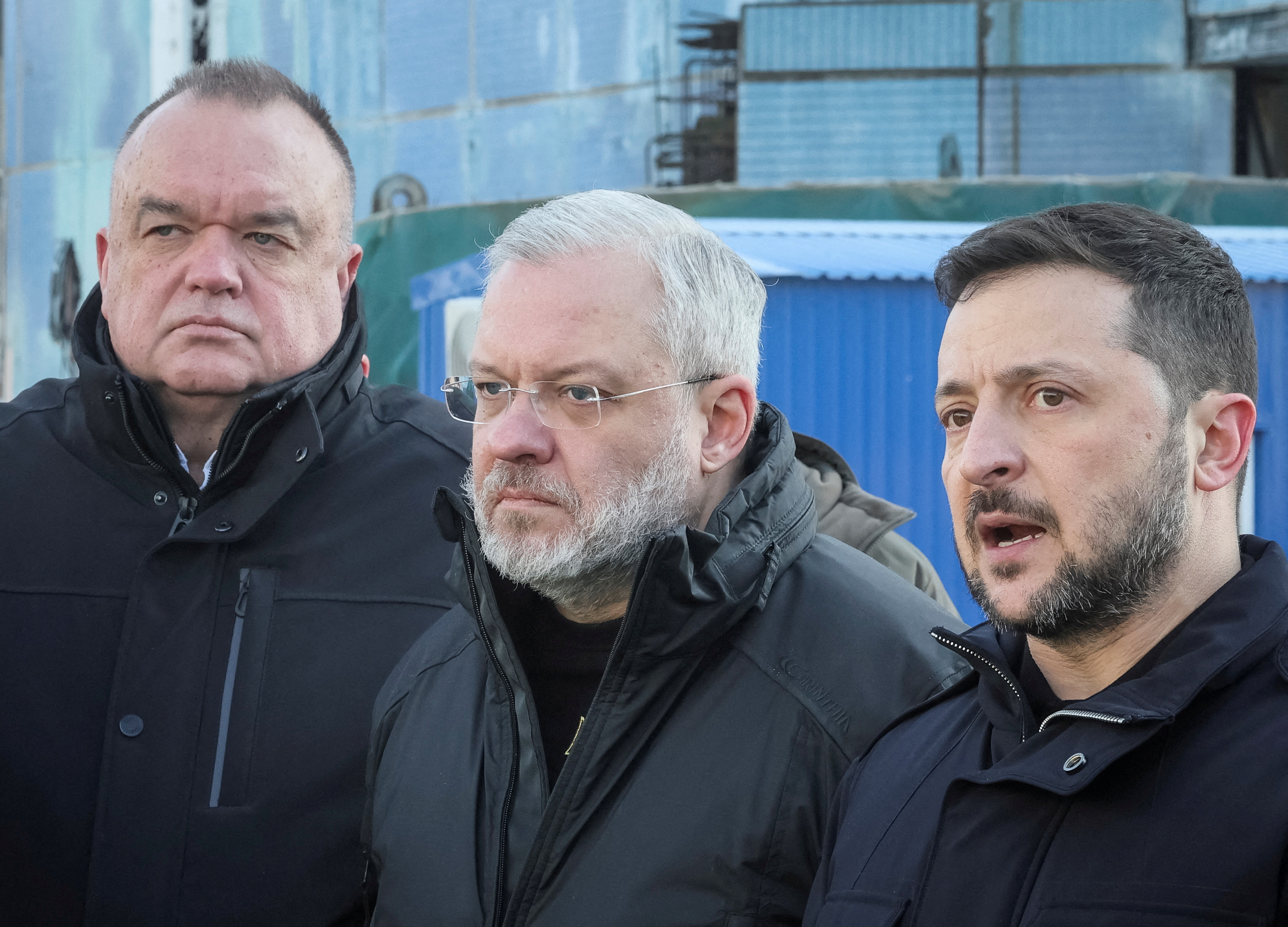
The Anti-Corruption Office said the money was obtained through illegal commissions of 10 to 15 percent from contracts related to Enerhoatom. These were lucrative construction contracts that the company had concluded in an effort to protect its energy infrastructure during constant Russian air strikes.
A golden toilet and back pain from carrying banknotes
A 15-month NABU investigation called Operation Midas uncovered cash transfers to Russia, as well as luxury villas in Kyiv, and even huge amounts of Ukrainian cash stored in travel bags. In one of the wiretapped conversations, the suspect allegedly complained of severe back pain caused by carrying bundles of banknotes.
The scandal in the energy sector resulted in the departure of the head of the president's office, Andriy Yermak, who resigned after NABU raided his home.

During a search of the property, police found a gold toilet belonging to Timur Mindič, one of the most influential men in Ukraine and a long-time business partner who was considered the leader of the entire group. However, Mindič himself escaped before his arrest.
In January 2023, the then Ukrainian Deputy Minister of Infrastructure, Vasyl Lozynsky, was also dismissed after being accused of accepting a bribe of $400,000 from the state budget earmarked for winter aid.
Nothing has changed in terms of corruption, but it is Europe that is being robbed.
All these cases of corruption and theft at the highest levels of government show that this criminal activity is thriving not only in the immediate vicinity of the president and his political party, but also in other important positions in the state administration.
It was Zelensky himself who promised to end corruption, but without pressure, especially from foreign allies, he would rather end the anti-corruption authorities. It is worth considering whether he was just making traditional "political" promises that he had no intention of keeping, whether he himself fell into the corrupt system (when he wanted to limit the powers of anti-corruption agencies), or whether he was simply unable to see the corruption around his closest associates and MPs.
It is also questionable whether the corrupt individuals were certain that the new president would not deal with them in any way (for whatever reason) when committing their crimes, or whether they simply believed that, given their high status, no one from the police would touch them. Stealing supplies from a country at war is truly a despicable act, and one must be spineless to do so.
Similar criminal activity in Ukraine is not only problematic in terms of the war or the country's efforts to join the EU. The fundamental problem is that a large part of the stolen funds comes from European taxpayers' money, for example from the recently approved loan of €90 billion.
The idea that war-torn Ukraine will be able to repay this and many other loans in peacetime, and even rebuild the country's infrastructure for hundreds of billions more, is rather naive. A much more realistic scenario is the write-off of part of the debt or even the bankruptcy of the state.
Hunter Biden's words about kleptocracy in Ukraine take on a more realistic meaning after the corruption revelations, which, of course, do not reveal all criminal activity of this type.
However, it is necessary to highlight the work of the anti-corruption authorities, which have managed to uncover organized groups even in the Ukrainian parliament, and to hope that President Zelensky has already abandoned his fundamental restrictions on their activities.