
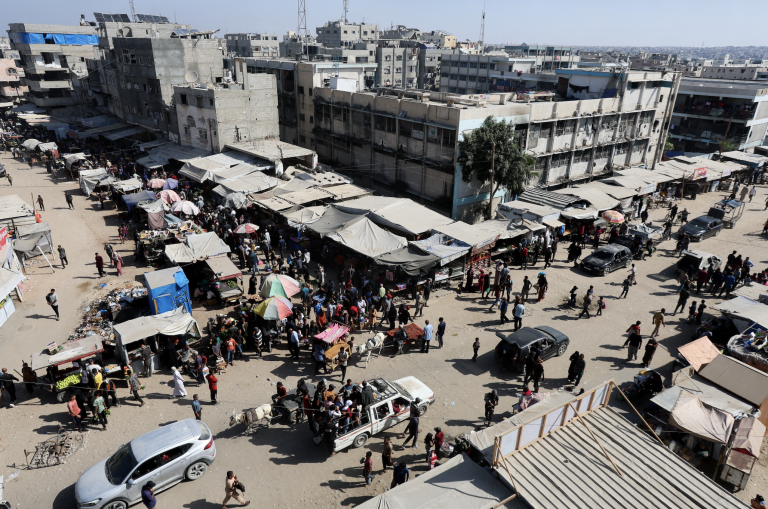
Israel will reopen the Rafah border crossing in the southern Gaza Strip in the coming days, a government office known by the acronym COGAT has announced. However, the latter clarified that under the planned regime, it will only be used for the departure of Palestinians, while it is unclear if and when Gazans will be allowed to return.
The Coordinating Office for Government Activities in the Territories (COGAT) is an official office of the Ministry of Defence, and although it does not mention words such as 'occupied' or 'Palestinian' in its name, it is this institution that administers parts of the West Bank under the military and security administration of Tel Aviv.
Since the start of the war on 7 October 2023, it has also carried out an agenda related to the distribution of humanitarian aid in the coastal enclave - and has repeatedly been the target of criticism for its blockade.
Palestinians willing to leave Gaza will have to obtain a permit from Israeli security forces, and their transit will be supervised by an EU delegation - similar to the agreement struck in January this year, the Times of Israel recalled.
Rafah has been off-limits since May 2024, when the Palestinian side was occupied by the Israel Defense Forces (IDF). Both the passage of people and humanitarian aid have been halted, and COGAT has been releasing only a fraction of the necessary food, water and medicine supplies at the time.
Egypt is opposed to
In a public statement, Cairo rejected any reports of coordination with Tel Aviv and called on its neighbour to open Rafah in a two-way deal. A government spokesman explained to Al-Qahira news agency the position of Abdel Fattah Sisi's government that any opening of the crossing would be considered "two-way" by Egypt.
In a statement, the head of Egypt's State Information Service, Diaa Rashwan, reminded that the opening of Rafah is in line with US President Donald Trump's plan for a ceasefire and that Egypt has the right of veto in the event of a lack of coordination with Israel.
Cairo is leading joint Arab efforts to preserve the ethnic character of the Palestinian territories, although it has acted as a mediator in negotiations between Tel Aviv and the ruling Hamas movement with Qatar and the United States. It has therefore long rejected Israeli attempts at a controlled emigration of Palestinians.
The Sisi Government is serious about restricting this emigration, as evidenced by the satellite images published by CNN in February last year. These show the construction of a border wall and a sort of buffer zone between Gaza and Egyptian territory, which is to be approximately 3.2 kilometres wide.
Egypt's fears of an orderly emigration or eviction of nearly 2.3 million Palestinians are partly unfounded. The United States-based Gaza Humanitarian Foundation (GHF) plays a major role in the alleged efforts to depopulate Gaza. Its activities have been linked to incidents of Israeli firing into crowds of civilians, with 875 deaths in July alone.
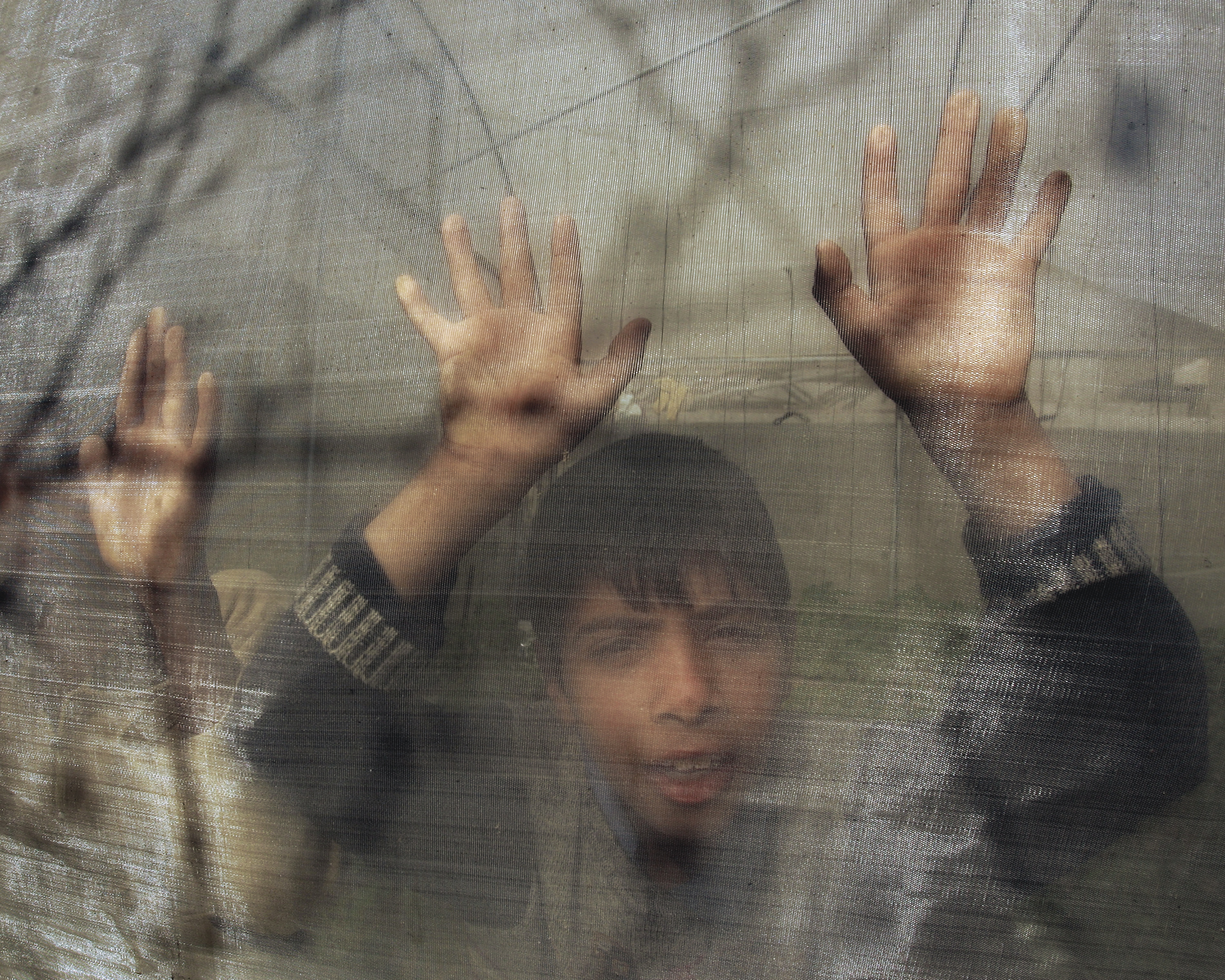
The GHF deployment originally envisioned 400 distribution points, which they reduced to four over the course of the year. On July 14, Reuters reported on the "humanitarian transit zones" that the U.S.-backed foundation, with massive Israeli support, was to build outside the Gaza Strip.
The two-billion-dollar project from the US State Department was to lead to the construction of "large-scale" camps in Egypt and Cyprus, where Palestinians were supposedly to go "voluntarily". In these camps, Gazans were to be 'temporarily housed, deradicalised, reintegrated and prepared for resettlement if they so wished'.
The Foundation denied the report, saying that the presentation they reportedly gave to the US embassy in Jerusalem earlier this year "is not a GHF document." The diplomatic ministry declined to comment on the report, and a Reuters source responded by saying that "no such thing is being considered."
Deradicalisation would be in order
Although the GHF has been criticised since its inception for being unbalanced and siding with the Israeli side of the conflict, other humanitarian organisations are not so much better off. The United Nations Relief and Works Agency for Palestine Refugees (UNRWA) is regularly criticised by Prime Minister Benjamin Netanyahu's government, which accuses it of alleged anti-Semitism, but this can be understood as a political move.
However, the nationalist militant movement that has ruled Gaza since the 2007 Palestinian civil war has monitored international aid workers and appointed 'guarantors' to ensure they are pro-Palestinian. This is according to an investigation by the pro-Israeli NGO NGO Monitor, which referred to internal Hamas documents.
Hamas has controlled all Gazan ministries, including the interior ministry, since the July 2007 civil war. It is documents of this ministry from 2018 to 2022 that reveal how "guarantors" loyal to Hamas maintain the favor of humanitarian groups at the desired level.
The documents come from the activities of the Interior Ministry's intelligence arm, called the Gaza Internal Security Mechanism. The intelligence agency "kept detailed records on NGO staff in Gaza - including their finances, family relationships, level of piety, and whether they sympathized" with Hamas, according to NGO Monitor.
International humanitarian organizations "do not operate independently or neutrally," the pro-Israel NGO further said. "They are embedded in an institutional framework of coercion, intimidation and surveillance that serves Hamas' terrorist goals," it said, adding that these organizations must abide by Hamas' security measures and can only work with its approval.
NGO Monitor has not escaped criticism, either, and has done so since it began operating in 2001. Several books categorize the NGO as "right-wing," which in Israeli politics is understood as an affinity for the Netanyahu government or the Jewish settler movement in the Palestinian territories.
For the Arab side of the conflict, members of the organisation's advisory board are also undoubtedly suspect. At the time of writing, in addition to prominent Israeli officials and judges, it includes British Colonel Richard Kemp [who led operations in Afghanistan, editor's note], writer Douglas Murray, former CIA director James Woolsey, and former American Jewish Committee (AJC) director David Harris.
Of these names, lawyer Alan Dershowitz is probably the most controversial. The latter was formerly the personal lawyer of the infamous financier and sex offender Jeffrey Epstein, although he has repeatedly distanced himself from his "outside activities."
NGO Monitor's assortment of fiercely pro-Israel officials also suggests a certain imbalance. The veracity of the allegations in the above-mentioned report is underlined by the fact that several humanitarian organisations have vehemently distanced themselves from it - notably the UK's Oxfam, Mercy Corps, International Medical Corps or Medical Aid for Palestinians (MAP-UK).