
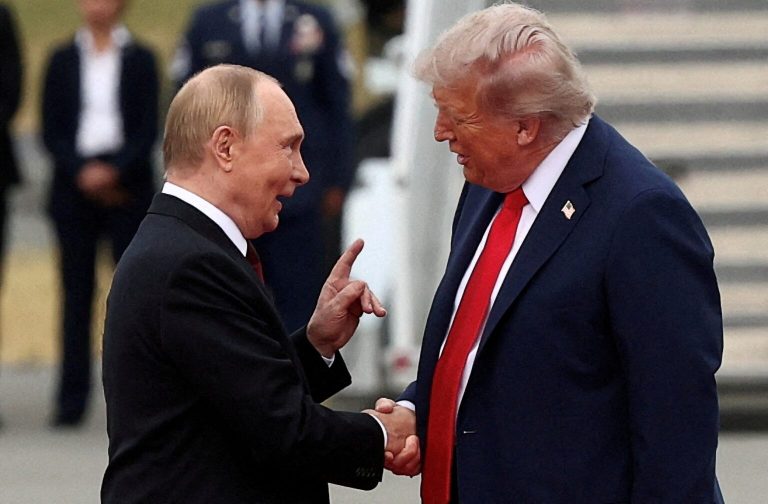
The summit between Donald Trump and Vladimir Putin, which was to take place in Budapest, has been postponed for the time being. The reason for this is fundamental differences of opinion about the conditions for a ceasefire in Ukraine.
According to a senior White House official, “there are no plans for a meeting between President Trump and President Putin in the near future.”
The statement came after US Secretary of State Marco Rubio and Russian Foreign Minister Sergey Lavrov had a “productive phone call” but were unable to agree on a face-to-face meeting. A kind of “preparation for the summit” between the two diplomats was to take place in Budapest on Thursday.
Lavrov is said to have said during Monday's phone call that the location and timing of the next summit
were less important than the implementation of the agreements reached in Alaska.
Moscow wants the entire Donbass and rejects foreign troops in Ukraine
Trump announced last week an upcoming meeting with the Russian leader, the goal of which was to be a step toward ending the war in Ukraine.
However, according to American sources, Moscow insists on complete control over the Donbass region in eastern Ukraine and rejects the American president's demand to begin a ceasefire based on the current front line.
In a private communiqué sent by Moscow to the United States last weekend, it reaffirmed its claims to the entire territory of the Luhansk region and most of the Donetsk region. Russia also reiterated that no NATO troops should be stationed in Ukraine as part of the peace agreement, one of the representatives said.
No summit without agreement
However, European leaders—including the UK, France, and Germany—appealed to Washington to stick to its demand for an immediate cessation of fighting without further shifts in the front line.
When asked by journalists about the possibility of a summit meeting, Trump replied that he did not want a “wasted meeting,” but hinted that there could be further developments and that he would provide information on this in the coming days. He added that he still believed a ceasefire along the current front lines was possible.
Meanwhile, NATO announced that Secretary General Mark Rutte is traveling to Washington, where he will meet with Trump on Wednesday to discuss the West's strategy toward Moscow. He intends to present the European positions on a ceasefire and possible peace negotiations.
Diplomatic sources claim that the Americans are increasingly reluctant to hold the summit if Russia does not reconsider its demands.
The Kremlin confirmed that there is no exact date for the meeting and that “serious preparations” are necessary, which will take some time. However, Putin's envoy Kirill Dmitriev insists that preparations are continuing.
The view of European leaders
According to European diplomats, the cancellation of the preparatory meeting between Lavrov and Rubio in Budapest is a sign that the US does not currently consider the summit or the outcome in the form of an agreement to be realistic.
Although last week's meeting between Trump and Zelensky at the White House led to public support for a ceasefire on the current front lines, media reports suggest that behind-the-scenes negotiations were accompanied by nervousness and pressure on the Ukrainian leader.
Budapest as the venue for the summit also sparked some controversial reactions. Poland, for example, suggested that Putin could be arrested if he flew through its airspace due to a valid international arrest warrant. Bulgaria declared that it would open its airspace to Putin's flight.
European leaders will meet with Zelenskyy later this week, first at the EU summit and then at the meeting of the “coalition of the willing,” where they will discuss security forces to ensure a post-war order in Ukraine. Russia rejects such international security forces.
(reuters, max)